
 E-Paper



Emergency at 50: Learn from the mistakes of the past
This article is authored by Priyal Bhardwaj, general secretary, BJP Women’s Wing, Delhi and a social worker.

 Prefer HTon Google


On the night of June 25, 1975, India’s democratic foundation was shaken to its core. The Prime Minister Indira Gandhi advised President Fakhruddin Ali Ahmed to declare a state of Emergency, citing “internal disturbances.” This decision, bypassing all democratic norms, marked the beginning of a dark and unprecedented chapter in India’s political history.
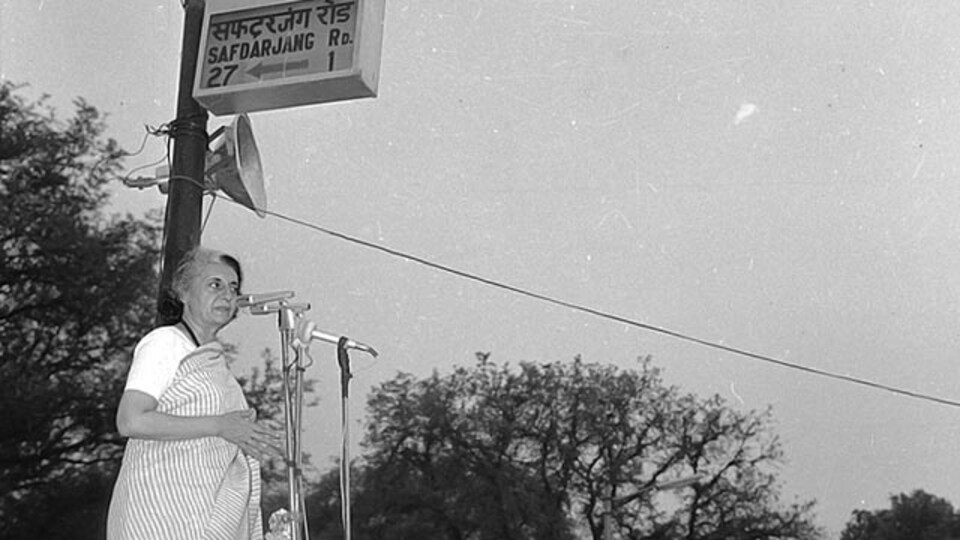
This drastic action followed the Allahabad High Court’s verdict that found Indira Gandhi guilty of electoral malpractice and disqualified her from holding public office. Instead of resigning gracefully, she chose to clamp down on civil liberties, stifle dissent, and silence opposition through the imposition of Emergency rule. What followed was an authoritarian nightmare—a sweeping suspension of fundamental rights, censorship of the press, mass arrests of political opponents, and the erosion of democratic institutions.
Nearly 50 years later, one must ask: Do ordinary citizens—especially the youth of today—truly grasp the gravity of that period? Do they know or remember what it meant to live in a country where freedom of expression was muzzled, where newspapers carried blank columns as silent protests, and where countless political leaders, activists, and innocent citizens were jailed without charge?
Three-fourths of India’s population today was born after the Emergency. To them, it may seem like a distant historical event, abstract and irrelevant. Many dismiss it casually without understanding its implications. They obviously haven’t heard Jaiprakash Narayan’s fiery and impassioned speeches, nor are they aware of defiant editorials or read reports of the horrors of forced sterilisation. It was a full-scale assault on the democratic ethos of a modern, independent India.
The extent of constitutional manipulation during this period remains shocking. Amendments were pushed through Parliament with little debate, including one passed just a day before a critical Supreme Court hearing on August 10, 1975, which retrospectively validated Indira Gandhi’s election—an audacious move that undermined judicial independence and the spirit of the Constitution. These legal acrobatics were designed not to protect the nation, but to entrench the ruling regime.
We cannot allow these events to fade into oblivion. Every year, on the anniversary of the Emergency, political leaders and historians recall its horrors. But these reflections often remain confined to academic circles or partisan debates. Among the general public, and especially the youth, awareness is alarmingly low. As public memory fades, so too does political accountability. That is deeply troubling.
It is not enough to treat the Emergency as a footnote in textbooks. It must be remembered as a stark warning of what happens when democratic checks and balances are overridden by authoritarian ambition.
In the 1970s, it was young people who became the backbone of the resistance led by Jayaprakash Narayan. Students and youth groups mobilised across the country, facing arrests, violence, and intimidation with remarkable courage.
The government’s decision to mark June 25 as Samvidhaan Hatya Diwas—a day to honour those who fought to restore democratic governance—is a welcome initiative. But symbolism must be paired with substance. We need educational programmes, public dialogues, documentaries, and memorials that keep the memory of this period alive and relevant. Schools and universities should incorporate the Emergency into civic education curriculums. Public broadcasting should revisit it through archival material, interviews, and documentaries. Libraries and museums must preserve testimonies and records from the period. These efforts are necessary not to dwell on the past but to inoculate the future.
As increasing numbers of young Indians enter careers in public policy, it is equally essential that they consider political engagement not just as observers or analysts, but as participants. India needs more than perennial youth leaders in their fifties. It requires fresh voices who understand history, uphold democratic values, and possess the moral courage to challenge authoritarian tendencies—no matter who displays them.
As we approach the 50th anniversary of the Emergency, we must renew our collective commitment to liberty, justice, and the rule of law. Forgetting that such a catastrophe once befell our nation is not an option. We should guard against anything that blurs the searing memories of that episode.
The 21-month period of emergency in 1975-77 serves as an exemplar of the importance of democracy and the dangers of unrestrained executive authority. This recognition and constant awareness can motivate efforts to enhance democratic systems by implementing restrictions on unbridled power of any individual. This also serves as the reminder of the resilient Indian and her eternal belief in democratic ethos of culture and nation. We owe it to the past—and to the future.
This article is authored by Priyal Bhardwaj, general secretary, BJP Women’s Wing, Delhi and a social worker.


