For many years now, the response by the State to human trafficking in India has involved the following visual imagery; the police raid and rescue cum rehabilitation of victims from their trafficked status. The number of brothels raided, victims rescued, and FIRs filed used to be indicators of success in this framework. There was a problem, however, in the enforcement-based strategy, that many of those who survived remained traumatised, impoverished, socially stigmatised, and neglected once they were rescued.
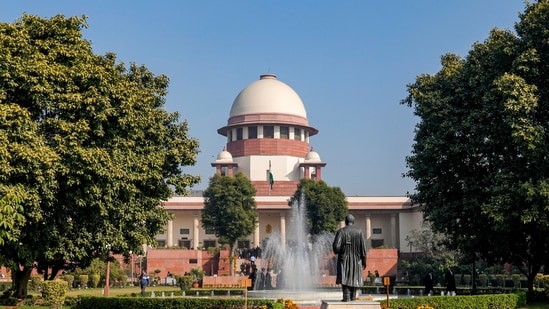
What makes the latest judgment delivered in the case of Prajwala v. Union of India (2026 INSC 609) distinct from this tradition is the simple fact that it is an explicit departure from what is traditionally expected of the anti-trafficking legislation as the court effectively dismantles the existing paradigm on anti-trafficking in India. The judgement cogently explains that the very nature of trafficking does not imply only recruiting and transporting of the victims but commodifying them and thus taking away from them their agency. In other words, as this is an attack on the very nature of dignity of human beings, constitutional measures imply protection and recovery of the victims rather than punishment of the offenders.
Especially important is a new outlook for women and children, who are mostly the targets of trafficking and who are structurally more prone to being victims of trafficking. The perpetrators exploit the structural vulnerability of the victims caused by gender imbalance, poverty, social exclusion, forced migration due to insecurity, educational deprivation, and familial disruption. Women and children are not merely victims alongside other people, but potentially more susceptible to becoming the target. Yet, the fight against trafficking, which has existed in India for many decades, has prioritised rescue over rehabilitation of the victims.
Rescue, crucial as it is, must not be an end to itself. Persons who are rescued and restored to the same conditions that led them to be trafficked i.e., poor employment, lack of security, family pressure, are still at the risk of re-exploitation. Rescue postpones vulnerability without providing access to education, livelihood, health, psycho-social support and safe housing.
{{/usCountry}}Rescue, crucial as it is, must not be an end to itself. Persons who are rescued and restored to the same conditions that led them to be trafficked i.e., poor employment, lack of security, family pressure, are still at the risk of re-exploitation. Rescue postpones vulnerability without providing access to education, livelihood, health, psycho-social support and safe housing.
{{/usCountry}}Unfortunately, numerous survivors slip through the fissure after extraction, continuing to suffer the tragedy of the institutionalisation. Others are brought home to the families that were involved in trafficking them. Others live for years in under-resourced shelters, with no viable re-integration options. Numerous people are subjected to stigma that prohibits them from being able to access jobs, schools, or community support services. This leaves the victim in a vulnerable state which can lead to re-trafficking.
What is special about the judgment, is that it recognises that rehabilitation is not a matter of charity or welfare. Rehabilitation has been seen as an administrative process that is reliant on government schemes, budget allocation or policy priorities. India already has several legislations in place which in combination with its welfare programmes create a strong legal framework viz., Immoral Traffic (Prevention) Act,1956 ; Bharatiya Nyaya Sanhita,2023 ; Protection of Children from Sexual Offences Act,2013; Juvenile Justice Act,2015, among others. The issue is not only with the design of legislation, but implementation which points to its shortcomings. Co-ordination among institutions is still weak. State laws and practices regarding the protection of victims of crime greatly differ. Shelters lack resources and quality of care. Trafficking networks have tentacles across jurisdictions, but there is limited inter-state cooperation.
The Court's tacit acknowledgment that trafficking has outrun the law is also important. The imagery of brothel, physical transportation and organised crime syndicates remains the prevailing legal imagination. Today, however, trafficking is more likely to be conducted via digital infrastructures. Traffickers now use social media, encrypted communications networks, online recruitment networks, live-streaming technologies, cyber enabled sexual exploitation and digital grooming to identify, recruit, control and exploit victims. Young girls are tricked into taking up jobs that are bogged up or are misrepresented as employment opportunities, used as bait in an online relationship, or exploited through digitally-mediated exploitation. There is a growing overlap in the physical and virtual trafficking networks. However, there are still many legal and institutional reactions that are based on assumptions that were formed decades ago. This judgment thus serves as a timely reminder. It recognises that trafficking is not an issue that can be treated exclusively in traditional criminal law contexts, as technology is continually changing the structure of trafficking.
India's anti-trafficking efforts have traditionally been reactive. Often intervention does not occur until exploitation has taken place. However, trafficking is not simply the product of criminal intent but it also can be adduced to structural causes. Conditions like poverty, gender discrimination, inability to attend school, vulnerability of children to trafficking, migration, unemployment, and precariousness benefit traffickers. These are not peripheral issues to trafficking; they are the issues of trafficking. It is pointless attempting to combat trafficking through arrests and prosecutions when its root causes are left unaddressed.
It is thus imperative for prevention to be at the core of any policy against human trafficking. Measures like education, social security programmes, safe migration policies, economic empowerment of women, child protection programmes, and community awareness campaigns may prove the most powerful measures against trafficking.
By allowing these questions to emerge from the judgment, the court opens up further room for questioning institutional accountability. Questions will be asked about whether the rehabilitation process works in the right way. Is the shelter sufficiently staffed? Who is allowed to access compensation funds for victims? Were regular social services provided for survivors? Does the anti-human trafficking unit have sufficient technological resources to investigate cases in technologically savvy milieu? How efficient is the cooperation between states if the victim violates state jurisdiction? The importance of the verdict is in what it focuses on. Core of it is not about statutory interpretation or institutional design. It is a case of human dignity. It acknowledges that trafficked women and children are individuals with rights, aspirations and futures that should be protected by the constitution. The impact of anti-trafficking efforts in India cannot be gauged by the number of raids, arrests and convictions achieved. It must be the ability to rebuild lives that are safe, open, and dignified and in which survivors have autonomy. It must be to bring a trafficked child back to freedom and to education and hope. It must be that a trafficked woman not only is rescued, but also has a sense of reintegration and economic independence. The Supreme Court has provided a constitutional perspective that transcends rescue to restoration.
(The views expressed are personal)
This article is authored by Ashok Ramappa Patil, vice chancellor and Sumit Kumar Singh, research assistant, National University of Study and Research in Law, Ranchi.