For much of the 20th century, strategic power rested on food, fuel and finance, and oil shaped alliances, trade routes and wars. India's own policy architecture was built for that world, where economic resilience depended on securing essential commodities.
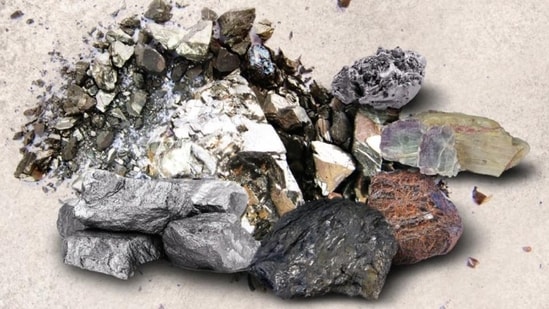
That world has not disappeared. But it is no longer sufficient. The headlines today are dominated by lithium, cobalt, nickel and rare earths. India currently imports nearly 100% of its lithium and cobalt requirements and meets over 60% of its copper demand through imports. Governments are entering into strategic partnerships, companies are buying mining assets, and industrial policy is increasingly organised around critical minerals. The implication is clear: whoever secures these minerals will command the industries of the future.
It is an important insight. It is also an incomplete one. The larger geopolitical shift is not from fossil fuels to critical minerals. It is from energy security to the governance of materials. As economies become more material-intensive, the challenge extends beyond securing access to materials. Competitive advantage will increasingly belong to countries that can anticipate demand, diversify supply, build processing capacity, recover materials already embedded in their economies and coordinate policy across value chains. The question is no longer simply who owns resources. It is who governs the material economy most effectively.
This matters because Viksit Bharat is, at its core, the largest material transformation project in independent India's history. Every metro line, transmission corridor, semiconductor facility, affordable housing programme, renewable energy park, electric vehicle factory and manufacturing hub is, before anything else, an assembly of materials. Steel, cement, copper, aluminium, construction aggregates, graphite, rare earths and dozens of other materials are not merely inputs to these sectors but constitute the physical foundation on which India's growth and decarbonisation ambitions will be realised. As per projections by NITI Aayog, demand for several minerals will grow tenfold by 2050.
{{/usCountry}}This matters because Viksit Bharat is, at its core, the largest material transformation project in independent India's history. Every metro line, transmission corridor, semiconductor facility, affordable housing programme, renewable energy park, electric vehicle factory and manufacturing hub is, before anything else, an assembly of materials. Steel, cement, copper, aluminium, construction aggregates, graphite, rare earths and dozens of other materials are not merely inputs to these sectors but constitute the physical foundation on which India's growth and decarbonisation ambitions will be realised. As per projections by NITI Aayog, demand for several minerals will grow tenfold by 2050.
{{/usCountry}}Other major economies have already adapted their policies to this reality. China has built dominance across mining, processing and manufacturing. The US has linked industrial policy to secure supply chains through the Inflation Reduction Act. The European Union's Critical Raw Materials Act combines supply diversification with investment in processing and recycling. Japan has long relied on overseas partnerships and technology to strengthen material resilience. Different approaches, but a common recognition: Materials have become instruments of economic and industrial strategy.
India has responded through the National Critical Mineral Mission, renewed exploration and overseas partnerships. These are necessary steps. But they remain focused on individual commodities. The larger challenge is to prepare for the material economy as a whole.
That requires rethinking how policy is organised. Mining policy concerns itself with extraction. Industrial policy focuses on manufacturing. Trade policy manages imports. Environmental regulation addresses ecological impacts. Urban policy deals with waste. Each serves a legitimate purpose. Yet materials do not move through ministries; they move through value chains.
In essence, public policy follows ministries, while materials follow value chains. That mismatch is becoming a strategic vulnerability. Decisions about mining shape manufacturing, building design determines future demand for steel and cement, and waste policy influences the availability of secondary materials. Yet these connections rarely inform policymaking because they lie across administrative boundaries. Rather than treating extraction, manufacturing, infrastructure, trade and recycling as separate policy domains, they need to be viewed as components of an integrated material system.
India, therefore, needs a National Materials Framework built around three shifts.
First, move from planning for minerals to planning for material flows. India projects electricity demand decades ahead; it should apply the same discipline to anticipating future demand for copper, aluminium, construction materials and battery inputs.
Second, make material productivity a national economic objective. Creating more value from every tonne of material consumed- through better design, longer asset lives, higher recovery rates and greater circularity- is not simply good environmental policy. It is a source of industrial competitiveness. India's cities, too, should be seen as future resource banks. Over time, buildings, infrastructure and vehicles will become one of the country's largest above-ground reserves of copper, aluminium and steel.
Finally, govern material systems rather than material sectors. India needs an institutional mechanism that aligns decisions across mining, industry, trade, urban development and environmental policy. It should complement resource acquisition with resource diplomacy, building long-term partnerships around processing, technology, recycling and resilient supply chains.
Every industrial age has rested on a new material base- from coal and steel to oil and silicon. India's transition to a developed economy will be no different. The real question is not whether the country can secure enough critical minerals. It is whether it can build the institutions to govern the material economy more intelligently than its competitors.
The next frontier of industrial policy is not critical minerals alone. It is the governance of materials. Countries that recognise this early will shape the next industrial era. For India, that may prove to be one of the most consequential questions on the road to Viksit Bharat.
(The views expressed are personal)
This article is authored by Manish Dubey, dean and Rahul Bajaj Chair, IIHS School of Governance and Nidhi Srivastava, head, Research & Strategy, Dravya, IIHS Centre for Materials and Sustainable Development.