
 E-Paper



Conflict, elections and geopolitical realignments
This article is authored by Cchavi Vasisht, associate fellow, Chintan Research Foundation, New Delhi.

 Prefer HTon Google


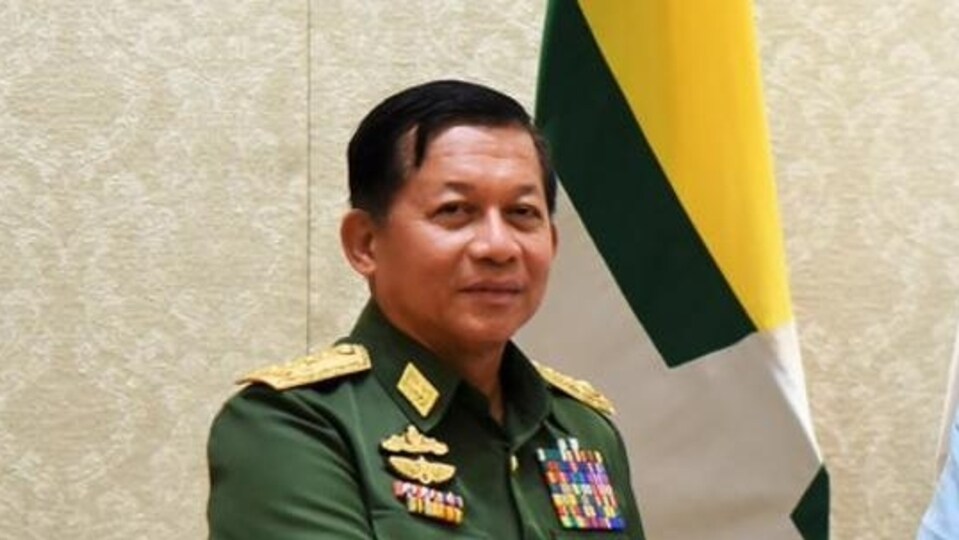
In the last few days, Min Aung Hlaing has ended the state of emergency and announced the starting of the first phase of elections on December 28, 2025. The State Administrative Council (SAC) has been dissolved and a new interim government and National Security and Peace Commission has been formed with Min Hlaing as its head. But this also reflects the political uncertainties of the present times which is amidst a civil war, persistent humanitarian and economic crisis accentuated by floods, earthquakes in areas such as Kayin, Bago, and Mon, and disease outbreaks, along with geopolitical shifts. Since the February 2021 coup, the Ethnic Armed Organisations (EAOs) have expanded their control over territories, and engaged in frequent clashes with the military, raising concerns over further escalation around the elections.
Recently, the military have also gained on the battlefield, for instance it recaptured the strategic Shan town of Nawnghkio from the Ta-ang National Liberation Army (TNLA), and partially reopened the highway to northern Shan State and China. Earlier this year, the Myanmar National Democratic Alliance Army (MNDAA) gave away control of the Regional Military Command in Lashio, which was considered one of its greatest wins.Additionally, a recent report by Armed Conflict Location & Event Data (ACLED) said in a report that the military has been rapidly closing the gap in drone use by buying military grade models from both Russia and China. As a result, thousands have died; more than 3.3 million internally displaced, over 182,000 refugees abroad. It's the local population that faces the brunt of all, from unemployment to forced conscription from both sides.
The military’s efforts to legitimise its rule through polls have been widely criticised as manipulated and non-inclusive. Aung San Suu Kyi remains imprisoned and 40 parties, including the NLD excluded from elections. The 11-member election commission aims to serve the interests of the military. Additionally, new legislation imposes prison terms of up to 10 years and even death penalty for any action which seems to disrupt the electoral process. The military is also offering cash rewards to rebels who agree to surrender ahead of polls. And martial law continues to exist in nine out of 14 states, excluding the areas which are out of the military's control. Even the United Nations have decried the elections as “fraud”.
This turn of events have major powers — including the US, China, India and other Southeast Asian States— recalibrating their positions, while some even shaping these events. China’s strategic role is well known in manipulating the military by providing economic stability via providing grants and funds for new investment projects, and mining projects; while simultaneously maintaining strong links with ethnic armed groups. Given China’s dominance and influence with both the military rulers and EAOs, China has favoured the military to continue its rule and subtly pressurising the EAOs to ease/let go their control.
The US, despite recent leverage of tariffs, has implied a diplomatic gesture of recognising the military as legitimate rulers as Trump exchanged letters with Min Hlaing. It also lifted sanctions selectively which were imposed against three companies and four individuals, in a way allies of military rulers. This was predicted as the Trump administration since coming to power had given mixed signals of its policy being shifted in Myanmar. Though under Malaysia’s leadership, Association of Southeast Asian Nations (ASEAN) has initiated dialogue efforts among the military and opposition forces, progress is fragile and contested.
India, sharing a 1643 land border with Myanmar, faces direct security challenges, with the ongoing conflict spilling over our northeast region, dilemma in the face of refugee flows, increased competition for resources (notably rare earth minerals). Therefore, for India, it is important to reflect on effective strategies for securing the Indo-Myanmar border, especially with the work on fencing the border already progressing. Here the Indian government could leverage the position of northeastern states to forge ties with bordering EAOs. Northeast states have closer ties with neighbouring states of Myanmar. India has already started talks with EAOs at the Indian border. More efforts are needed and it is often suggested that the Arakan Army could act as the most important player, which is strategically in control of Rakhine state, a key linchpin to India’s Kaladan Multi Modal Project.
Additionally, it is crucial to explore India’s position and prospects for regional diplomacy, given that regional players like ASEAN and China have greater presence and impact in the region. And here it is also essential to assess the possibility of extracting rare earth minerals for its resource security. Given the importance of rare earth minerals in high-tech industries and electric vehicles, it is vital for the resources to be extracted and distributed without the dominance of any one regional player. Here it is important to ensure that environmental concerns are also adequately addressed. From western countries to immediate neighbours, Myanmar is seen as a goldmine of reserves which has huge economic potential and therefore re-igniting interests among major powers.
Therefore, there is a need to evaluate Myanmar’s evolving situation — to map its ongoing domestic situation, examine its regional and global interactions, and develop actionable recommendations specifically tailored to India’s national and security interests. The first focus is to understand the legitimacy and prospects for the election as announced. How can meaningful democratic participation occur amidst martial law, repression, and exclusion of top opposition leaders? What are the risks and opportunities for dialogue between the military and ethnic armed groups? This seems one of the biggest challenges as one looks at the current situation in the country. If elections are to be organised, it is important to facilitate a ceasefire and ensure protection and aid for the people affected and the refugees.
This needs to follow up with a dialogue including all stakeholders. It’s been more than four years, and the NUG which was formed to fight as an opposition government has failed to unify the EAOs or People/Local Defence Forces. Apart from overthrowing the military government, there is lack of solidarity on how they would proceed further in establishing a unified government. There is a general mistrust between EAOs and therefore, the clashes and disputes between different EAOs continue to prevail in some regions. And it is well accepted that no dialogue can take place with the exclusion of any stakeholder. The military has ruled the country for decades and not just governed it but owned it by establishing companies, maintaining control over banks and its economic resources. Any solution for it to be lasting and effective, needs to include all the stakeholders, now running into multiple stakeholders.
This article is authored by Cchavi Vasisht, associate fellow, Chintan Research Foundation, New Delhi.


