Prime Minister (PM) Narendra Modi’s recent appeal to conserve petrol and diesel, use public transport, consider work-from-home practices and reduce avoidable foreign travel has brought India’s energy vulnerability back into focus. The appeal comes at a time when rising crude prices and tensions around key trade corridors such as the Strait of Hormuz are placing renewed pressure on fuel costs, import bills and foreign exchange. It is a reminder that energy security today is not only about access to resources, but whether they can move reliably through fragile global routes.
For a long time, energy security was treated primarily as a question of access. Countries that had oil, gas, and coal were considered secure, while those without these resources depended on global trade. In general, the global maritime system was viewed as sufficiently open and predictable that the security of major trade routes received relatively little attention.
That assumption no longer holds with the same certainty. Recent events have shown how quickly disruption in a single corridor can ripple across the global system. The 2021 Suez blockage alone is estimated to have disrupted nearly $10 billion worth of trade per day, while instability in the Red Sea and Hormuz corridor has repeatedly forced shipping companies to reroute vessels around the Cape of Good Hope, increasing transit time and fuel costs significantly. Simulation-based analysis suggests that a prolonged disruption or closure of the Strait of Hormuz could place up to $1.2 trillion in annual exports from Gulf economies at risk, illustrating the scale of potential disruption to global trade.
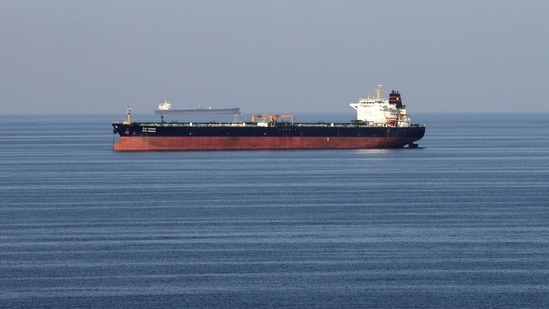
The Strait of Hormuz remains one of the world’s most critical energy chokepoints. International Energy Agency data shows that nearly 15 million barrels of crude oil per day passed through the corridor in 2025, accounting for almost 34% of global crude oil trade. China and India together received 44% of these exports, highlighting how heavily major Asian economies depend on the route. The corridor is also vital for global gas markets, carrying a substantial share of internationally traded LNG.
{{/usCountry}}The Strait of Hormuz remains one of the world’s most critical energy chokepoints. International Energy Agency data shows that nearly 15 million barrels of crude oil per day passed through the corridor in 2025, accounting for almost 34% of global crude oil trade. China and India together received 44% of these exports, highlighting how heavily major Asian economies depend on the route. The corridor is also vital for global gas markets, carrying a substantial share of internationally traded LNG.
{{/usCountry}}For India, the exposure is particularly significant. The country imports more than 80% of its crude oil requirements. Disruptions to supplies through the Strait of Hormuz can sharply increase fuel prices, and the impact extends well beyond energy markets, influencing inflation, transportation costs, industrial competitiveness, and the broader economy.
Taken together, these developments expose a deeper structural vulnerability. India’s position brings this into sharper focus, where energy demand continues to grow across all sectors, driven by industrial growth and rising consumption. Much of this growth is being driven by the rapid expansion of digital industries. According to some estimates, India’s data centre capacity could grow more than fivefold by the early 2030s, reaching 8 GW.
The International Energy Agency forecasts annual energy demand growth in India of 6–6.5% over the next five years. Sustaining this growth will require not only reliable energy supplies but also resilient and diversified transport corridors capable of withstanding geopolitical disruptions.
This is precisely why diversification of global logistics routes is becoming a major strategic priority. Large economies are increasingly embedding alternative transport corridors into their long-term planning frameworks. China, for instance, invested a record $213.5 billion in its Belt and Road Initiative in 2025, expanding maritime and land connectivity projects across regions ranging from Latin America to Central Asia.
The European Union is also accelerating corridor projects aimed at strengthening connectivity with Africa and West Asia while reducing dependence on traditional southern trade routes. Within this broader shift, Russia's Northern Sea Route stands out as one of the few emerging corridors that has already demonstrated operational viability in practice.
The Northern Sea Route, running along the Arctic coastline, offers a shorter connection between continents. Its significance lies in more than reduced distance from Europe to Asia. For India, whose energy security depends heavily on stable and uninterrupted energy imports, the route presents a practical mechanism for diversification. At a time when instability in the Strait of Hormuz continues to create volatility and additional transport costs, the Northern Sea Route offers a corridor operating within Russia’s territorial jurisdiction, providing a greater degree of predictability during periods of geopolitical turbulence.
Recent years have also shown how vulnerable global logistics systems remain to disruption, conflict, and maritime insecurity across traditional trade routes. The International Maritime Bureau reported a sharp rise in piracy and armed robbery incidents in 2025, with total recorded cases increasing 18% year-on-year to 137 incidents, the highest level since the first half of 2020. These developments have reinforced concerns about the re-emergence of State-linked piracy and maritime coercion across several regions. Logistics movement through the Northern Sea Route, operating within Russian territorial waters, significantly reduces exposure to piracy-related risks, which continue to cost the global economy an estimated $25 billion annually.
However, the Arctic environment still presents challenges, and expansion will depend on infrastructure, regulation and commercial viability. Operating such corridors requires specialised capability, including ice-class navigation, Arctic infrastructure and nuclear-powered icebreaker support.
This is precisely where Russia has a unique position. With the world’s longest Arctic coastline, the country made an early strategic bet on nuclear-powered Arctic infrastructure and today remains the only nation capable of serial construction of heavy nuclear icebreakers using fully domestic technology.
Russia’s state nuclear corporation Rosatom currently operates the world’s only nuclear icebreaker fleet, consisting of eight active vessels, with four more at different stages of construction. These icebreakers are capable of navigating through ice up to three metres thick, enabling reliable year-round Arctic navigation. Their reactor systems allow operations for up to seven years without refuelling while maintaining an extremely low carbon footprint compared to conventional maritime transport systems.
Rosatom’s next-generation flagship icebreaker, Rossiya, is expected to further expand these capabilities, with the ability to break through ice exceeding four metres in thickness while creating navigation channels wide enough for large commercial vessels.
Since becoming infrastructure operator of the Northern Sea Route in 2018, Rosatom has played a central role in expanding cargo movement along the corridor. Cargo volumes crossed historic highs in 2025, exceeding 37 million tonnes, while the total number of voyages rose to 1,565, marking a 16% increase over the previous year. Transit cargo volumes reached 3.2 million tonnes, while container traffic doubled year-on-year.
The long-term significance of the route extends beyond Arctic shipping alone. Russia is increasingly positioning the Northern Sea Route as part of a larger Trans-Arctic Transport Corridor integrating Arctic maritime infrastructure with rail, river, and road connectivity across the Russian mainland. Such integration could substantially reduce transit timelines between Asia and Europe while creating new logistics flexibility across Eurasian trade flows.
This direction is also reflected in India–Russia cooperation on the Northern Sea Route. Since 2024, the two countries have worked through the India–Russia Working Group on Cooperation on the Northern Sea Route to advance practical collaboration. At the end of 2025, New Delhi and Moscow agreed to develop cargo movement potential of nearly five million tonnes in both directions and to deepen cooperation in creating stable and efficient transport corridors. A portion of cargo currently moving through the Suez Canal could eventually transition toward Arctic routes as infrastructure and operational capability continue to expand. The second meeting of the Working Group, co-chaired by Rosatom's Special Representative for Arctic Development, VA Panov, and India's deputy minister of ports, shipping and waterways, RK Sinha, also reaffirmed cooperation on expanding logistics links in support of the International North–South Transport Corridor, the Vladivostok–Chennai Corridor, and the Northern Sea Route.
The emergence of such routes as the Northern Sea Route reflects growing recognition that global energy security can no longer be viewed only through supply agreements, and future energy security will depend on logistics and infrastructure resilience as much as resource availability. The resilience of trade corridors, the ability to operate across alternative routes, and long-term control over logistics infrastructure are increasingly shaping how countries protect economic continuity during periods of geopolitical instability.
(The views expressed are personal)
This article is authored by Rudra Prasad Pradhan, professor, department of humanities & social sciences, BITS Pilani KK Birla Goa Campus, Goa.