
 E-Paper



Gen Z’s revolt will make regimes accountable
This article is authored by Ayanangsha Maitra, programme coordinator, COGGS, UAE.

 Prefer HTon Google


Nepal’s prime minister (PM) KP Sharma Oli’s forced resignation followed by the loss of more than 20 protesting Nepalese, reflect the resurgent nature and strong sense of patriotism among Gen Z. Crippling inequality and a widening lifestyle gap of the political elites fuelled the two-day street protests that led to regime change. The unimaginably lavish lifestyles of politicians, coupled with rampant unemployment and corruption, deepened frustration among ordinary Nepalese.
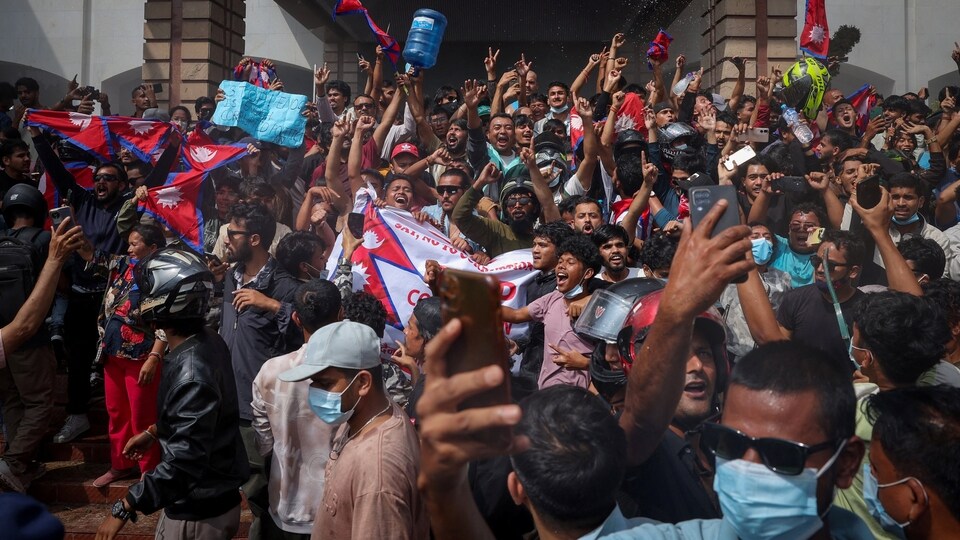
Barry Glassner, in his iconic The Culture of Fear, illustrated one form of fear, while Bangladeshi-American political scientist Ali Riaz wrote a book with the same title in Bengali, showing how authoritarian regimes create it. While studying Gen Z’s social habits and behavioural patterns, this writer found them very difficult to grasp. But the Gen Z dismantled all the fear of authoritarian regimes and made an example for the question of accountability. The GenZ now have further created an example of fear for the corrupted regimes!
The July Revolution in 2024 that toppled PM Sheikh Hasina in Bangladesh, and the uprising in Colombo in 2022 both undoubtedly impacted the minds of youths in Kathmandu. Yet, the Gen Z protest in Kathmandu was very different in nature from the one in Bangladesh. Unlike Bangladesh, the protests in Nepal were concentrated in Kathmandu, the capital. Social media played a decisive role, with Nepal ranking among the highest in South Asia in terms of usage. Beyond mainstream platforms, Nepalese citizens actively use several Chinese apps, including WeChat and TikTok. The Himalayan state has about 14.3 million social media users—roughly 48.1% of its population where as India’s social media penetration of about 33.7% (till early 2025).
Unlike the other popular apps, TikTok was accessible during the ban as the Chinese-owned app completed the mandatory registration on time. The blanket social media ban covered 26 popular sites and messaging apps after they refused to comply with the Oli government’s directives. Businesses such as garments and tourism, which are heavily dependent on digital platforms, were among the worst affected. The blackout severely disrupted operations, with Nepal’s tourism industry in particular suffering major losses during the shutdown.
Nepal remains a highly centralised State, with Kathmandu serving as its economic and administrative hub - an urban primacy comparable to Dhaka, despite several vibrant tier-2 cities exist.
Tourism is central to this system. In 2024, it contributed an estimated 6–6.7% of GDP, generating about $471 million in revenue. The country’s economic structure is fragile. About 77.4% of Nepal’s population still lives in villages, and the earthquake-prone Himalayan state derives nearly one-third of its GDP from remittances sent home by Nepalese working abroad.
Marketing homestays, trekking routes, and cultural experiences everything depend on social media. This digital ecosystem is oxygen for the Gen Z, whose entrepreneurial skills and online presence have expanded geographic reach and diversified income streams.
The median age in Nepal, a nation of about 30 million, is 25. This rebel generation has never seen or lived under the monarchy. Albeit Gen Z revolution was steered by Sudan Gurung - who is a millennial and had lived through the monarchy. Gurung, the founder of Hami Nepal, was already a mass leader in one of Asia’s poorest nations.
The Oli regime stopped social media, the lifeline of Gen Z. That was the sparking point of the revolution. In Bangladesh, Sheikh Hasina’s total shutdown of internet and mobile services sparked the student uprising but Nepal’s case is different. Unlike the so-called revolutions, where outside powers were accused of involvement, Nepal’s uprising appears to be generic. As it matured very quickly. The nation has a history of upheaval, having endured a civil war and the toppling of the monarchy. Oli’s fall has undoubtedly caused some loss for China. Every protest has a tendency to turn violent when authorities attempt to clamp down: From Dhaka to Colombo. Gen Z’s rebellion and martyrdom of 20 Nepalese will be remembered as a turning point in history and as a serious threat to leaders mired in corruption and nepotism.
This article is authored by Ayanangsha Maitra, programme coordinator, COGGS, UAE.


