For years, governments were offered a poor choice in digital infrastructure: depend on a handful of global platforms or build national systems that could not speak to one another. India demonstrated a third path. Aadhaar, UPI, DigiLocker and the Ayushman Bharat Digital Mission show that a country can retain sovereign control of its digital rails while using open standards to make them interoperable.
Payments provide the clearest proof. UPI processed 24.51 billion transactions in August 2026. Its international footprint now extends to 11 countries, while the UPI-PayNow linkage with Singapore enables direct cross-border transfers. These arrangements do not require one nation to absorb another’s system. Each side keeps its institutions, laws and infrastructure; common protocols allow a useful transaction to cross the border.
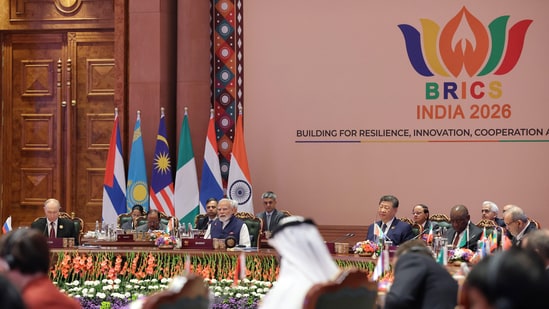
As India continues its 2026 BRICS presidency after the New Delhi summit, it should apply this principle to health. The expanded grouping represents nearly half of humanity and carries a major share of the world’s tuberculosis, diabetes and maternal-health burden. Its citizens already move across borders as workers, students and medical travellers, but their medical histories usually do not. A patient treated in Chennai may return to Addis Ababa with a paper file. A person with tuberculosis who migrates during treatment may fall out of care, increasing the risk of drug resistance.
The answer is not a central BRICS health database. Such a repository would create unacceptable security, legal and political risks. The practical answer is a federated trust framework. Health information should remain with the institution or national network that created it and move only for a defined purpose, through secure channels, with patient authorisation and an auditable record of access.
{{/usCountry}}The answer is not a central BRICS health database. Such a repository would create unacceptable security, legal and political risks. The practical answer is a federated trust framework. Health information should remain with the institution or national network that created it and move only for a defined purpose, through secure channels, with patient authorisation and an auditable record of access.
{{/usCountry}}BRICS can begin with a minimum set of shared rules. Members could adopt the India stack and co-create for exchange and agree on an International Patient Summary containing allergies, diagnoses, medicines, immunisations and essential test results. Common clinical terminologies would ensure that a prescription or diagnosis retains its meaning after translation. A system of trusted digital signatures could allow member countries to verify discharge summaries, e-prescriptions and vaccination records without copying entire databases.
Every exchange would remain subject to national law, including India’s Digital Personal Data Protection Act, Brazil’s LGPD and South Africa’s POPIA. Countries would recognise the authenticity of one another’s approved issuers, not hand over unrestricted access to their citizens’ records. Open-source reference software could help members with less mature digital systems participate without buying a proprietary stack or creating a new technological dependency.
During 2016-2018, when I served as the advisor to the Union health minister, I had mooted the idea of leveraging the patient data of our large public hospitals like AIIMS, PGI, KGMU, JIPMER and create our own AI tool that is based on Indian data sets, time to expand this to BRICS member States and build the BRICS AI Model. India should propose a BRICS Health Information Exchange Compact with a small technical secretariat and equal national representation. Its mandate should be limited: Define the common patient summary, certify trusted issuers, test cross-border exchange and publish conformance requirements. Governance must be transparent, with patients represented alongside governments and clinicians.
The first pilots should be narrow enough to earn trust. Portable vaccination records would test document verification. A continuity-of-care pathway for tuberculosis patients would deliver a clear public-health benefit. A patient-summary service for medical travellers would solve an existing commercial and clinical problem. Each pilot should publish security tests, consent logs, clinical outcomes and grievance data before it expands.
The pandemic showed why this matters. Countries had to improvise ways of checking foreign vaccination certificates while patients and clinicians struggled with incompatible formats. India’s CoWIN experience proved that digital credentials can be issued at vast scale. The Ayushman Bharat Digital Mission, which had created 96.43 crore health accounts and linked more than 110 crore records by mid-August 2026, shows that federated health infrastructure can also operate across a population of 1.4 billion.
India’s experience with digital public infrastructure gives BRICS a practical path: Agree on common protocols, preserve national control, and pilot consent-based health record exchange for patients crossing borders. Connecting sovereign systems can extend access, lower costs, and improve quality of care across BRICS, while respecting each member’s laws and priorities.
(The views expressed are personal)
This article is authored by Dr Rajendra Pratap Gupta, co-chair, Global Policy Network on Artificial Intelligence, United Nations Internet Governance Forum.