
 E-Paper



India’s rise in the declining American century
This article is authored by Gunwant Singh, scholar, international relations and security studies, Jawaharlal Nehru University, New Delhi.

 Prefer HTon Google


The escalation of hostilities between Israel, the US and Iran represents more than a regional flare-up; it is a systemic crisis that signals the definitive sunset of the unipolar moment and the painful birth of a fragmented, multipolar world order. To understand the gravity of the current situation, one must apply an academic lens to the structural realism that governs these State actors. The triple entente of friction, the ideological messianism of the Iranian regime, the existential security imperatives of the Israeli State, and the declining but still formidable hegemonic maintenance of the US has created a Thucydides trap within a sub-regional context. For decades, the US has acted as the offshore balancer in West Asia, a role designed to ensure the free flow of energy and the security of its primary democratic ally, Israel. However, the 2026 conflict demonstrates that this balancing act has reached its structural limit. The US finds itself caught in a commitment trap, where its credibility is tied to an increasingly aggressive Israeli defence posture, even as its domestic political will and strategic focus attempt a pivot to Asia.
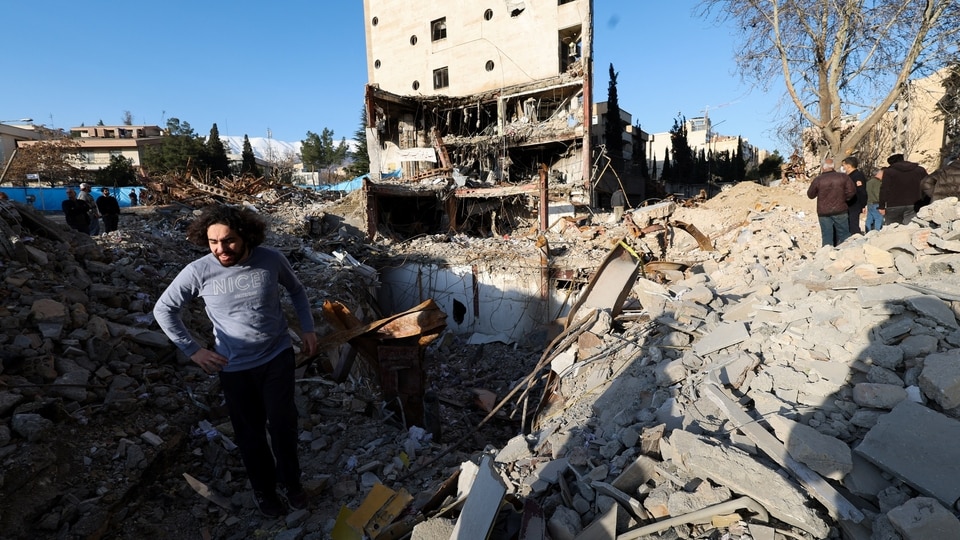
The anatomy of the ongoing conflict is rooted in a fundamental mismatch of security perceptions. For Israel, Iran’s ring of fire strategy utilising proxies like Hezbollah, the Houthis, and various militias in Iraq and Syria constitutes an intolerable encirclement. The recent developments in 2026, involving the suspected breakout of Iranian nuclear enrichment to weapons-grade levels, have moved Israel from a doctrine of mowing the grass (periodic tactical strikes) to strategic decapitation. This shift was manifested in the recent high-intensity kinetic exchanges that targeted not just proxy infrastructure, but sovereign Iranian military installations. Iran, conversely, views its missile program and regional influence as its only viable deterrent against a technologically superior adversary. This security dilemma, where one State’s quest for security is perceived as an existential threat by another, has now bypassed the stage of diplomatic remediation. The US role has shifted from a mediator of the status quo to an active participant in escalation, thereby eroding its claim to being a neutral arbiter of international law.
The impact on US hegemony is profound and perhaps irreversible. Hegemony, in the Gramscian sense, relies not just on coercion (military might) but on consent (the perceived legitimacy of the leader’s rules). By failing to prevent the regional war and subsequently being drawn into it, the US has signaled that its liberal international order is unable to provide the most basic global public good: peace. The economic fallout of the conflict, particularly the disruption of the Strait of Hormuz, a maritime artery through which roughly 20% of the world’s petroleum liquids pass, has weaponised the global economy. As energy prices spike and supply chains fracture, the Global South increasingly views US foreign policy as a source of global instability rather than a guarantor of it. This provides a fertile vacuum for the New World Order spearheaded by the BRICS+ nations and the Shanghai Cooperation Organisation (SCO), which emphasises sovereign equality and non-interference over the western focus on values-based interventions.
Central to this transition is the blatant obsolescence of the United Nations. The current conflict has served as the final indictment of a system designed in 1945. The UN Security Council (UNSC) is currently paralyzed by the very design that was supposed to keep the peace: the veto power. When the US, Russia, or China is directly or indirectly involved in a conflict, the UNSC becomes a theater of rhetorical performance rather than an instrument of action. The inability of the UN to enforce even its own resolutions regarding humanitarian corridors or ceasefires in the Israel-Iran-Lebanon theater highlights a capabilities-expectations gap that is now fatal. Academically, we are witnessing the League of Nations moment for the UN. There is a burgeoning global consensus on the need for a UN 2.0, a restructured body that eliminates or severely restricts the veto, expands permanent membership to include neglected giants like India, Brazil, and an African representative, and shifts its focus from great power management to global commons management. Without such a radical transformation, the world risks returning to a Hobbesian state of nature where might makes right.
In this shifting kaleidoscope of power, India emerges as a pole in its own right. New Delhi’s position in the new world order is defined by multi-alignment, a sophisticated evolution of non-alignment that seeks to maximise national interest by engaging with all sides while being tethered to none. India is perhaps the only major power that maintains a Special and Privileged Strategic Partnership with Russia, a Comprehensive Strategic Partnership with the US, and deep, functional security ties with Israel, all while being a major investor in Iranian infrastructure like the Chabahar Port. As the US and Iran clash, India’s role as a vishwa mitra (friend of the world) becomes vital. India is not merely a swing State; it is a civilisational State that offers an alternative to the binary of western liberalism and eastern authoritarianism. By 2026, India’s economic weight will make it an indispensable partner for any regional security architecture. India’s stake in west Asia is visceral, millions of its citizens live there, and its energy security is tied to the Persian Gulf. Therefore, India will likely lead the charge for a middle way, utilising platforms like the I2U2 (India, Israel, USA, UAE) and the IMEC (India-Middle East-Europe Economic Corridor) to create economic interdependencies that make war too expensive to sustain.
The academic conclusion of this conflict is that we are witnessing the end of globalism and the rise of regionalism. The New World Order will not be a singular hierarchy but a multiplex world, much like a cinema with many screens playing different movies simultaneously. In one theatre, the US and China will continue their high-tech Cold War; in another, India and the Global South will drive the transition to a green economy; and in a third, West Asia will struggle to move past its 20th-century grievances. The Israel-US-Iran conflict is the friction point where these theaters collide. The erosion of US hegemony does not mean the US disappears; it means it becomes one of many powerful actors who must learn to negotiate rather than dictate. The rules-based order is being rewritten, not by a single pen in Washington, but by a committee of nations in New Delhi, Tehran, Beijing, and Brasilia. The tragedy of the current war is that it may be the necessary catalyst for the world to realise that the institutions of the past are no longer fit for the complexities of the future. The need for a new UN is no longer a theoretical debate for academics; it is a prerequisite for human survival in an age of nuclear-armed regional powers and globalised volatility.
This article is authored by Gunwant Singh, scholar, international relations and security studies, Jawaharlal Nehru University, New Delhi.


