
 E-Paper



Pakistan under complete army control does not bode well for relations with India
This article is authored by Prabhu Dayal, former ambassador, New Delhi.

 Prefer HTon Google


The 27th Amendment to the Constitution of Pakistan, passed on November 13, 2025, is highly significant and controversial because it fundamentally alters the balance of power between the civilian government, the military, and the judiciary. It formalises military supremacy and undermines democratic institutions. The amendment solidifies the army chief's position by creating the new, permanent, and constitutionally recognised post of Chief of Defence Forces (CDF), which is concurrently held by the Chief of Army Staff. This centralises command over all armed forces (army, navy, and air force) under one person, enhancing military coordination but raising concerns about civilian oversight.
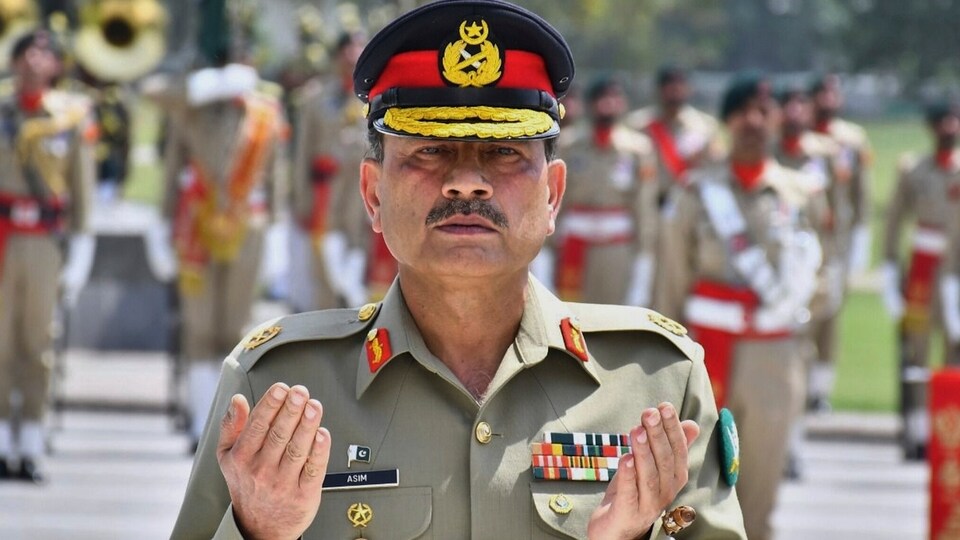
One of the most contentious provisions is the grant of lifelong immunity from criminal prosecution and civil proceedings to five-star rank officers, including the current Field Marshal Asim Munir. This moves top military officers beyond legal scrutiny in a way that even the president and prime minister (PM) do not enjoy once out of office, leading to criticism that it places non-elected officials above the law.
The amendment establishes a new Federal Constitutional Court (FCC), which assumes the Supreme Court's former jurisdiction over constitutional interpretation, fundamental rights cases, and inter-governmental disputes. This change significantly curtails the power and independence of the Supreme Court, which is now primarily limited to civil and criminal appeals. The process for appointing and transferring judges is also affected, with concerns that the changes tighten executive control over the superior judiciary, as the government plays a key role in appointing the initial judges of the new FCC.
The amendment also includes provisions for reviewing fiscal and administrative autonomy of provinces, which critics worry could weaken provincial autonomy and allow the federal government more control over resources.
The overall significance of the 27th Amendment lies in this major shift of institutional power, leading to widespread debate and opposition from many of Pakistan's legal experts and political leaders who view it as a constitutional coup and an assault on the rule of law and democratic balance in Pakistan.
With Munir reportedly consolidating power as a de facto dictator, what does this mean for Pakistan’s internal political stability? The consolidation of power by Munir could lead to more internal political instability in Pakistan. The 27th Constitutional Amendment reduces parliament and the judiciary to ceremonial or subordinate roles. This move effectively legalises military supremacy, marginalising civilian governance and deepening the existing political crisis. The collapse of civilian supremacy fundamentally undermines the foundations of democracy in Pakistan and it will increase political polarisation. The ongoing feud between Munir and former PM Imran Khan's party, the Pakistan Tehreek-e-Insaaf could also intensify.
The new legal structure grants the Field Marshal and other five-star generals lifelong immunity from legal proceedings, effectively insulating them from the rule of law. This lack of accountability for military actions or governance failures removes a critical check on power and transforms Pakistan into a legalised authoritarian state, where stability may be enforced through control rather than democratic consensus. This is likely to lead to continued underlying instability and the risk of future civil unrest.
Asim Munir's consolidation of power effectively as Pakistan's dictator is expected to heighten India's security concerns and complicate diplomatic efforts. This shift has institutionalised military dominance, leading to a more aggressive and less predictable Pakistani stance towards India. Asim Munir has described the "struggle" in Kashmir as "legitimate" and not terrorism, so his dictatorial position will give him freedom to carry out covert operations against India. The centralisation of military decision-making in one ideologically driven individual, with few checks and balances, increases the risk of miscalculation that could lead to a conventional conflict. It is bound to have a negative impact on India-Pakistan relations, primarily by increasing the risk of military adventurism and diminishing civilian oversight of critical strategic and nuclear decisions.
Munir has issued explicit nuclear threats and warned of a "decisive, beyond proportions" response to any "minor provocation", which is nothing short of "nuclear sabre-rattling". There could also be a potential multi-front strategy, using vulnerabilities in India's east (e.g., via a newly destabilised Bangladesh) to stretch Indian military resources. Munir's worldview, which is influenced by a deep-seated religious ideology suggests that animosity towards India is existential, making a pragmatic approach to peace less likely. In short, India faces a more entrenched and militarised adversary, requiring a comprehensive recalibration of its security and diplomatic strategy towards a long period of heightened vigilance and managed hostility.
This article is authored by Prabhu Dayal, former ambassador, New Delhi.


