India and Vietnam are among Asia’s fastest-growing economies. Supported by favourable global conditions, both countries have undergone remarkable economic transformation over the past quarter century. However, they now face a more uncertain global environment marked by rising protectionism and intensifying geo-economic contestation. At a time when supply chains are being reconfigured and growth prospects are becoming increasingly uneven, strengthening trusted economic partnerships has become a strategic imperative for both nations. It is in this context that the visit of President To Lam to India assumes particular significance.
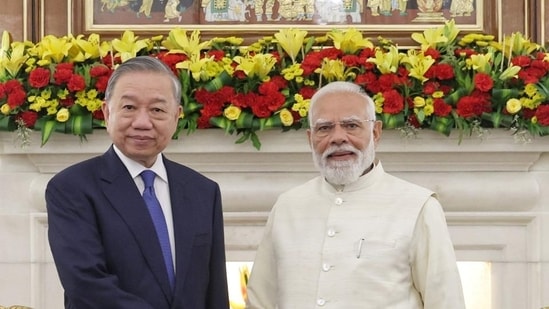
While the outcome of this high-level visit will unfold in the coming days, three issues merit closer attention; where India and Vietnam stand in their economic engagement, what constrains its full potential, and how the partnership can be deepened in a changing global landscape.
There is little doubt that economic engagement between India and Vietnam has witnessed remarkable progress, particularly after the implementation of the ASEAN-India Trade in Goods Agreement. Bilateral trade has expanded sharply, from about $ 2 billion in 2009 to over $ 16 billion in 2024. This growth has been accompanied by greater diversification, with a broader range of products now being exchanged and a steady expansion in the number of traded tariff lines.
At the same time, early signs of value chain integration are emerging. In electronics, trade now increasingly includes components and intermediate goods alongside finished products. In textiles, India is supplying fibres and yarn while Vietnam is undertaking processing and exports, reflecting a clear division of production roles. Similar patterns are visible in agro-based products, indicating a gradual deepening of production linkages.
Services trade and investment linkages too have expanded, albeit from a low base. India’s services exports to Vietnam have risen from about $ 0.5 billion in 2011 to nearly $ 1.7 billion in 2024, while Vietnam’s exports to India have also increased steadily. Investment flows are gradually picking up, with India having over 400 projects in Vietnam and Vietnamese firms, such as VinFast, beginning to establish a presence in India. Together, these trends point to a broadening of economic engagement beyond merchandise trade.
{{/usCountry}}Services trade and investment linkages too have expanded, albeit from a low base. India’s services exports to Vietnam have risen from about $ 0.5 billion in 2011 to nearly $ 1.7 billion in 2024, while Vietnam’s exports to India have also increased steadily. Investment flows are gradually picking up, with India having over 400 projects in Vietnam and Vietnamese firms, such as VinFast, beginning to establish a presence in India. Together, these trends point to a broadening of economic engagement beyond merchandise trade.
{{/usCountry}}Despite this progress, the full economic potential of the India-Vietnam partnership, however, has remained largely unrealised. Bilateral trade is estimated to be operating at roughly half of its potential, with gravity-based estimates suggesting it could reach around $ 34 billion. This gap reflects a combination of tariff and non-tariff constraints.
While the ASEAN-India Trade in Goods Agreement has led to significant tariff liberalisation, its coverage has remained uneven, with a sizeable share of products still placed under sensitive and exclusion categories, particularly on Vietnam’s side. In addition, regulatory barriers, standards, and certification requirements continue to raise transaction costs. Weak maritime connectivity and limited direct shipping links further add to logistics inefficiencies, reducing the competitiveness of bilateral trade.
Similar constraints persist in services and investment, where engagement remains concentrated in a few sectors. Regulatory frictions, limited mutual recognition arrangements, and information gaps continue to restrict expansion, especially as both economies move towards more technology-driven and value-added activities.
Against this backdrop, the current visit of President Lam should be seen as an opportunity to recalibrate the economic partnership. What is required is a shift from incremental expansion to a more comprehensive and forward-looking framework of cooperation.
Moving towards a Comprehensive Economic Partnership Agreement (CEPA) would be a logical next step. Such an arrangement should go beyond tariff liberalisation to address non-tariff barriers through deeper regulatory cooperation, harmonisation of standards, and streamlined customs procedures.
At the same time, the partnership must expand into emerging areas that will define future growth. These include digital trade, services integration, resilient supply chains, green technologies, critical minerals, and labour mobility. Strengthening maritime connectivity and logistics infrastructure should also be a priority, given their central role in shaping trade competitiveness.
Equally important is the need to promote greater investment linkages and industrial collaboration. Encouraging joint ventures, facilitating business-to-business partnerships, and improving the investment climate will be critical for integrating the two economies more deeply into regional value chains.
A well-designed and forward-looking framework can help unlock unrealised trade potential, deepen value chain integration, and provide a more predictable environment for businesses. In doing so, it will support both India and Vietnam in advancing towards their goal of becoming developed economies over the next two decades. More importantly, it can serve as a strategic anchor for scaling up the bilateral relationship in an increasingly fragmented global economy.
The present visit, therefore, should not be seen as an endpoint, but as a stepping stone, one that paves the way for a more ambitious, comprehensive, and future-oriented economic partnership between India and Vietnam.
(The views expressed are personal)
This article is authored by Pankaj Vashisht, associate professor and Prabir De, professor, RIS.