The usually high international interest in the Tianjin SCO summit was the result of geopolitical uncertainties deepened further by President Trump’s unusual diplomatic style. However, this summit’s messaging needs to be analysed for indications of emerging trends in global power equations without being carried away by its optics.
At one level, the coming together of a large number of national leaders for the summit parallels European leaders’ coalescing for balancing the US President’s mixed messaging on Ukraine subsequent to the
The usually high international interest in the Tianjin SCO summit was the result of geopolitical uncertainties deepened further by President Trump’s unusual diplomatic style. However, this summit’s messaging needs to be analysed for indications of emerging trends in global power equations without being carried away by its optics.
At one level, the coming together of a large number of national leaders for the summit parallels European leaders’ coalescing for balancing the US President’s mixed messaging on Ukraine subsequent to the disastrous February meeting at the White House with Zelenskyy; the European leaders’ coordinated stance also spotlighted his limitations in pursuit of his top foreign policy agenda. His coercive leveraging of tariffs as well as supply chain issues to reset US’s bilateral relationships - not just trade-related – with nearly all countries in the world have only produced greater global economic uncertainty to which the US economy is not immune; that this approach is being deployed to resolve the Ukraine conflict, with which a large number of countries had nothing to do, only adds to this uncertainty. Even on tariff diplomacy vis-à-vis India, China, Russia and others, the limitations are becoming evident due to mutual bilateral stakes. This uncertainty is the latest phase in the evolution of the western approach, preceding Trump, in weaponising international trade, financial and banking mechanisms in pursuit of their geopolitical objectives, as witnessed in the suspension of countries like Russia from the SWIFT system and seizure of its financial assets; such trend can apply to any country with a change in circumstances. Trump’s aggressive tariff diplomacy for diverse geopolitical objectives has created rifts with Europe and among the Europeans themselves.
As this uncertainty has grown in recent times in conjunction with the increasing dysfunctionality of global institutions underpinning the global political and economic order, search for alternatives has also grown apace. The SCO along with other non-West – not anti-West – multilateral organisations such as BRICS have expanded in membership, dialogue partnerships with an increasing number of observer countries as well as institutional associations with various UN and non-UN organisations. Originating as Shanghai Five comprising Russia, China and the three bordering Central Asian countries and set up in 1995 in the wake of the Taiwan Straits crisis, it evolved into SCO in 2002 following US intervention in Afghanistan to counterpose the US-led unipolar world order by emphasising multipolarity; focused on Central Asia, it started accepting observer countries, including India, since 2004 onwards (and rejecting US application) and dialogue partnerships since 2010 onwards. Its 10 members are Russia, China, four Central Asian states (except Turkmenistan), India, Pakistan, Iran, and Belarus, with 17 dialogue partner countries from across Asia. Apart from its Secretariat in Beijing, it also has in Tashkent the Regional Anti-Terrorist Structure (RATS) set up in 2004 in response to the resurgence of the Taliban against the US and other partner forces in Afghanistan.
Although it encompasses activities ranging from security to economic and cultural development through an array of ministerial/senior executive bodies, it is not a military alliance. Its Secretariat has been deliberately kept under-resourced to enable the Chinese government to deploy its economic and political heft in its bilateral relationships with the member countries to pursue the organisation’s charter objectives. It remains a useful platform to develop roadmaps for the envisaged activities and for exchange of experiences among the member states. Its various policy documents and declarations also help in coordinating positions at other multilateral forums whenever possible to pursue the organisation’s broader global perspectives: the focus of various development, trade facilitation and infrastructure schemes remains Central Asia, however. More importantly, its calendar of events, especially at the summit level, provide useful opportunity for national leaders of member and dialogue partner countries to exchange perspectives on regional and global affairs as well as for understandings in the conduct of their bilateral relationships.
Tianjin summit served this purpose in ample measure. A congregation of mostly non-West countries, the event in itself counterposed the western, especially US, worldview as currently held. The declaration made that strikingly clear by seeking reform of the global institutions for stronger role for the countries of the global South concerning, especially, global financial architecture, global economic governance, WTO and WHO; it underlined cooperation in trade and economic development, including e-trade, sustainable energy cooperation, transport corridors, greater role of national currencies in international trade and posited the establishment of an SCO Development Bank. On the international issues, it condemned the happenings in Gaza as well as the airstrikes – naming Israel and US in collective messaging – on Iran’s nuclear energy infrastructure. It condemned double standards over human rights besides opposing terrorism including “cross-border movement of terrorists”; it adopted a somewhat favourable formulation for India by condemning Pahalgam terrorist massacre besides terrorist incidents in Pakistan concerning the Jaffar Express train and in Khuzdar. As has been the past practice, there was no reference to the Ukraine conflict. Prime Minister Modi’s statement highlighted double standards on terrorism as evident over the Pahalgam atrocity and underlined the principle of national sovereignty in transport connectivity issues.
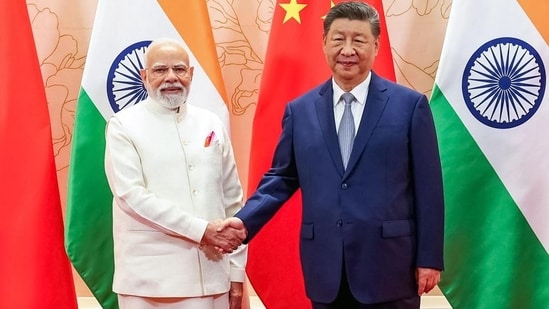
Two key meetings were with the Chinese and the Russian Presidents. An informal convivial Modi-Putin-Xi conversation and a long private conversation between Prime Minister and Russian President in the latter’s personal limousine captured global attention as suggestive of Indian recalibration of its foreign policy which is not far off the mark but must not be over-interpreted as an extreme swing of the pendulum; these images were, however, promptly followed by a tweet by US secretary of state invoking enduring people-to-people friendship and economic potential reflecting US’s own domestic imperatives. The light-hearted conversation between the members of the troika, as portrayed in the Indian media, does have pale shades of the Russia-India-China forum which the Russian leadership is seeking to resurrect at the summit level; post-Galwan clash, there was a telephone conversation between the foreign ministers of this forum and, later, their in-person meeting. The separate readouts following the meeting of Modi and Xi - possibly shared in advance between the two sides - do have a forward-looking tenor with both leaders mentioning their pursuit of “strategic autonomy” and personal ownership in shaping the future expansion of bilateral relations, including economic, with the Indian readout emphasising the latter’s importance for stabilisation of “world trade”; whilst both readouts underline thaw on the border since their last meeting (October 2024), their manifestly divergent approaches concerning the border suggest that a sustained growth in bilateral relations depends on several imponderables, including the larger geopolitical dynamics. Meeting between PM Modi and the Russian President was described by the Indian foreign ministry sources as frank over subjects like Ukraine and economic cooperation as the former tweeted it as being “excellent”; the bonhomie between the two leaders was personal but also demonstrative for the international observers. The Indian readout on the meeting indicated a very expansive outlook in all-around growth in bilateral relationship, including economic even as trade deficit, payment issues and the brooding prospect of western direct or indirect sanctions on trading entities cast a long shadow. The frequent, private conversations between the two leaders are critical for Indian assessment of the possible scenarios for European security architecture; the Prime Minister has kept channels open with both Putin and Zelenskyy in a fluid situation.
Whilst the Tianjin summit did suggest a sharp turn in Indian foreign policy due to the Trump factor, its recalibration, as indeed on the part of other countries, has been underway for quite a while. Apart from their domestic compulsions and worsening big power distrust, China and Russia showcased their relationships with a large number of countries who are also exploring alternatives for political and economic cooperation in various multilateral organisations and mobilisation for the reform of UN and other related systems. The intensifying unpredictability impels countries to nurse equities in all their bilateral relationships in this recalibration process, India being no exception.
This article is authored by Yogendra Kumar, former ambassador to Tajikistan.
One Subscription.
Get 360° coverage—from daily headlines
to 100 year archives.
Archives
HT App & Website