Among various plurilateral groupings of which India is a member, the Shanghai Cooperation Organisation (SCO) is a unique case. It is an intergovernmental organisation with Russian and Chinese as the official languages. India is an active member, but it is perceived as an outlier. It entered the SCO as an observer in 2005 and became a full member in 2017, with the active support of Russia, which, in a deal with China, also agreed to Pakistan's entry.
SCO now has
Among various plurilateral groupings of which India is a member, the Shanghai Cooperation Organisation (SCO) is a unique case. It is an intergovernmental organisation with Russian and Chinese as the official languages. India is an active member, but it is perceived as an outlier. It entered the SCO as an observer in 2005 and became a full member in 2017, with the active support of Russia, which, in a deal with China, also agreed to Pakistan's entry.
SCO now has 10 members: China, Russia, four Central Asian Republics – Kyrgyzstan, Kazakhstan, Tajikistan, and Uzbekistan – as well as Belarus and Iran, in addition to India and Pakistan. Launched in June 2001 in Shanghai, the institution has now hosted 25 summits, the latest of which took place in Tianjin.
For the past nearly 25 years of its operations, SCO has expanded its footprint well beyond the region near Russia and China. Besides its 10 full members, it has two observers: Afghanistan and Mongolia, as well as 14 dialogue partners, which include a diverse mix of nations such as Azerbaijan, Armenia, and Türkiye, as well as those from West Asia, including Egypt, Kuwait, Qatar, Bahrain, the UAE, and Saudi Arabia. South Asia is represented by Maldives, Nepal, and Sri Lanka, and Southeast Asia by Myanmar and Cambodia. It also maintains an extensive network of cooperation arrangements with numerous regional organizations, including the Commonwealth of Independent States (CIS), the Collective Security Treaty Organization (CSTO), and the Association of Southeast Asian Nations (ASEAN), among others. No wonder India has accorded the SCO more importance in the last few years than in earlier periods. Prime Minister (PM) Narendra Modi’s participation in the latest summit reflected this trend.
SCO’s goals are broadly in conformity with India’s foreign policy priorities. These include strengthening mutual trust, friendship, and good neighbourly relations among member States; encouraging effective cooperation in diverse domains like politics, trade, economy, education, energy, and environment; and jointly ensuring peace, security, and stability in the region. The grouping is dedicated to the eradication of three ‘evils’, namely, separatism, extremism, and terrorism, resulting from radicalisation.
New Delhi has been justifiably suspicious of the China-Pakistan collaboration, which often ends up exonerating the latter of its direct responsibility for practising cross-border terrorism against India as a state policy. This indicates why, explaining India’s likely approach at the Tianjin summit, a senior Indian official recalled on August 26 that SCO had adopted a joint statement on counterterrorism during India’s presidency in 2023, and expressed the hope that the forthcoming summit would come up with a strong condemnation of terrorism.
In this light, the key points made by PM Narendra Modi in his significant statement at the summit are worth noting. After reminding the participants that as an active member, India has always contributed to SCO constructively and positively, he underlined that the acronym represented three key pillars for India: “S--Security. C--Connectivity. O--Opportunity.” He highlighted that terrorism was “a shared challenge to all of humanity” and, referring to the Pahalgam terrorist attack, he called on the SCO to “state clearly in one voice: Double standards on terrorism are unacceptable.” He also shared his thoughts on the other two pillars, emphasising the importance of fostering connectivity within the region and capitalising on opportunities for cooperation and reform.
As regards the principal outcomes of the summit, this author considers the following as imbued with considerable significance.
One, in a notable departure from the past is that the summit declaration included a strong and clear condemnation of terrorism in all its forms, as well as the unacceptable “double standards” in combating it. This has been seen as a major diplomatic win for India, resulting from the progress achieved in expanding India-China understanding on a slew of issues.
Two, SCO has called for a more representative, democratic, just, and multipolar world order, based on principles of international law and the central coordinating role of the UN. The need for the UN to adapt and reform in accordance with the modern realities has been stressed.
Three, on economic cooperation, the grouping expressed its opposition to unilateral coercive economic measures that contradict the UN Charter and WTO rules. Thus, a large group of Eurasian nations stands opposed to President Trump’s approach to tariffs. The grouping also supported an increased use of national currencies in mutual financial settlement, thus posing a danger to the international position of the US dollar. Another major decision relates to the establishment of the SCO Development Bank.
Four, the grouping called for deepening cooperation in education, science, and technology, and simultaneously advocated launching a global dialogue among civilisations.
Five, on its institutional development, it decided to merge its two categories – observer and dialogue partner into a single category. ‘SCO partner’. The Lao People’s Democratic Republic was admitted as a SCO partner. As the summit concluded, the Presidency was to be transferred from China to the Kyrgyz Republic, which announced that it plans to anchor its activities around a new theme: “25 years of SCO: Together Towards Sustainable Peace, Development and Prosperity.”
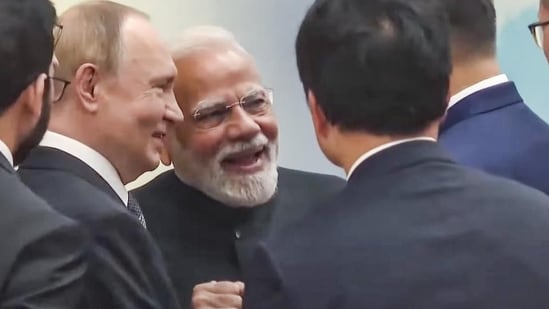
What happened outside the SCO conference room needs to be factored in to assess the real significance of the summit. On the sidelines, at least three important meetings took place: Between President Xi Jinping and PM Modi; between Modi and President Putin; and between the Chinese President and Putin. Their discussions, along with a stream of photographs showing the three top leaders in cordial discussions with each other, led many observers to declare that ‘a new Troika Axis’ against the West has been formed at Tianjin.
The Xi Jinping-Modi meeting confirmed that the process of normalisation in India-China relations, begun at Kazan last October, has gained some momentum. In a candid briefing, foreign secretary Vikram Misri referred to four major points agreed by both leaders, despite their differences. Among the agreed points, the leaders concluded that, as their countries were focused on domestic development goals, they were “partners rather than rivals.” They also understood that it was critical for the growth of India-China cooperation that the world must become “a functioning multipolar world with multipolar Asia at its heart.”
The meeting between Modi and Putin highlighted the growing warmth and policy alignment between India and Russia, with the Ukraine conflict and the need to bring it to an early end also being discussed. The Putin-Xi meeting confirmed the close partnership between the two countries and their critical joint role in the operations and further development of the SCO.
The message from Tianjin was that great power relations are in a flux; that the US approach towards other nations has set off a train of changes that brings the Eurasian powers closer together; and that the ongoing reset of India-China relations may have a significant role to play in this process Yet, as former foreign secretary Vijay Gokhale put it, New Delhi “sees these as early days in the crafting of a new framework for India-China relationship.” It is also noteworthy that, according to former deputy national security advisor Pankaj Saran, India ensured “PM Modi’s road to Tianjin went via Tokyo.”
Finally, the SCO summit assumed exceptional significance due to the changing pattern of ties among the key members of this grouping and the way they now view the evolving US position on world affairs.
This article is authored by Rajiv Bhatia, distinguished fellow, Gateway House, former Indian ambassador and author of three books on Indian foreign policy.
One Subscription.
Get 360° coverage—from daily headlines
to 100 year archives.
Archives
HT App & Website