
 E-Paper



Shalom Namaste: A renewed bond of friendship
This article is authored by Prabhu Dayal, former ambassador, New Delhi.

 Prefer HTon Google


Prime Minister Narendra (PM) Modi is scheduled to visit Israel for a high-profile two-day visit from February 25 to 26, 2026. This marks his second visit to the country, following his historic 2017 trip which was the first by an Indian PM to the Jewish State. The visit is viewed by both nations as a milestone in the India-Israel Strategic Partnership, emphasising mutual trust and innovation. As a major Global South leader visiting during an active conflict, PM Modi’s presence carries significant diplomatic weight for Israel.
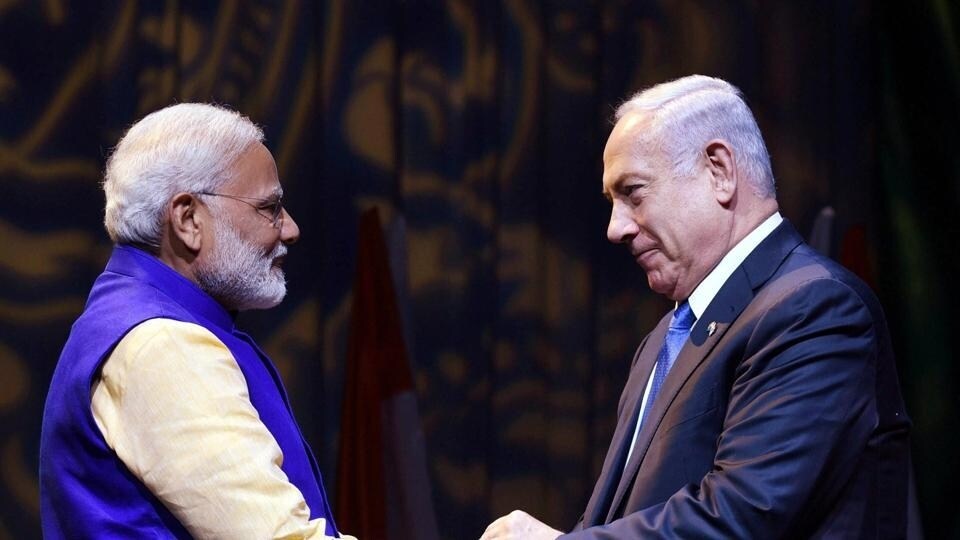
Strategic bilateral talks will be the main focus of the visit. Discussions will focus on deepening the "tremendous alliance" in sectors including defence, Artificial Intelligence (AI), quantum computing, technology, and trade. Both nations are expected to sign a new Memorandum of Understanding (MoU) on security cooperation.
Beyond strategic ties, defence remains a major economic driver, with Israel becoming India’s second-largest weapons supplier in 2026 through deals worth $8.6 billion. A major focus will be on joint development of advanced military systems, including anti-ballistic missile shields (Mission Sudarshan), laser-based defence systems, and drones. Discussions are expected to focus on co-developing long-range stand-off missiles and incorporating Iron Dome style technologies into India's indigenous Sudarshan Chakra air defence programme. Israel has reportedly agreed to share high-end technologies previously unavailable to India, including hi-tech laser defence systems and anti-ballistic missile technologies.
Economic ties will also be an important focus of the visit. Both nations aim to expand bilateral trade, which stood at approximately $3.71 billion in FY25. Following the signing of a Bilateral Investment Treaty (BIT) in 2025, this visit may pave the way for a full-fledged FTA to further integrate their economies. The visit will likely reinforce long-standing partnerships in water management and the existing network of 43 Agricultural Centres of Excellence.
The itinerary includes a Joint Innovation Event in Jerusalem focused on high-tech collaboration. This follows recent agreements such as the January 2026 Joint Ministerial Declaration of Intent aimed at strengthening the Blue Economy, specifically in fisheries and aquaculture technology. Netanyahu said that they will focus on emerging technologies that are active "present" realities, specifically naming AI and quantum computing.
The visit occurs amidst high regional tension in West Asia. In this context, Netanyahu is viewing PM Modi's visit as an opportunity to shape a strategic regional alignment. Netanyahu has described the visit as an effort to build a "hexagon of alliances" involving India, Greece, Cyprus, and other unnamed Arab, African and Asian countries. to counter regional radicalism. Netanyahu said, " The intention here is to create an axis of nations that see eye to eye on the reality, challenges, and goals against the radical axes, both the radical Shia axis, which we have struck very hard, and the emerging radical Sunni axis.” While Netanyahu has been vocal about India's inclusion, India traditionally maintains a policy of strategic autonomy, often avoiding formal military alliance systems. Such an alliance could draw India deeper into West Asian proxy wars between Israel and the "Axis of Resistance". Groups like Hamas have already labelled the proposal a direct threat to regional interests, potentially complicating India's relations with Arab nations not in the "hexagon".
The itinerary includes a joint visit to Yad Vashem (Holocaust memorial) which echoes his historic first trip to Israel in July 2017, during which he also visited the memorial. PM Modi had rekindled the eternal flame in the Hall of Remembrance and laid a wreath to honour the six million Jewish victims of the Holocaust. In the guest book, he had described the memorial as a "poignant reminder of the unspeakable evil inflicted generations ago" and a symbol of Jewish endurance.
PM Narendra Modi is scheduled to address the Indian community during his visit. The Indian community in Israel consists of approximately 85,000 Jews of Indian origin (primarily Bene Israelis from Maharashtra, Cochini Jews, and Baghdadi Jews) who immigrated in the 1950s/60s. Additionally, about 18,000–20,000 Indian nationals, mainly caregivers, agricultural workers, and IT professionals, live in Israel.
The upcoming visit by PM Narendra Modi to Israel has become entangled in a domestic protocol dispute. Opposition leader Yair Lapid has warned that his party, Yesh Atid, and other opposition members will boycott the special Knesset session unless Supreme Court President Yitzhak Amit is formally invited. Lapid stated that failing to invite Justice Amit would be a "profound embarrassment" and could result in PM Modi addressing a half-empty chamber.
Conventionally, the Supreme Court President is invited to major ceremonial events at the Knesset, such as addresses by world leaders. The snub is part of a long-standing conflict over judicial reforms. Justice Minister Yariv Levin has refused to recognize Amit’s authority since his election in January 2025, leading to Amit’s exclusion from several high-profile events, including past addresses by US President Donald Trump and Argentine President Javier Milei. Knesset Speaker Amir Ohana has accused Lapid of using foreign relations as an "illegitimate weapon" for domestic political gain. Lapid maintains that the opposition does not want to boycott but is being "pushed into a corner" by the government's refusal to follow standard state protocol.
India-Israel relations are characterised as a deep, multifaceted strategic partnership built on trust, high-tech innovation, and crucial defence cooperation. Since establishing formal diplomatic ties in 1992, the relationship has evolved from a quiet friendship into a robust alliance, with India being the largest consumer of Israeli military equipment. PM Modi's forthcoming visit will be a significant diplomatic event, marking continued strong ties between the two nations, though domestic Israeli politics currently cast a shadow over the ceremonial proceedings.
This article is authored by Prabhu Dayal, former ambassador, New Delhi.


