
 E-Paper



Unbroken spirit: Sudan's war for sovereignty and dignity
This article is authored by Mohammed Abdalla Ali Eltom, ambassador of Sudan to India, New Delhi.

 Prefer HTon Google


Sudan — once envisioned as the breadbasket of Africa and West Asia, blessed with vast natural and agricultural wealth — has, for the past two-and-a-half years, endured one of the most brutal wars in its modern history.
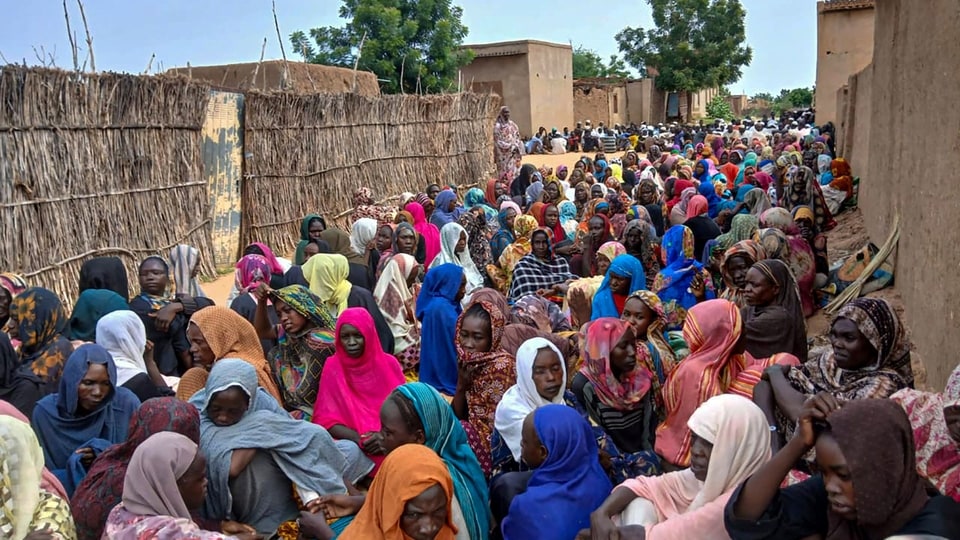
The conflict was triggered in April 2023 when the Rapid Support Forces (RSF) — a paramilitary militia backed by a major oil-rich regional power — launched a violent coup attempt against the State
Since then, the militia — whose crimes were officially designated as genocide by the US in January 2025 — has waged a campaign of terror across the country, marked by mass killings of civilians, the systematic use of rape and sexual violence as weapons of war, and the deliberate destruction of vital infrastructure. It has also weaponised hunger, blocking humanitarian access and using starvation as a tool of war.
The RSF militia was created by former president Omar al-Bashir as a parallel force to the Sudanese Armed Forces. Though formally under state control, it operated with considerable administrative and financial autonomy. Its leader, Mohamed Hamdan Dagalo — widely known as Hemedti — grew immensely powerful, amassing vast wealth through control of lucrative gold mines. Following the 2019 revolution that toppled al-Bashir, Hemedti’s ambitions grew, encouraged by external actors and foreign sponsors. In 2023, he attempted to overthrow Sudan’s legitimate government, plunging the nation into an unprecedented cycle of violence and atrocities.
Over the last thirty months, the Sudanese people have faced atrocities rarely seen in modern times. Civilians have been deliberately targeted — most recently, the shelling of a displacement camp in El Fasher, on October 11, 2025, that killed more than 60 civilians. Looting and torture have become a defining pattern of the militia’s war against the Sudanese people. Sexual violence, including mass rape, has been widely used as a weapon of war. According to UNICEF, even infants as young as one year old have been among the victims of these heinous rape crimes.
Realizing that the war is a foreign-backed aggression, driven by external powers pursuing agendas against Sudan’s interests through the RSF proxy, the Sudanese people have rallied around their national army to defend their homeland.
The Sudanese Armed Forces, supported by the people, have now regained control of about 85% of the country’s territory. Meanwhile, the RSF continues to besiege parts of Darfur, including the city of El Fasher, where civilians are enduring severe famine and denied access to humanitarian relief. Attempts by the militia and its backers to divide the country and establish parallel governance structures have failed, as the United Nations, African Union, Arab League, and neighboring countries reaffirmed their strong rejection of such a move, recognising only Sudan’s legitimate government.
With steady advances by the national army, optimism is growing that this devastating war will soon draw to a close. The next chapter for Sudan will be one of reconstruction and recovery — rebuilding what was destroyed, restoring livelihoods, and laying the foundations for lasting peace.
As Sudan rebuilds, partnerships become essential — not only to restore infrastructure and livelihoods, but also to rekindle hope. Sudan looks forward to working closely with India — a nation that has undergone remarkable economic transformation over the last decades. India’s expertise in agriculture; renewable energy; science and technology and digital infrastructure and connectivity, can play a transformative role in Sudan’s reconstruction.
Sudan’s immense potential — fertile land, abundant water, diverse ecological zones, rich mineral resources, and a resilient population — provides a strong basis for this partnership. Together, Sudan and India can build bridges of cooperation that help Sudan emerge stronger, more stable, and more prosperous than before.
The courage and unity of the Sudanese people remain unbroken. Their resolve ensures that, despite the pain of this war, Sudan’s story will ultimately be one of resilience, renewal, and hope — a nation reborn through its struggle for dignity and peace.
This article is authored by Mohammed Abdalla Ali Eltom, ambassador of Sudan to India, New Delhi.


