
 E-Paper



What the US-Iran ceasefire really reveals
This article is authored by Ravindra Garimella, former joint secretary (Legislation), Lok Sabha Secretariat and Amal Chandra, political analyst and columnist.

 Prefer HTon Google


The ceasefire between the US and Iran, first announced on April 8, now looks less like a diplomatic breakthrough and more like a fragile, reversible pause shaped by coercion, miscalculation, and competing political compulsions. What has unfolded since is not a linear movement toward de-escalation, but a volatile sequence of tactical moves, reversals, and escalatory signals that underscore a deeper truth: Neither side has found a workable pathway to negotiation, yet both remain deeply invested in leverage.
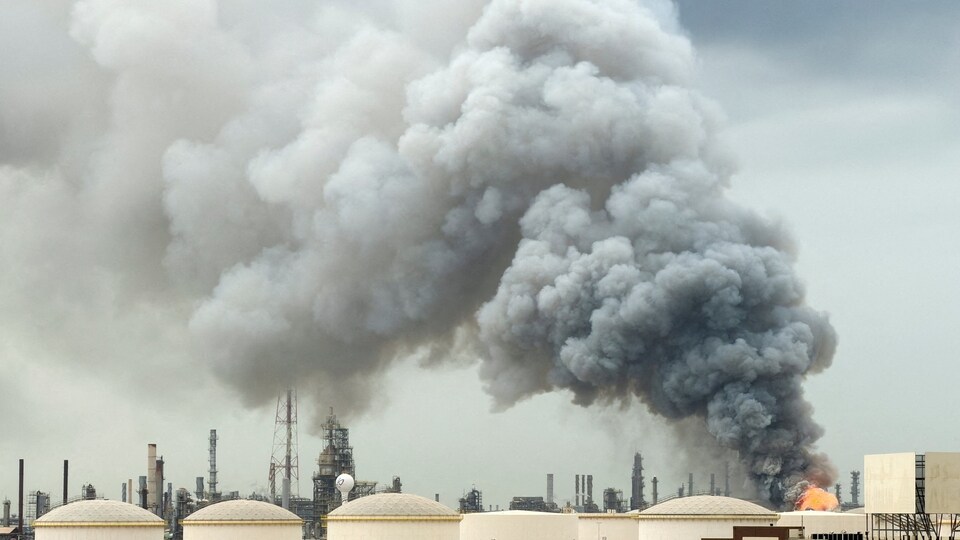
At the core of the current impasse lies a fundamental contradiction. Tehran has made the removal of the US-led naval blockade a precondition for talks, framing it as a matter of sovereignty and economic survival. Washington, by contrast, views the blockade as its primary instrument of coercion—indeed, President Donald Trump has explicitly argued that only sustained economic pressure at sea can force Iran to negotiate. This structural deadlock has turned the ceasefire into a holding pattern rather than a bridge to dialogue.
If anything, recent developments suggest that Iran believes time is on its side, while the US faces mounting urgency. Tehran’s strategy reflects patience: It has demonstrated a willingness to absorb economic strain while leveraging geography, particularly its control over the Strait of Hormuz, to impose costs on the global economy. Washington, however, is constrained by domestic political pressures—rising inflation linked to energy market volatility, criticism from Congress, and growing unease among Gulf allies. This asymmetry in time horizons has hardened positions rather than softened them.
The events following the April 8 ceasefire announcement illustrate the instability of the current moment. The initial declaration itself carried ambiguity. While mediators suggested that the ceasefire framework extended to Lebanon, Trump indicated that Iran’s reported ten-point proposal could serve as a basis for talks. Yet within hours, Israel intensified strikes in Lebanon, and the White House appeared to walk back any endorsement of Tehran’s framework. Rather than building momentum, the ceasefire exposed the absence of coordination even within the US-aligned camp.
Subsequent attempts at diplomacy have yielded little progress. Talks held in Islamabad, facilitated by Pakistan’s increasingly active backchannel role, failed to produce a breakthrough. Meanwhile, the maritime theatre has grown more volatile. The US has continued to enforce and expand its naval blockade, while Iran has responded by tightening its operational control over the Strait of Hormuz. In one notable incident, Iranian forces reportedly opened fire on two commercial vessels, forcing their retreat. These actions were calibrated, but unmistakable: Tehran retains both the capability and the willingness to disrupt one of the world’s most critical energy chokepoints.
A brief moment of de-escalation appeared possible when Washington reportedly pressed Israel to accept a limited ceasefire in Lebanon, one of Iran’s key demands. In response, Tehran announced that it would reopen the Strait of Hormuz to commercial traffic, signalling conditional flexibility. Trump even publicly thanked Iran, suggesting a potential thaw. Yet the optimism proved shortlived. When the US clarified that the naval blockade would remain in place, Iran swiftly reversed its decision, once again restricting maritime flows. The episode revealed how narrow the space for compromise has become: even reciprocal gestures collapse under the weight of unresolved core demands.
The cycle of escalation intensified further with a US strike on an Iranian tanker in the Gulf of Oman and the detention of its crew. Whether intended as a pressure tactic ahead of a second round of talks or as a demonstration of resolve, the move had the opposite effect. For Tehran, which had already been subjected to military action during ongoing negotiations, the incident reinforced a perception that diplomacy was being instrumentalised rather than pursued in good faith. Iran subsequently withdrew from the planned second round of talks in Islamabad, deepening the diplomatic stalemate.
By the time the ceasefire approached its April 22 deadline, the situation had become even more uncertain. US Vice President JD Vance postponed a planned regional visit, signalling unease within the administration. In a last-minute move, Trump unilaterally announced an indefinite extension of the ceasefire—yet crucially, without lifting the blockade or securing any concessions from Iran. Tehran, for its part, maintained its control over the Strait of Hormuz, preserving its primary leverage. The result is a paradoxical equilibrium: a ceasefire without agreement, de-escalation without trust, and dialogue without participation.
What has emerged is not stability, but a new phase of strategic contestation centred on economic choke points. The Strait of Hormuz has become the focal arena of this conflict, with both sides recognising its global significance. Even limited disruptions have sent shockwaves through energy markets, driving up shipping insurance costs, delaying cargo flows, and heightening fears of supply shocks. Iran’s ability to weaponise geography has effectively offset, to some degree, the US’ superior military power, illustrating how asymmetry operates in contemporary conflict.
At the same time, the crisis has exposed the limits of coercive diplomacy. The US has deployed a familiar toolkit—sanctions, military signalling, and maritime pressure—but has struggled to translate these into political outcomes. Instead, each escalation has produced countermeasures that complicate rather than clarify the path forward. Trump’s oscillation between threats and overtures has added to this uncertainty. While such unpredictability may create tactical openings, it also undermines credibility, making sustained negotiations harder to sustain.
Domestic dynamics in the US have further constrained strategic options. Rising fuel prices and inflationary pressures have begun to shape political calculations, particularly as the administration faces scrutiny from both allies and opponents. Congressional concerns over executive authority in managing the conflict have added another layer of complexity. In this context, the ceasefire extension appears less a strategic choice than a political necessity—a way to contain escalation without appearing to concede ground.
Iran, by contrast, has leveraged both restraint and escalation to strengthen its position. Its insistence on sanctions relief, security guarantees, and recognition of its regional role has remained consistent, even as it calibrates its actions on the ground. By linking negotiations to the removal of the blockade, Tehran has effectively set the terms of engagement, forcing Washington to choose between pressure and diplomacy. So far, the US has attempted to pursue both simultaneously, with limited success.
A middle power’s facilitation of talks in Islamabad highlights their growing relevance in conflict mediation. Yet, India, despite its significant stakes in Gulf stability, has maintained a notably restrained posture, balancing its relationships while avoiding overt involvement. This relative silence from major actors reflects both the complexity of the crisis and the fragmentation of global diplomatic consensus. Gulf states, meanwhile, have quietly pushed for de-escalation, driven by immediate economic concerns. Maritime disruptions have exposed the vulnerability of their trade and energy infrastructure, prompting increased security measures and contingency planning. Their influence, though largely behind the scenes, reflects a convergence of economic and strategic imperatives.
Israel’s role remains central to the broader dynamics. Its continued operations in Lebanon, even in the context of a ceasefire framework, have complicated efforts to stabilise the situation. For Iran, Lebanon is not a peripheral theatre but an integral component of its regional strategy. Any escalation there risks triggering a wider conflict involving non-state actors, further reducing the space for diplomatic resolution.
The broader international response has been cautious, even subdued. European powers have emphasised the need for structured negotiations but have stopped short of endorsing Washington’s approach.
Perhaps the most striking feature of the current moment is the persistent risk of renewed conflict. With no agreement on core issues, continued military posturing, and deep mistrust on both sides, the ceasefire remains inherently unstable. The possibility of renewed bombing, whether as a deliberate strategy or the result of miscalculation, cannot be ruled out. Such an escalation would not only intensify the humanitarian crisis but also amplify economic disruption on a global scale.
This is, ultimately, a conflict in which victory is elusive. Military escalation risks uncontrollable regional spillover, while economic warfare imposes costs that reverberate far beyond the immediate participants. The longer the standoff continues, the greater the likelihood that unintended consequences will shape outcomes.
The ceasefire, then, is best understood not as a step toward peace, but as a reflection of mutual constraint. It reveals the limits of power, the complexity of modern conflict, and the difficulty of translating leverage into lasting agreements. What it offers is a narrow window—one that remains open, but is rapidly narrowing.
Whether that window is used to build a credible diplomatic framework or closes under the weight of renewed escalation will depend on choices that neither side has yet shown a willingness to make. For now, the pause holds. But peace, as ever, remains deferred.
(The views expressed are personal.)
This article is authored by Ravindra Garimella, former joint secretary (Legislation), Lok Sabha Secretariat and Amal Chandra, political analyst and columnist.


