Here is a simple task. Take an ORS packet. Read the instructions. For effective hydration, instructions must be followed. As part of the ASER 2023, young people (aged 14-18) who were part of the survey were asked to read the package and answer simple questions: If you had four litres of water, how many ORS packets would you need? How many litres of the mixture can be given to a 45-year-old man in 24 hours? About 25% of this age group could not read simple text fluently in their regional language. Of those who could read, 70% could answer questions. Remember, this entire sample of youth had at least 7-8 years of schooling and had done measurement as part of maths in school.
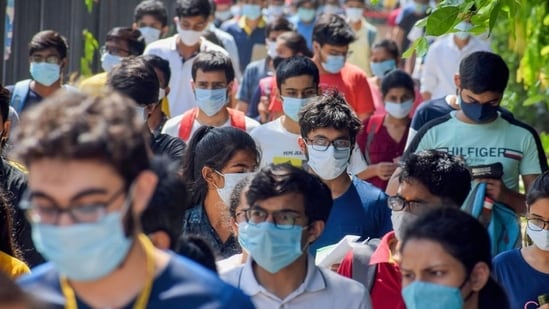
The survey, ASER 2023 Beyond Basics, spent time with close to 35,000 rural youth in this age group across 26 states. It asked them to do everyday things. Calculate how long a girl slept if she went to bed at one time and woke up a few hours later. In a shop, look at a sale with discounts and work out what would be the best deal. Manage a simple household budget. Around half could do such calculations correctly. Among those who had basic arithmetic skills, only about a third could apply a discount, and barely one in ten could work out the repayment on a loan. An 18-year-old who steps out of school will be doing these things frequently in his or her daily life in the market, at the bank, on the farm, and at work.
Why does this happen? These young people have spent eight, 10, 12 years in school. Most have passed every exam that came their way. The honest answer is that from Std VI onwards, our schools have focussed on one task: complete the syllabus and get children through the board exam. Nobody asks anything else of these grades. Not parents, not the administration, not even most of us who work in education.
{{/usCountry}}Why does this happen? These young people have spent eight, 10, 12 years in school. Most have passed every exam that came their way. The honest answer is that from Std VI onwards, our schools have focussed on one task: complete the syllabus and get children through the board exam. Nobody asks anything else of these grades. Not parents, not the administration, not even most of us who work in education.
{{/usCountry}}In recent times, two ends of school education have received attention. NEP 2020 has made foundational literacy and numeracy a national priority for early grades in primary school. The NIPUN Bharat mission has helped in translating policy into action. By 2024, barely two years since schools re-opened after the pandemic, available data (PARAKH 2024 and ASER 2024) both show that basic reading and arithmetic skills in the early grades have improved after years of stagnation. At the other end of the school system, board exams and entrance tests have occupied centre stage in the public eye. These high stakes assessments consume the lives of students and families; with children running between schools and coaching classes. But the long stretch in between, from Std V to Std IX is on autopilot and is largely neglected. In this space, two things go wrong at once. Learning barely moves. ASER data over the years shows that learning trajectories through these grades are nearly flat. PARAKH 2024 also showed that data from Std V and Std IX is worryingly low. A child who reaches Std VI without strong foundations is rarely helped to catch up. They are carried along by the syllabus, year after year, towards an exam they cannot really tackle, if they stay to attempt it at all.
How are our middle and secondary schools actually doing? Large scale achievement data (PARAKH and ASER) point to several facts. First, a significant proportion of students are still struggling with foundational skills. Second, variation in learning levels gets larger as children move to higher grades and finally, the value add from an additional year of schooling is relatively flat.
In 2009, India participated in PISA, the international assessment of 15-year-olds. The data placed India second from the bottom among 73 education systems. One can argue that the test is not suitable for India. But not participating means that we do not know whether our situation vis a vis other countries, has changed in the last decade-and-a-half. In our own high school examinations, scores are rising and there is concern about grade inflation. So, what is school for, especially after the primary years? We can argue that it has to prepare young people for three things: for further academics, for work, and for life. Today it attempts only the first, and even on that we don't know how we compare globally.
Preparing for academics cannot mean racing through the syllabus. ASER evidence suggests that about a fourth of children in Std VIII still need help with foundational reading and arithmetic. NEP 2020 acknowledges this and speaks of helping those who have fallen behind to catch up. But this catch-up needs to be prioritised by the school system. This priority must lead to sufficient time in the timetable, appropriate methods and materials needed for implementation, and teachers in middle school and above have to be supported to help children catch up. Otherwise we keep passing children from one grade to the next, along to grade level textbooks they cannot read or comprehend.
Preparing for work does not mean turning schools into job factories. ASER 2023 found that many young people already work while studying, mostly on family farms and enterprises, yet fewer than 6% are in any vocational course. The only answer we have had to the school to work transitions is vocationalisation but our current implementations and imaginations of vocational education have not been aspirational for our youth, are not in touch with the rapidly evolving times and do not offer enough agency for the youth to pursue their potential. Nearly all have a smartphone at home and know how to use it. There is much to build on: Projects, local internships and apprenticeships, and exposure to livelihoods to move students beyond the familiar dream of a government job or a desk in an office.
The ability to read a medicine label, run a household budget, calculate interest are all important skills, but preparing for life means much, much more: As many 16 year olds have said to us “ek acha insaan ban-na” (to become a good human)--is an education goal! The civic values, courage to do the right thing, judgement and similar capabilities--that make us more human need to become essential learning outcomes in a world with abundant AI - and these have to be woven into ordinary classroom work & just being in the school rather than added on as one more subject to memorise.
What can young people do when school makes room for the real world? In Hisar in Haryana, four students of a government senior secondary school noticed that period pain was keeping girls absent and unable to concentrate in class. Through a school entrepreneurship programme run by the state government supported by Udhyam Learning Foundation, they surveyed women in their own community, found that nearly seven in ten suffered menstrual pain, and put together a product: a kit with a portable heating pouch, herbal remedies and discreet storage. They won seed money, launched, and found their first customers. Along the way they used more arithmetic, writing, persuasion and problem-solving than any chapter of their textbooks had asked of them.
Look at this story closely. Two girls and two boys worked together on a problem that is rarely spoken about openly, let alone in a classroom. Menstrual discomfort affects girls and women everywhere in the world, and what these students built would make sense far beyond Hisar. The empathy in their solution runs deep. So, does the dignity it offers a girl going to school or a woman going to work, not wanting to disclose her cramps. And it has come from a small town in a state long known for the country's most skewed sex ratio. That is what our young people are capable of, if we are willing to design school for this kind of learning.
None of this needs a new policy. NEP 2020 already speaks of critical thinking, flexibility, vocational integration and attention to life aspirations at the secondary stage. What is needed is translation into the daily life of schools, and a change in what we measure. As long as the pass percentage is the only number that counts, schools will work towards that number and nothing else. If states began to check, even on a sample basis, whether their 14- to 18-year-olds can use what they have learned, as ASER 2023 did, schools would slowly begin to work towards that instead.
A young person in India today will spend 12 or 15 years in school and the next 50 in work and life. More children are completing more years of schooling than at any time in our history. That is a real achievement, built over decades. The question to ask now is simpler, and harder: what are all those years preparing them for?
(The views expressed are personal)
This article is authored by Rukmini Banerji, senior advisor, Pratham Education Foundation and Mekin Maheshwari, founder and CEO, Udhyam Learning Foundation.