For decades, India’s nutrition debate has centred on food availability, with one fundamental question: Is there enough food to eat? The remarkable progress the country has made in expanding irrigation and agricultural inputs have transformed farming, and availability of food grains has increased. It has contributed to declining in hunger, yet has revealed a more complicated challenge. A household may have sufficient grain but not the nutritious diet. A child may receive supplementary food but malnourished and suffer from repeated infections. A farmer may be producing more and earning a higher income, but the family may still be eating a less diverse diet. Nutrition, therefore, is no longer just about what is on the plate; increasingly, it is about the quality of the diet, the systems that shape it, and who gets left behind.
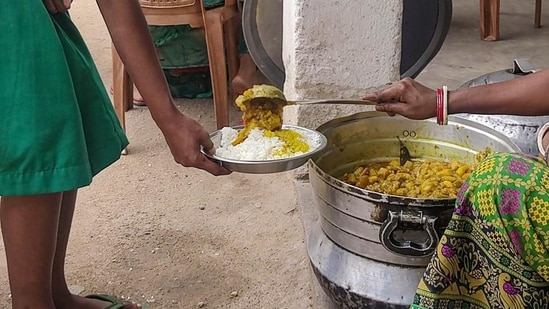
Again, aligning with India’s shining economic development, the national average on nutrition is deeply shaped by geography, bioregions and pin codes. The latest district level factsheets of NFHS-6 shows that the burden remains disproportionately concentrated in Rural India, particularly Central India Tribal Region. Madhya Pradesh, Uttar Pradesh, Jharkhand and Chhattisgarh continue to face serious challenges of child undernutrition. Within the state, tribal, remote, and geographically isolated regions bear a disproportionate burden, while evidence from tribal communities across geographies highlights the persistent and intergenerational nature of undernutrition. The rainfed, forested, tribal majority blocks and districts historically faces challenges and have weaker access to irrigation, electricity, health care and other essential infrastructure. Nutrition security in these geographies is not a matter of awareness or food supply. It’s about the place where people are born and live.
One of the greatest development achievements, the Green Revolution, transformed agricultural production, strengthened food security and helped India move away from recurring famine and large-scale hunger. But its success was uneven and concentrated on selected concentrated geographies. Some of those limitations continues to shape India’s nutrition map today. The agricultural transformation followed the availability of water, infrastructure and markets; but it left geographies where vulnerabilities were higher.
{{/usCountry}}One of the greatest development achievements, the Green Revolution, transformed agricultural production, strengthened food security and helped India move away from recurring famine and large-scale hunger. But its success was uneven and concentrated on selected concentrated geographies. Some of those limitations continues to shape India’s nutrition map today. The agricultural transformation followed the availability of water, infrastructure and markets; but it left geographies where vulnerabilities were higher.
{{/usCountry}}Also, the remarkable progress in production through high yield stable grains and calories has not translated into nutrition security. The agricultural systems focused on narrow range of crops, while many traditional foods including pulses, millets, wild foods and locally available leafy vegetables gradually lost spaces in farms and diets. For the next phase of nutrition transformation, the focus has to be beyond increasing production. It’s about what food is being produced, who has access to it, and whether it meets the nutritional needs of a growing child, an adolescent girl, a pregnant woman, or an ageing population.
Evidence shows that; vitamin and micronutrient adequacy such as iron, iodine, folate and vitamin A is as equally important as enough calories. These nutrients shape a child’s growth, learning and long-term health, factors that calorie counts alone cannot capture. A long-term study following children found that a 10% increase in birth weight was associated with an 8.1% increase in cognitive test scores later in childhood. This difference became clear around the age of eight, showing that the effects of poor nutrition in the early years of life may remain hidden for many years, impacting learning and development in ways that are invisible during routine health check-ups. The evidence becomes more extensive when examined across a lifetime. Early childhood nutrition trial found associations between improved nutritional status and higher secondary school completion, progression in higher education and better employment or continuing education. This evidence suggests that early investment in nutrition is an investment in human capabilities. To achieve Viksit Bharat, the country, and particularly its aspirational districts, cannot afford to overlook it.
For long, India’s nutrition conversations have largely focused on mothers and children under two. That focus is essential, but it is not sufficient. Rising rates of overweight, alongside undernutrition, diabetes, and other non-communicable diseases, are making the situation increasingly complex.
A study from south India, found that 23.1% of women and 13.1% of men experience both anaemia and overweight; while further 6% had co-occurring anaemia and diabetics. These require very different and often highly personalised dietary responses that a single nutrition message can’t do. With the changes in rural food systems and processed foods becoming increasing accessible and preferred; the double burden is likely to become more widespread.
And India is ageing. The LASI found that nearly 8% of adults above the age of 45 face household food-access constraints; in Jharkhand, the figure rises to more than 10%. The diverse nutritional needs across life stages; for example, an adolescent girl, a pregnant woman, an adult living with diabetics and an older person losing appetite within the same household requires a very different response, that a health and nutrition system built around the mother and child will miss.
The climate crisis adds another layer to this complex challenge. For rural and tribal households, dependence on agriculture and natural resources means that changing rainfall patterns, droughts, and extreme weather events affect far more than just crop production. It is increasingly disrupting the local food systems and making diverse, nutritious foods less available and affordable. Beyond behaviour and what families should eat, the challenges are much broader: Whether local food systems can continue to provide nutritious and diverse diets under changing environmental conditions. Crop diversity, locally adapted foods, and biodiversity are, therefore, essential to building healthier diets and a healthier future.
Against this premise, nutrition interventions must evolve for the future, recognising that nutrition cannot be delivered or achieved through a single scheme or solved by any one sector alone. It is shaped by the intersection of food systems, health services, livelihoods, care practices, local institutions, cultures, traditions, and the environment within a local ecosystem.
The responses, therefore, must be local, bringing together panchayats, women’s collectives, frontline workers and communities to reimagine and strengthen the ecosystem around families rather than treat nutrition as an isolated intervention. This requires moving beyond calories towards dietary diversity and local food systems, while addressing nutritional needs across life stages.
The plate will always matter, but the local system that determine what reaches the plate, and who gets left behind matter even more. The future of nutrition in rural India, therefore, lies in strengthening interconnected systems at the neighbourhood level, caring for people, protecting the planet, and shaping institutions to create ‘neighbourhoods of care’.
(The views expressed are personal)
This article is authored by Shyamal Santra, practice director, Transform Rural India.