
 E-Paper



Inside the city's growing baithak culture: The hyper-local living room gigs are reviving the classical music scene
Some of the most meaningful performances now unfold on sofas & rugs. Medha Shri Dahiya explores home concerts that mark a gentle renaissance for classical music

 Prefer HTon Google


On a night when rain poured in sheets, my husband and I braved Delhi’s gridlock and the notorious parking hunt to reach a stranger’s home.
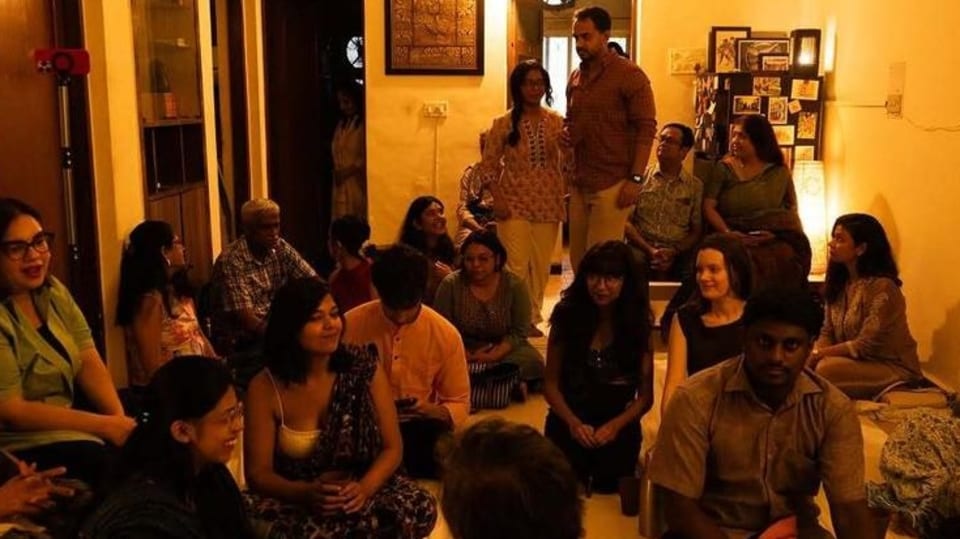
We had, in fact, paid to be there.
Inside, about 40 people sat cross-legged on rugs as a young sitarist tuned her instrument, joined by a tabla player. No velvet curtains, no stage lights, no professional sound system. Yet, as the music began, a stranger’s living room instantly felt like home.
Baithaks, intimate and hyper-local ticketed concerts held in homes, are quietly reshaping Delhi’s cultural landscape. For many millennials, they are both a throwback to childhood memories of baithaks at grandparents’ homes and a new experiment in intimacy in a city crowded with strangers.
Hyper-local gigs for passion to keep the music flowing
In Vasant Kunj, Sukanya Banerjee and Tejas Jaishanka began hosting baithaks in May under the name Upstairs with Us. “My husband, Tejas, and I come from families of musicians. We started baithaks at home to create a space for classical music with cosy, non-intimidating vibes, and a chance to bond over the home-cooked dinners I prepare myself. We wanted to create a space where people could appreciate classical music without feeling intimidated ,” says Sukanya, a vocalist who quit her teaching job last year. To keep it sustainable, they charge a modest fee and cook dinner for everyone. Sukanya is now training other music lovers to start their own home concerts.
In Dwarka, Soumya Rao and her husband Varun K call their series Evenings Unplugged. “These started because there was nothing like it around us in Dwarka. My husband works in the government sector and I have an IT job, but we both missed the joy of attending classical music baithaks as we did in our childhood. Coming from rich Hindustani and Carnatic traditions, we also wanted to introduce our two-year-old to it. At first, we were skeptical. Who would come? Would anyone pay to hear Carnatic music in my house? The answer is that there are plenty who want to attend such events," says Soumya, who is prepping to host her fourth baithak next month.
"Some come because they miss neighbourhood-level cultural life. Some others came alone for community and left with a connection. And Some others simply for the raga. We have had college goers from Sonepat come over, too. They stayed at a hostel nearby and then left the next day,” says Soumya, whose mother-in-law, a trained sitarist, cooked a South Indian meal for the guests last time.
Gurugram, too, has its outposts. Leadership coach Sangeeta Chopra runs Naadyatra, hosting monthly baithaks. “Gurugram lacks a strong cultural scene. Although I am busy travelling and working as a leadership and executive coach, I yearned to pursue my passion for classical music. So I began organising these home concerts in May. Both audiences and artists have loved performing in our living room. This is my effort to revive it and fill my house with music," says Sangeeta, who serves chai and snacks before every baithak.
Tickets typically range from INR1,500 to INR2,500, and often include dinner. But food and repertoire are not the main draw. It is the come-home-and-listen energy that attracts audiences. “You don’t feel judged here. I don't know classical music deeply but I enjoy it. The informal vibe of a home concert made me comfortable with the idea of attending the event,” says Prakash Sharma, who first discovered baithaks through an Instagram reel.
The neighbourhood community connect for attendees
There are those who want to start their own hyper-local gigs. “When I attended my first baithak, it was more of a social experiment. Back in Indore, my dadaji would host baithaks with his friends, so for me it was nostalgia but without big expectations. I thought, what is this crazy idea of inviting strangers home for a recital, and let’s see if anyone will pay. But I am glad I went, because I loved every bit of it. Now I want to organise something similar in my own house,” says Neha Gupta, an aspiring baithak host.
The home-like ease draws out even the introverts. “I am an introvert, and when I saw a reel about a baithak I thought, this is lovely. A small gathering in the informal setting of a living room, with no pressure to make conversation or pretend I know classical music deeply. I could just show up and enjoy. The home-cooked dinner was an added bonus. Would I pay for it? Yes, I did, and I loved every bit of it,” shares Nandini Ojha, a baithak attendee.
The intimacy with artists is another appeal. “I have attended many big-ticket concerts, and I have seen enough of them. When I attended a baithak, I loved it. The come-home energy was a big draw, and we get to be close to the artist. The musicians are also free to play the way they want, which makes the music even better. These baithaks are definitely reviving the age-old tradition of enjoying musical evenings in an intimate and informal setting. Unlike big concerts and halls where there is little bonding, here, it truly feels like home," says Sapna Thekkepat, a baithak regular.
Artists love the control and closeness
The artists also love the intimacy of a small gathering. Sitarist Malvica Chopra shares, “I love the informal, easy energy of baithaks. It is amazing to meet people who attend with intention, they are there for the music. We get paid fairly, and it is not like a hall with bright lights and distance. And the artist has more control over their music presentation. You can decide how you want to showcase your music.”
For mridangam artist Manohar Balatchandirane, the appeal lies in artistic freedom. “It is an intimate format where you can go beyond the mandate. It allows us to have more control over how we present the music and we can alter it depending on the audience.”
Vocalist Vivek Bhola adds, “Here, I can see the audience breathe. There are no egos. Baithaks are not bound by the formal nature of big concerts. You can interact with the audience, and the absence of professional-grade sound systems keeps the acoustics largely natural. The sound is slightly amplified, but the acoustics remain natural.”
Baithaks are unlikely to replace formal concerts. But in a city where cultural experiences often feel corporate, these living-room sessions remind people that music can still be personal, porous, and rooted in the neighborhood.


