Am I eating real or 'analogue' paneer? The question has gained urgency in Maharashtra after the state's Food and Drug Administration (FDA) banned the manufacture, sale and use of analogue or non-dairy paneer for a year on July 30, citing public health concerns.
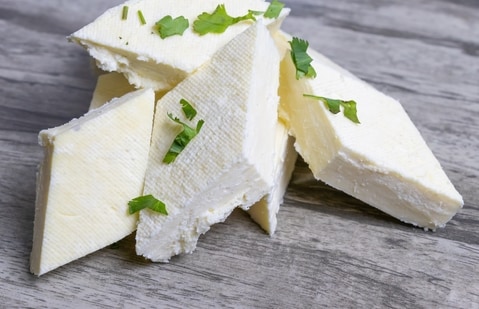
The order also directed hotels, restaurants, caterers and cloud kitchens to stop using analogue paneer. Maharashtra was the second state to impose such a ban after Chattisgarh, and Gujarat followed suit on Wednesday.
The state government's decision, however, differs from the approach adopted by the Food Safety and Standards Authority of India (FSSAI). The national food regulator permits the sale of analogue paneer as long as it is accurately labelled and not misrepresented as dairy paneer.
In an advisory issued in April 2026, FSSAI had clarified that selling or serving a cheese analogue under the name "paneer", or listing dishes made with analogue products as paneer on menus, violates the Food Safety and Standards Act, 2006.
Why Maharashtra imposed the ban
{{/usCountry}}In an advisory issued in April 2026, FSSAI had clarified that selling or serving a cheese analogue under the name "paneer", or listing dishes made with analogue products as paneer on menus, violates the Food Safety and Standards Act, 2006.
Why Maharashtra imposed the ban
{{/usCountry}}According to the order, the ban follows a year-long enforcement and surveillance drive carried out between April 2025 and March 2026. The FDA said repeated inspections, sampling and awareness campaigns had failed to curb the sale of analogue paneer.
Of the samples analysed during the drive, 35.4% did not conform to prescribed standards. Additionally, 79 samples were found to be sub-standard and 30 were declared unsafe, suggesting that existing enforcement measures and labelling requirements had not been sufficient to protect consumers. Laboratory analysis of the extracted fat also found iodine values beyond the prescribed range for milk fat in multiple failed samples, indicating that vegetable fat had been added or had replaced milk fat.
What is analogue paneer?
FSSAI defines an analogue product as one “in which constituents not derived from milk take the place, in part or in whole, of any milk constituent(s) and the final product resembles, organoleptically and/or functionally, milk or milk product.”
Dr Piyush Vishwakarma, Consultant-Gastroenterology, Hepatology & Liver Transplant, RG Hospitals, Delhi shares, "Analogue paneer is typically made using vegetable oils, starches, plant proteins, emulsifiers, and food additives instead of milk.”
However, analogue paneer isn’t adulterated paneer, cautions Dr Kshitiz Sharan, Consultant – Gastroenterology, Sarvodaya Hospital, Greater Noida West: “While adulteration or misrepresentation is a form of food fraud, an analogue product is legal when appropriately manufactured and clearly labelled.”
What the ban means for restaurants
The ban is expected to have the biggest impact on smaller restaurants and unorganised food businesses
, where analogue paneer is more commonly used because of its lower cost.
Pranav Rungta, Vice President, National Restaurants Association of India, says the economics of dairy paneer make it difficult to sell genuine paneer dishes at very low prices. "To make dairy paneer, you need 5 litres of milk to get 1kg of paneer. But the amount of paneer that is sold in the market, there's not that much milk produced in the country. That's why vendors and restaurants turn to artificial sources. And if any restaurant sells the paneer for less than ₹200, you're buying analogue paneer," he says. He adds that since FSSAI permits analogue paneer when correctly labelled, "it's available openly in the market”.
Pranav says larger restaurant chains are less likely to be affected as they typically rely on dairy paneer. "Bigger restaurants and chains would never use analogue paneer because there's a difference in the taste profile," he says.However, he believes the ban will increase the burden on restaurants to verify their supply chains. "Restaurants will be paying the price of paneer, but there's no way for a restaurant or a vendor to distinguish between analogue. It has to be tested, and even then one could get false positives," he explains.
According to Pranav, analogue paneer is largely produced by small factories in industrial areas and supplied through local distribution networks, making it difficult to trace once it enters the market.
The problem lies in misrepresentation, not the product alone, say doctors
"Considering its manufacturing complies with the approved food safety standards with use of only permissible ingredients, analogue paneer doesn't pose an immediate health risk," shares Pratiksha Kadam, Chief Dietitian, Kokilaben Dhirubhai Ambani Hospital, Navi Mumbai.
Dr Piyush adds that the primary concern arises when analogue paneer is “fraudulently sold as traditional dairy paneer, as consumers may unknowingly consume a product with a very different nutritional profile”.
The nutritional differences between dairy and analogue paneer, however, are significant.
"Traditional paneer is rich in protein, calcium and other essential nutrients. In contrast, some analogue paneer products contain low-quality proteins, refined starches, high sodium, saturated fats and/or additives for texture or shelf life," Pratiksha says, adding, "Regular consumption of these products may lead to increased calorie and sodium intake, lowered intake of essential nutrients and may displace healthier dairy products."
In fact, analogue paneer could even be part of a healthy diet. Dr Piyush shares, "Well-formulated analogue products may offer benefits for certain groups, including people with lactose intolerance, those following vegan diets, or individuals looking for plant-based alternatives. However, not all analogue products are nutritionally equivalent. Their nutritional value depends on ingredient quality, protein content, fat composition, sodium levels, and fortification with nutrients such as calcium and vitamin B12."
How consumers can identify analogue paneer
- Look for terms such as ‘analogue paneer’ or ‘non-dairy paneer’ on the packaging
- Check whether the ingredient list includes vegetable oils, starch, soy or pea protein, emulsifiers or stabilisers instead of milk
- Compare the nutrition panel, particularly protein and calcium levels
- Buy from authorised retailers and established brands, as unusually cheap products or poor labelling may indicate inferior quality
"When choosing any processed food, from paneer to bread, consumers should analyse nutrition labels. A healthier analogue paneer should provide protein, have reduced or no saturated fat and sodium, and should have limited artificial additives. And like other processed foods, it should be consumed in moderation as part of an overall healthy eating pattern rather than replacing fresh, minimally processed foods regularly," shares Pratiksha.