A tiny wild cat found in Bolivia’s cloud-covered Yungas forests has turned out to be something scientists have not formally identified in more than a century: a completely new species of feline. Named Leopardus tilcayo, the cat is known locally as tilcayo and belongs to the tiger cat group found across South America. It marks the first formal description of a completely new living feline species in more than 100 years, making the little cat from Bolivia a significant addition to the world’s known cat family.
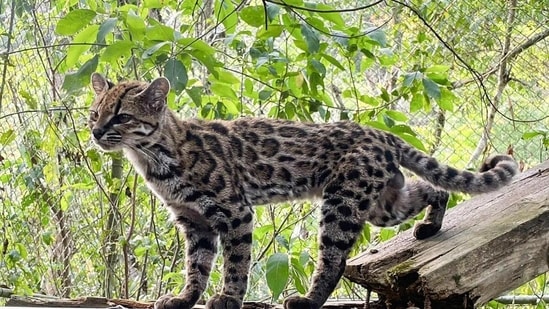
At around 46cm long and weighing just 1.4kg, the animal is even smaller than an average domestic cat. But its size was not the only thing that caught researchers’ attention. With its leopard-like spots, short rounded ears, long whiskers and distinctive small face, the animal looked markedly different from the cats scientists already knew.
The discovery traces back to 2016, when Bolivian biologist and National Geographic Explorer Paola Nogales-Ascarrunz received an unusual call from the Senda Verde wildlife sanctuary. The sanctuary had taken in what staff described as a “weird cat”. A local man had found the animal as a kitten on a road near a forest and initially assumed it was a domestic cat. It was only after keeping it for nearly a year that he realised the animal was wild and would be better cared for at a sanctuary.
Nogales-Ascarrunz, who leads the Bolivian Felids Research Program, decided to see the animal for herself. The cat’s appearance immediately stood out, particularly its tiny build and unusual facial features, along with the coat covered in leopard-like spots.
{{/usCountry}}Nogales-Ascarrunz, who leads the Bolivian Felids Research Program, decided to see the animal for herself. The cat’s appearance immediately stood out, particularly its tiny build and unusual facial features, along with the coat covered in leopard-like spots.
{{/usCountry}}What initially appeared to be an unusual-looking wild cat eventually led to a much bigger discovery. Researchers analysed its genetic data and confirmed that it was not simply an unusual individual, a known subspecies or a previously identified cat. It represented a species previously unknown to science.