The Fallen Tiger Dynasty of Bandhavgarh: End of the Khitauli Kings
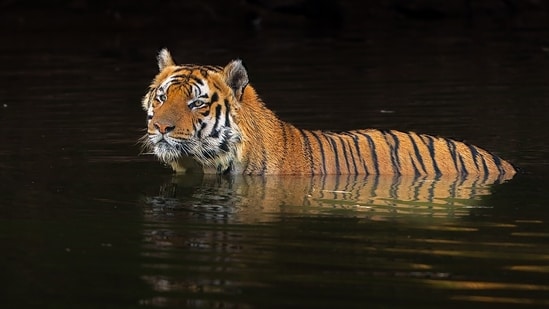
The "fallen dynasty" of Bandhavgarh National Park marks the end of a legendary era in the Khitauli Zone, a territory once ruled by dominant Bengal tiger brothers, Pujari and Chota Bheem. Their combined presence brought years of stability to the region—a peace that has now fractured into a violent turf war.
The Khitauli Lineage
The brothers maintained a stronghold over the region's resources, but their reign was defined by two distinct personalities:
Chota Bheem: The first pillar to fall. His untimely death created a massive territorial vacuum, destabilizing the power dynamics of the reserve.
Pujari (The King of Khitauli): A formidable 9-year-old male known for his unique, "priest-like" calm and famous sun-salutation poses at waterholes. While a strong fighter, he strategically avoided unnecessary clashes to maintain his reign.
The Collapse into a Conflict Zone
Chota Bheem's death transformed the once-stable Khitauli range into a contested battlefield. With the throne vulnerable, a fierce power struggle emerged between three dominant males:
Pujari: Fighting to defend his family's traditional boundaries.
D1 (also known as B1): The aggressive, highly territorial challenger.
Bahar Wala: A third male who pushed in to exploit the weakened borders.
{{/usCountry}}Bahar Wala: A third male who pushed in to exploit the weakened borders.
{{/usCountry}}The Fatal Encounter
The long-standing rivalry reached a bloody conclusion on a Monday morning near the Dhamdhama camp. At approximately 6:30 AM, security personnel heard the terrifying, thunderous roars of a struggle. Pujari was later found with a fractured neck bone and deep puncture wounds. His passing marks the 33rd tiger fatality in Madhya Pradesh this year. To honor the fallen king, park officials and emotional locals performed his final rites with full honors according to NTCA (National Tiger Conservation Authority) guidelines.
Who was Pujari?
The Name: The tiger earned the name "Pujari" (which means priest) due to his unique, almost ritualistic daily habits that made him a favorite among tourists and guides.
Ritualistic Bathing: He was widely recognized for his unusual habit of taking a dip in a waterhole before moving through the forest.
Sun-Salutation Pose: As we discussed previously, after his bath, he would often stand in a serene, sun-salutation pose, looking as if he were offering prayers to the sun. This "meditative" and disciplined behavior reminded onlookers of a priest performing a religious ritual.
Calm Demeanor: His predictable routine and tourist-friendly, photo-friendly behavior made him one of the most famous and easily identifiable felines in the Khitauli range.
While he was a powerful and dominant "King of Khitauli," it was this seemingly spiritual and gentle behavior that defined his legacy and his nam
Personality: Celebrated as exceptionally "tourist-friendly," he was a favorite for photographers, often posing fearlessly for safari jeeps.
Bandhavgarh National Park is home to more than 70 tigers.
Due to this population size, the park is known to have one of the highest densities of tigers in the world. This high density, spread across a 1,156 sq. km. area, has led to shrinking habitats and intensified territorial conflicts, which conservationists believe contribute to rising tiger mortality in the region.
Bandhavgarh Tiger Conservation: Strategies for Managing High-Density Populations
Bandhavgarh National Park is currently navigating the "problem of plenty." With over 75 tigers packed into a 1,156 sq. km. area, the park’s high density has increased territorial disputes. To manage this, authorities and private partners have shifted toward high-tech monitoring and landscape-level connectivity.
1. Strengthening Wildlife Corridors
To reduce fatal territorial clashes, conservationists are restoring natural corridors linking Bandhavgarh to the Sanjay and Guru Ghasidas-Tamor Pingla reserves. These "green highways" allow tigers to migrate safely, diversifying the gene pool and easing habitat pressure.
2. Precision Monitoring & Enforcement
The park utilizes a multi-layered security net to prevent poaching and track tiger health:
Elephant Patrols: Mahouts use trained elephants to navigate rugged terrains that vehicles can't reach, ensuring a constant presence in deep forest zones.
Forensic Squads: Any tiger mortality triggers an immediate deployment of dog squads and metal detector units. Investigations follow strict NTCA (National Tiger Conservation Authority) protocols to ensure scientific transparency.
3. Strategic Zoning & Tourism
Human impact is minimized through a strict zoning system—Tala, Magadhi, and Khitauli. By capping vehicle numbers and enforcing silence, the park ensures that tourism supports conservation without causing animal stress.
4. The "Eco-Luxury" Contribution
Private lodges surrounding the park have moved beyond traditional hospitality to become active conservation partners:
Reforestation: Transforming former estates into "residential forests" by planting thousands of native trees.
Sustainable Operations: Eliminating single-use plastics and adopting farm-to-table sourcing to reduce carbon footprints and support local farmers.