The festive season calls for colourful chaniya cholis, upbeat dhol beats and circles that seem to go on forever. But between the claps, turns and repeated footwork, Garba can also make for a surprisingly energetic workout. Here’s how to dance your way through the celebrations while looking after your stamina, joints and mental well-being.
Your Garba workout explained
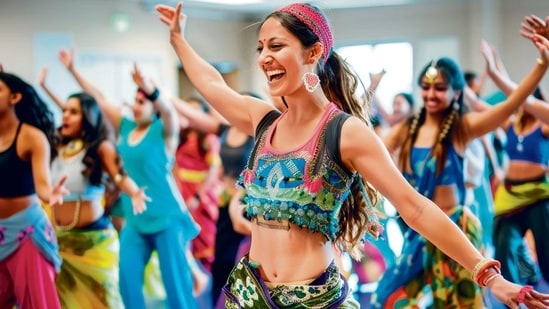
Those endless garba circles do more than test your memory for steps. “Repeated stepping, lateral movements, turns, clapping and coordinated arm movements can keep the heart rate elevated, particularly when performed continuously at moderate to vigorous intensity,” says physiotherapist Lakshya Bhaktyani of PSRI Hospital.
She estimates an average adult may burn around 350–600 calories in an hour, although the figure varies with body weight, pace and time spent moving. So, skip the obsession with a tracker’s number. The real cardio benefit comes from dancing steadily at a pace you can sustain, with breaks when you need them.
Before you hit the dance floor
Kushal Pal Singh, fitness and performance expert at Anytime Fitness India says
- Warm up: Spend 5–10 minutes walking or marching before introducing movements for the ankles, knees, hips and upper body.
- Pick the right footwear: Lightweight shoes with cushioning, stability, and adequate support can keep dancing comfortable.
- Stay hydrated: Start drinking fluids before dancing and continue through the session. Electrolytes may also be useful.
- Eat beforehand: A light, balanced meal or snack 1-2 hours before dancing can provide energy without feeling too heavy.
- Build your pace: Don’t begin at maximum intensity. Start comfortably, then increase your speed as your body warms up.
- Know when to slow down: People with cardiovascular conditions, uncontrolled blood pressure, recent injuries or surgery, advanced osteoarthritis, poorly controlled diabetes, significant respiratory problems or an acute illness may need to modify the activity or seek medical advice.
Can’t do high-impact? Modify the moves
Garba doesn’t have to mean jumping, rapid spins or keeping up with the fastest dancer in the circle. The movements can be adapted for older adults, people with joint issues or anyone who finds high-impact exercise difficult. “Its intensity should be matched to the individual’s physical capacity rather than being determined by the pace of others around them,” says Singh.
- Simple modifications include gentler side steps, smaller movements, basic two-step patterns and controlled turns.
- Try gentle side-to-side steps instead of hopping, simplified two-step patterns, controlled walking in a circle or slower turns.
- Focus on rhythmic arm movements, clapping and gentle trunk rotations.
- For those who cannot stand for long periods, seated garba is an option, using arm movements, clapping, gentle trunk rotations and comfortable foot tapping.
Garba good for the mind too
{{/usCountry}}Garba doesn’t have to mean jumping, rapid spins or keeping up with the fastest dancer in the circle. The movements can be adapted for older adults, people with joint issues or anyone who finds high-impact exercise difficult. “Its intensity should be matched to the individual’s physical capacity rather than being determined by the pace of others around them,” says Singh.
- Simple modifications include gentler side steps, smaller movements, basic two-step patterns and controlled turns.
- Try gentle side-to-side steps instead of hopping, simplified two-step patterns, controlled walking in a circle or slower turns.
- Focus on rhythmic arm movements, clapping and gentle trunk rotations.
- For those who cannot stand for long periods, seated garba is an option, using arm movements, clapping, gentle trunk rotations and comfortable foot tapping.
Garba good for the mind too
{{/usCountry}}Garba’s appeal goes beyond the physical workout. The music, rhythm and shared movement can help people feel connected and lift their mood, says Dr Sneha Sharma, psychiatrist and co-founder of Anvaya Healthcare. “Learning choreography also demands sustained attention, interrupting rumination and anxious thought patterns. Group dancing adds social connection, which can support emotional regulation and reduce isolation,” she says.
You do not have to master every sequence to feel part of the circle. Following a few comfortable steps with friends can be as rewarding as keeping up with the fastest group, especially when the point is to enjoy the evening together.