Indian researchers have sequenced over 1,800 genomes of the Sars-CoV-2 virus that causes the coronavirus disease (Covid-19), which will help them monitor mutations of the virus and trace the spread of the infection.
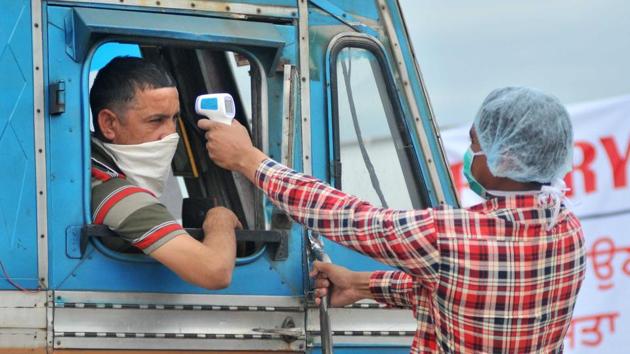
“So far, 1,886 genomes have been sequenced by various laboratories across the country. Of these, 833 are of very good quality and give us a lot of data. What we have learnt so far is that A2A is the dominant strain in India – the same as the globally prevalent strain – meaning that any drug or vaccine developed in other parts of the world should theoretically work here (factoring in the difference is response of people, of course),” Dr Rakesh Mishra, director of the Hyderabad-based Centre for Cellular and Molecular Biology, said.
Click here for full Covid-19 coverage
“We have also seen that the virus is very slow to mutate. We have seen over 2,700 mutations even in the A2A strain but it doesn’t make it very different and certainly doesn’t change the clinical findings,” he said at a media briefing through video link. “The mutations act like a bar-coding system where we can trace the path of the spread of the virus.”
Union minister of health and family welfare, and science and technology Dr Harsh Vardhan said interpretation of the findings and correlating them to global findings will help Indian researchers understand the behaviour of the virus, which surfaced at the end of 2019 in the central Chinese city of Wuhan and spread rapidly across the world.
{{/usCountry}}Union minister of health and family welfare, and science and technology Dr Harsh Vardhan said interpretation of the findings and correlating them to global findings will help Indian researchers understand the behaviour of the virus, which surfaced at the end of 2019 in the central Chinese city of Wuhan and spread rapidly across the world.
{{/usCountry}}“The samples from parts of the country have been collected and the genome sequencing has been done – there are areas in the country that have resemblance to the virus from Wuhan, then there are areas where the virus resembles that from Italy,” he said.
The most interesting finding was the A3i or A4 strain that was unique to India – once accounting for 40% of the Covid-19 cases – has now started declining and constitutes only about 5% of cases.
“The A4 strain – also referred to as the A3i strain -- has almost disappeared in India. This was a big cluster of cases that came in from an East Asian countries such as Brunei and spread across India in a cluster of cases. And, although the A2A strain is better adapted to infect humans binding more easily to the ACE2 receptor, I think the A4 strain died out because of aggressive contact tracing and quarantine,” said one of the scientists involved in the project, requesting anonymity.
The path traced using the mutations of the strain imply that it travelled with members of the Islamic missionary group Tablighi Jamaat, who gathered in Delhi for a religious congregation in March, the scientist said. “Although the strain has almost died out in southern India, there are still some cases of the strain in Delhi,” the scientist said.
“We get anonymised samples, but it is a possibility. The strain is present only in South East Asia and seems to have travelled from Malaysia to Delhi and then Hyderabad, where we first detected the strain. From what we have learnt about the strain, however, is that it seems weaker. Of the A3i genomes we sequenced, none of the patients had died,” said Dr Mishra.
The study of mutations in the Sars-Cov-2 strain also has implications for diagnostics and vaccine.
“If we talk about diagnostics, the RT-PCR {or reverse transcription-polymerase chain reaction, test uses probes of the N, S, E and RdRp gene to detect Sars-Cov-2. What we have observed is that the N gene has had more mutations than the others and therefore probes of N gene are likely to throw up more false negatives and be the first ones to fail. This will be different for different countries, of course. Monitoring the S or spike protein is also important as it helps the virus bind with ACE 2 receptor to enter cells. A study of the mutations will also be helpful for vaccine development programmes,” said Dr Anurag Agrawal, director, Institute of Genomics and Integrative Biology (IGIB).
ACE2 receptor is the protein that provides the entry point for the coronavirus to infect human cells.
The institute has sequenced almost 800 genomes already and is likely to complete 1,000 by next week.
“The most important thing has been studying the spread of the infection in various waves – the first being the ones from Wuhan in Kerala, then subsequent waves coming in from Europe, North America and the Middle East with the international travellers,” said Dr Agrawal.