The number of differently abled people on the electoral rolls of the five states where the current round of assembly elections is being held has increased by almost a fifth compared to the 2019 Lok Sabha elections, according to the Election Commission of India (ECI) data.
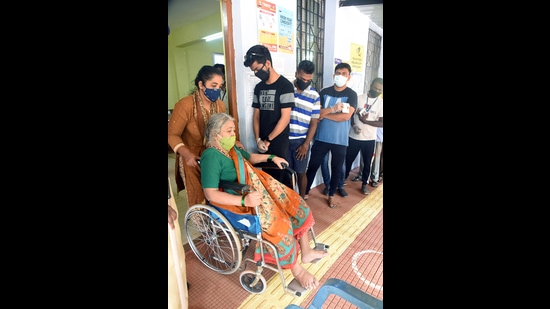
The Election Commission does not track how many differently abled voters on the rolls actually vote, but it has made special arrangements, such as providing “Divyang dolis” (or carriers) on Monday in remote constituencies such as Bageshwar, Uttarakhand, where wheelchairs and ramps weren’t enough to facilitate voting.
The total number of differently abled voters has gone up from 1,123,946 to 1,316,264 from 2019 (in these five states) to 2022, an increase of 17.11% . By states, among these five, Manipur, which goes to polls in two phases, on February 27 and March 10 has fared the best with an 87.9% increase, from 7,752 to 14,465. This is followed by Uttarakhand, which went to polls on Monday, which recorded a rise of 79.3%, from 38,183 to 68,478, according to ECI data.
Goa, which also went to polls on Monday is in third place, where the numbers have risen 67.2%, from 5,768 to 9,643, and Punjab, which goes to polls on February 20 is a distant fourth with an increase of 30%, from 111,197 to 144,667.
{{/usCountry}}Goa, which also went to polls on Monday is in third place, where the numbers have risen 67.2%, from 5,768 to 9,643, and Punjab, which goes to polls on February 20 is a distant fourth with an increase of 30%, from 111,197 to 144,667.
{{/usCountry}}Uttar Pradesh, where the second round of the seven-phase elections happened on Monday, is at the bottom of the table, with only a 12.3% rise, and the number of voters going up from 961,046 to 1,078,911 The state, however, has the highest number of differently abled voters among the five.
In the last round of assembly elections, held in Assam, Kerala, West Bengal, Puducherry and Tamil Nadu, in 2021, the number of differently abled voters on the rolls increased by 51%, with Assam and Kerela, recording an increase of more 100% among the states.
ECI, headed by Sushil Chandra and comprising of Rajiv Kumar and Anup Chandra Pandey has been pushing for greater inclusion of differently abled voters. The Commission’s motto for this year’s National Voters Day on January 25 was “incisive and participative elections”.
From ensuring all polling booths are on the ground floor, to providing ramps, EC has tried to ease access to voting facilities for the electors. It has also constituted a National Advisory Committee on Accessible Elections to ensure the complete participation of differently abled voters. The voters can also avail the postal ballot facility for polls since 2019.
Padam Shree awardee and diversity and inclusion consultant Niru Kumar lauded the attempts of the Commission. “There are three lenses why I am equipped to look at this, I have polio and am a disability person myself. As a diversity consultant and a national icon of the EC, the job they are doing is incredible. Both (former CEC) Sunil Arora are Sushil Chandra have been very strong champions of this cause,” she said. “The unique disability voter id card and the PwD app being available in the many languages in even the remotest polling booth have helped increase inclusion.”
“It instills a sense of empowerment,” she added.
On National Voters Day, Chandra also highlighted how the Commission was making the extra push to include more women and differently abled people on its rolls. “Our focus is to provide access to elections for all,” he said during the event.
Former Kerala chief electoral officer Teeka Ram Meena, said differently abled people were enrolled using an intensive campaign, with help from the department of social justice. “The number which we got from the department of social justice was different from ours,” he said. “It was a joint effort by the social welfare department, Handicap Commission and district commissioner to conduct a door-to-door campaign to enrol them.”
Meena added that political parties, media and online enrolment drives further strengthened the movement.