
 E-Paper



‘2 more years for Delhi to be breathable’: BJP MP's big remark amid pollution woes
Manoj Tiwari's remark comes after Delhi’s air quality slipped into the ‘very poor’ category on Tuesday morning, just a day after Diwali celebrations.

 Prefer HTon Google


Amid growing concerns over rising air pollution in the national capital, BJP MP Manoj Tiwari has estimated that it will take around two to two-and-a-half years for Delhi’s air to become breathable again.
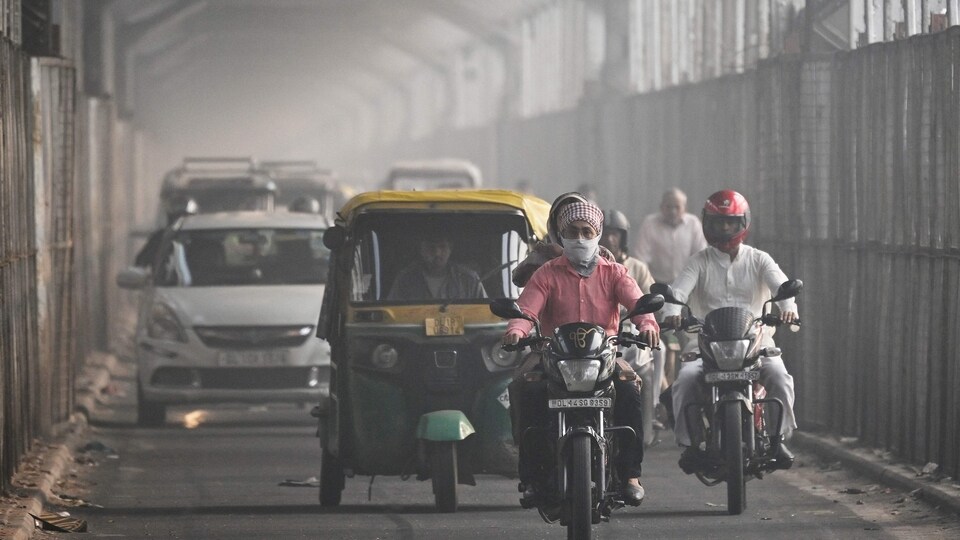
His remark comes after Delhi’s air quality slipped into the ‘very poor’ category on Tuesday morning, just a day after Diwali celebrations. The city woke up to a blanket of thick smog and haze following a night of cracker bursting.
Reacting to AAP's criticism of the Delhi government's handling of pollution concerns around Diwali, Tiwari said, according to news agency ANI: "Their (AAP) 11-year tenure has just ended. We have been repeatedly saying that it will take us 2-2.5 years to bring Delhi to a health-friendly and breathable condition. Despite that, the same people who polluted Delhi make such statements, and it makes me laugh."
Citing the Supreme Court's nod to sale and use of green crackers this Diwali, Tiwari said that the people of Delhi very happy this time. "The AQI, which used to reach the dangerous category in September, is still below that in October," Tiwari said.
While the Supreme Court had permitted the use of green crackers this time, it had set specific conditions, allowing them to be burst only between 6–7 pm and 8–10 pm from October 18 to 21. However, reports suggest that many people ignored these restrictions and continued bursting crackers well beyond the permitted hours, which possibly became a contributing factor to the rise in pollution levels in Delhi-NCR the next day.
Manoj Tiwari's remarks followed AAP's criticism of the Delhi government over the huge spike in pollution levels. AAP's Saurabh Bhardwaj had questioned the BJP-led government on Tuesday, alleging they "lied" about the artificial rain plan.
"The government said that after Diwali, we would fix all the pollution by conducting artificial rain. Did artificial rain happen? No, my question is that if you could have conducted artificial rain, then why didn't you do it? Do you (the government) want people to fall ill. The government has a collusion with private hospitals," he was quoted as saying by news agency ANI.
Meanwhile, Delhi minister Ashish Sood suggested that not just the national capital, but the neighbouring states should also take blame for the air quality. "Only firecrackers are not responsible for pollution in Delhi. However, I believe people should have followed the Supreme Court’s order to burst crackers before 10 p.m.,” Sood said, further adding: "Delhi has no weather of its own; many factors determine the weather and pollution levels here, and adjacent states also have a role to play."
The alarming spike in pollution levels this morning has further heightened concerns. While the overall AQI stood at 350 this morning, the readings surpassed 401 in some areas, entering the 'severe' category. Stage 2 of the Graded Response Action Plan (GRAP) is currently enforced in the city.


