E-Paper



24x7 Kerala court sets template for clearing judicial backlog
The ON court, inaugurated by current Supreme Court Chief Justice BR Gavai and which began functioning in November last year, was aimed to do a lot more than just digitising some aspects of justice delivery. It had the goal of bringing courts closer to the people and helping lawyers, litigants, and even the accused from being bogged down by the paperwork and proceedings

 Prefer HTon Google


Thiruvananthapuram: A year has passed since the country’s first 24x7 open and networked (ON) court was set up in Kerala’s Kollam district, and the feedback and results of the pilot project suggest that it is a model that has the potential to be scaled up and replicated across India in a bid to knock off the massive backlog of cases in the justice system.
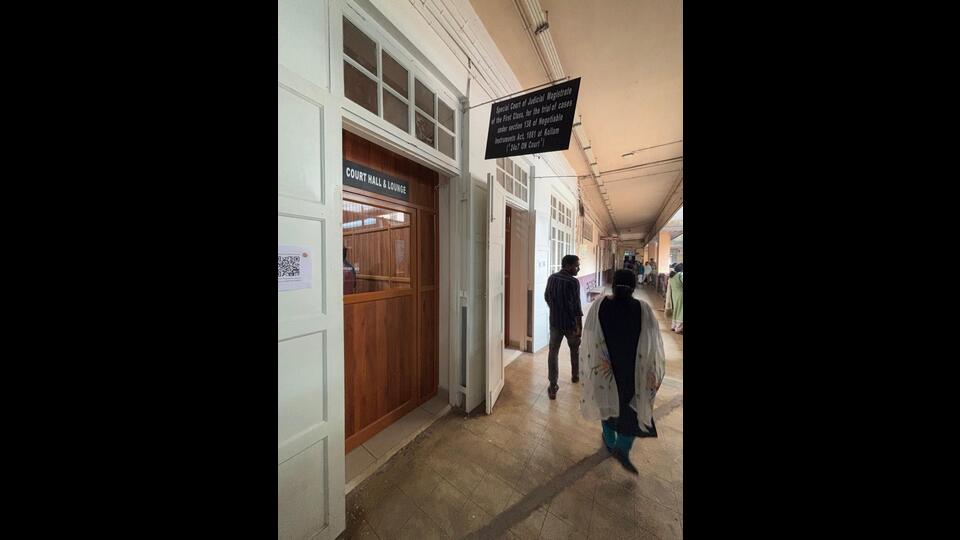
The ON court, inaugurated by current Supreme Court Chief Justice BR Gavai and which began functioning in November last year, was aimed to do a lot more than just digitising some aspects of justice delivery. It had the goal of bringing courts closer to the people and helping lawyers, litigants, and even the accused from being bogged down by the paperwork and proceedings.
To a large extent, the court has been successful on that front – in fundamentally transforming existing processes and making communication seamless with external but critical stakeholders like police, post, treasury, and prisons, those behind the project say.
The idea of the online court, which could deal with a specific category of high-volume cases and dispose them in a timely manner, germinated within the internal brainstorming sessions of judges of the Supreme Court and the Kerala high court. PUCAR, a non-profit collective of individuals and organisations focused on dispute resolution of common citizens in India, was brought in as a ‘knowledge partner’ that conducted user research and built the technology behind the online court. Agami, dedicated to reforms in law and justice, was one of the key contributors to the project.
The online court at Kollam deals exclusively with cheque dishonour cases under section 138 of the Negotiable Instruments Act, 1881 and accepts cases filed under 9 police stations in the district.
Cheque bouncing cases are high-volume and low-complex in nature and account for around 10% of litigations in district courts, thereby responsible for a large backlog in overall cases. Research showed that such cases tend to remain in the pre-trial stage in various courts for up to a year, primarily due to the difficulty in getting the accused and other parties to show up in court.
The 24x7 ON court is unique in the fact that all major steps during the proceedings of a case, right from filing the case to accessing and correcting documents, tracking the case to appearing for the hearing are done digitally. Cases can be filed at any time of the day, without physical paperwork, as opposed to specific timings and compulsory paperwork at physical courts.
Summons can be sent to the accused via SMS and e-mail as opposed to the traditional route via post.
The court simplifies processes specially for the litigants, as they can track the case through the portal and help them avoid trips to meet their lawyers. Lawyers get proactive alerts on their cellphone about hearings and case updates.
As of Nov 20, 2025, a total of 861 cases have been filed out of which 168 have been disposed of and 672 are currently pending. Out of the pending cases, over 350 of them are in the stage where the accused has to appear. Figures clearly show that while physical courts take anywhere from 1-2 years to even 5-6 years to dispose of a case, the average time for disposal in the ON court is just 140 days over less than 10 hearings.
Currently, a single judge presides over the court.
Beena M, a lawyer who has filed multiple cases of cheque dishonour in the ON court mainly for a prominent private bank, said she found the system extremely efficient, mainly due to the speedy disposal of cases and elimination of paperwork.
“In a physical court, once the case is filed, it takes a long time, sometimes months, for even the summons to be sent to the accused via post. Here, as soon as the case is filed and the documents are seen to be proper, the summons is sent immediately via text and e-mail. There are no long adjournments. Since a majority of cheque dishonour cases end up in out-of-court settlement, the disposal rate is quite fast,” she said.
The digital trail of cases, including all necessary documents, helps lawyers like Beena save time and paper.
With case updates reaching litigants in real-time, the lawyer-client communication channels are more open and clear, she added.
Litigants like Genghis Khan, a manager at a financial institution in Kollam who has filed over two dozen cases in the ON court, are also a happy lot.
“As a financial institution, we give out mainly vehicle loans and we encounter cheque bouncing issues from time to time. In such cases, the accused often have a history of fraud and do it again and again. There is no fear of the law. But in online court, the accused gets digital summons and simultaneously, the police also gets alerted. There is a fear (in the mind of the accused) that he will have to face the law,” said Khan, who was the first to get a settlement in the ON court.
He spoke of a case against a person from Attingal who had a fraud history and even resorted to threats and intimidation when asked to settle. But when the case was filed in ON court, the accused got timely updates related to the summons against him and the prosecution citing his previous cheating complaints.
“He got scared, I think, and offered to negotiate and settle. We accepted. It was a case that would have gone on for a long time if it was in physical court,” said Khan, underlining the need for more such digital courts that would speed up delivery of justice.
Supriya Sankaran, one of the founding members at PUCAR who was at the core of the project, said it was an ‘incredible experience’ understanding where the friction and pain-points in the system were and to build the corresponding technology and policy.
“People say systems don’t change because it has always been like that or that judiciary prefers it that way. We have been able to debunk that narrative. Whether it is lawyers, litigants or clerks, the truth is that it was not working for anyone. Everyone was suffering. Of course, people had feedback, but it was always in furtherance of wanting change. It created a nice challenge for us…to make (the system) better,” Sankaran told HT.
She said that she is convinced that this is the ‘model’ and the ‘approach’ to follow while pursuing the ambition to scale up the system across the country.
“This court is still not perfect and there is a lot more that has to happen. We continue to remain associated with the project on the ground and we are pursuing on how to improve the court digitally,” she added.
An official, associated with the IT division of the high court who preferred to remain anonymous, confirmed that there is a plan underway to set up a court to deal with cheque dishonour cases in Thrissur district too.
“We have proposed it and it is under active consideration. It is essential because courts get choked primarily with cases like cheque dishonour and motor vehicle compensation (civil). With the ON court, we have been able to adhere to the timeline of a maximum of six months for each case. In normal courts, it takes 5-6 years. So there is a huge difference,” he said.