Swine flu accounts for 98% of influenza cases tested across the country, according to the Indian Council of Medical Research, which also believes that there is no reason for panic as no deaths have been reported from the H1N1 subtype of the influenza A virus so far.
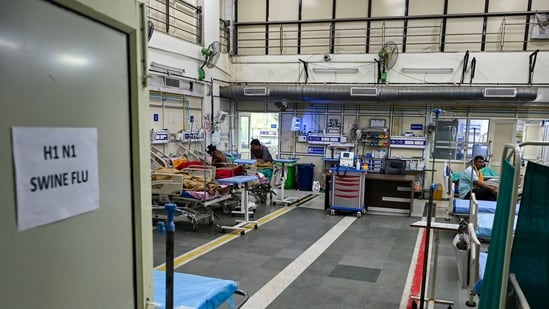
“Our surveillance network has shown about 98% of the cases that are tested are of H1N1; however, there is no need to panic as there is no shift in the seasonal flu pattern that we normally see. There are two peaks usually— monsoon and winters— and the cases that we are seeing are usual for this time of the year. We haven’t found any trend or pattern out of the usual that should concern us. Having said that we have to be watchful and follow preventive measures,” said Dr Rajiv Bahl, director-general, Indian Council of Medical Research (ICMR).
Still, in a country where it is estimated that less than 2% of the population has ever received a flu shot, leave alone an annual one, the flu can spread rapidly given the absence of any kind of herd immunity against a virus with a moderate reproduction number (1.3-2.8 according to previous estimates, though this sometimes varies by outbreaks), which is a measure of how contagious it is. Annual flu shots are the only insurance against seasonal flu outbreaks. To be sure, flu shots are cost-prohibitive , ranging from ₹2,000 to ₹4,000, so not everyone can afford it, especially in a country like India.
Bahl added that while the number of infections may have risen over the past few weeks, there aren’t too many severe cases needing hospitalisation. “Some cases are severe, but the number is not unusually high. And those who require admission are usually people who have some underlying medical condition. But the trend also suggests that the worst (in terms of infections) is yet to come.
“We can never know when the peak is going to hit until the number of cases start plateauing and then coming down. So far, the trend shows the number of infections is going up,” he said.
ICMR is tracking cases closely. “There is a robust surveillance network in place in 23 hospitals across the country that function as sentinel sites for syndromic and other testing. There are 73 labs that test at least 25 samples each in a week of severe acute respiratory infection (SARI) and influenza-like illness (ILI) to know which pathogens are circulating in the community,” Bahl added. Hospitals say there has been an uptick in the number of admissions related to respiratory illnesses but that the numbers are not overwhelming.
Also Read | Chandigarh logs second swine flu case of season
“The number of admissions of respiratory cases is high, but these are people who suffer from some form of co-morbidities. Not all need admission. Also, the numbers aren’t overwhelming and people are getting better,” said Dr Sumit Ray, medical superintendent, Holy Family Hospital, Delhi.
ICMR said on Sunday that the strain wasn’t new, and available vaccines were effective against the current strain. “The Influenza A (H1N1) pdm09 viruses currently circulating in the country belong to the A/Missouri/11/2025 (H1N1) pdm09-like virus strain. These viruses belong to clade 6B.1A.5a2a, subclade D.3.1.1, and have been in circulation since 2025,” said ICMR. “The Influenza strains currently circulating are also well matched with the vaccine strains recommended by the World Health Organisation for the Northern Hemisphere.”
Also Read | 1,777 cases, zero deaths: The science of H1N1, the surge in Delhi and how it differs from Covid-19
Based on these recommendations, companies issue annual vaccines. According to the US Centers for Disease Control and Prevention, almost half the adult population in the US takes a flu shot.