...
...
Next Story

Number theory: A caste-wise analysis of all chief ministers in India

A look at the overall, intertemporal and state-wise caste breakup of chief ministers.

Updated on: Aug 17, 2023 07:11 PM IST
Advertisement

Caste is a driving factor in Indian politics. While Indian politics has definitely become more socially egalitarian in the post-Independence period, it continues to play a crucial role in electoral arithmetic. The question to ask then is: Have politicians from deprived castes been more successful in getting themselves to leadership positions?

PREMIUMCaste plays a crucial role in India's electoral arithmetic.
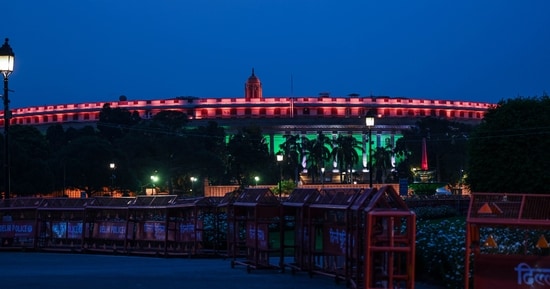
Caste plays a crucial role in India's electoral arithmetic.

Read here: Petitions against Bihar caste survey to be taken up on Friday: Supreme Court

One way to answer this is by analysing the caste composition of the top

Charts that matter
  • 71% of chief ministers in India have come from groups which are not OBC or SC/ST
    Of the 471 chief ministers in the database, 70.3% come from subcastes which do not belong to OBC, SC or ST groups. The share of CMs from OBC groups in the list is 22.7%, while only 2.5% of chief ministers in the database belong to the SC category. Of the total 471 chief ministers in the database, only 129 (this also includes CMs serving currently) had a full five-year term. Among these, 68.2% are from non-OBC/SC/ST groups. The share of OBC chief ministers who completed a full five-year term is 27.9%. Mayawati, who was the chief minister of Uttar Pradesh from 2007-12 is the only Dalit CM to have completed a full-term in office in India. Because the analysis excludes northeastern states which have a high ST population, it is prone to underestimate the share of ST chief ministers in India.
  • The share of OBC chief ministers peaked around 2008-09
    The database shows that the caste composition of chief ministers has been changing over the years. As is to be expected, this was very low between the 1950s and 1970s and started increasing in the late 1980s and 1990s. From December 2008 to May 2011, the percentage of OBC chief ministers remained greater than 40% (it reached an all-time high of 44.4% on 16th October 2009). Currently, one-third of the states in the database are headed by OBC chief ministers.
  • There is a big state-wise asymmetry between share of OBC population and OBC CMs
    While OBCs are expected to have a population share of somewhere between 40-50% at the all-India level, their population share varies significantly across states. It is as high as 68.2% in Tamil Nadu, greater than 50% in Telangana, Karnataka, Kerala, Bihar, Uttar Pradesh, and Andhra Pradesh, and as low as 13.8% in Punjab, 15.8% in Himachal Pradesh, and 16.8% in West Bengal. The OBC population share numbers have been taken from the 2019-21 National Family and Health Survey report 2019-21. A comparison of the share of OBCs in population with the share of OBC chief ministers in a state suggests that the share of OBCs chief ministers jumps significantly once the population share of OBCs goes above a certain level. For example, OBCs constitute 35% of Odisha’s population but only once in 1977 did an OBC become the chief minister (Nilmani Routray) of the state. On the other hand, states such as Karnataka and Bihar (the OBC population share is more than 50% here) have had a high share of OBC chief ministers.

This is the first of a two-part series based on HT’s own caste database of chief ministers in India. The second part will look at the questions of party-wise social background, subcastes and dynasties.

All Access.
One Subscription.

Get 360° coverage—from daily headlines
to 100 year archives.

E-Paper
Full
Archives
Full Access to
HT App & Website
Games
 
Follow India news real-time updates and the latest news covered on Hindustan Times, featuring today's critical updates on Sonam Wangchuk LIVE and more across India.
SHARE THIS ARTICLE ON
Hindustantimes wants to start sending you push notifications. Click allow to subscribe