
 E-Paper



A history of healing: St John’s Medical Hospital
St John’s Medical Hospital in Koramangala celebrates 50 years of providing affordable, ethical healthcare since its founding in 1975.

 Prefer HTon Google


Yesterday, December 8, marked the golden jubilee of an outstanding Koramangala institution that, since 1975, has kept its head down and beavered away at providing high-quality, ethical, and eminently affordable healthcare to thousands of Bangaloreans, across class, gender and age. We are speaking, of course, of the St John’s Medical Hospital, a natural extension of the even older St John’s Medical College, which consistently makes the cut as one of the country’s top colleges on every assessment metric, even 62 years after its founding.
It was the Catholic Bishops’ Conference of India (CBCI), the permanent association of the Catholic Bishops of India, that set up St John’s in 1963, as a self-financing private institution with a clearly articulated purpose – training healthcare professionals committed to serving the community, “especially the underserved, with integrity and compassion, in the spirit of Christ.” From the time CBCI was founded in Chennai in 1944, until it moved to the national capital in 1962, it was headquartered in Bangalore, which made the city the natural choice for locating the medical college.
The timing of the college’s founding was not random, either. In October 1962, Pope John XXIII, concerned that the Church may lose its relevance in an increasingly secular world, convened the Second Vatican Council (Vatican II) to rethink and ‘update’ how the Church engaged with its people, not only in the western world but also in the east, where adherents came from very different cultural backgrounds. One of the most significant decrees of Vatican II was Orientalium Ecclesiarum, which recognized the right of eastern Catholics, including those in India, to keep their own distinct liturgical practices. Pope John was also very supportive of the CBCI’s initiative to set up a medical college in India. Grateful on both counts, the CBCI named its medical college after St John the Baptist, the patron of Pope John.
In 1964, Pope Paul VI, who succeeded Pope John, became the first head of the Catholic Church to visit a predominantly non-Christian nation when he came to Bombay to preside over the 38th International Eucharistic Congress. To mark the historic event, CBCI dedicated St John’s, which had begun operations the previous year at the St Mary’s Orphanage building in Cooke Town — the then- Archbishop of Bengaluru, His Grace Thomas Pothacamury, had kindly provided the premises — to the Bombay Congress. The motto of the college – “He shall live because of me” – is a bit of a medico-biblical pun, a translation of the Latin phrase ‘Ipse vivet propter me’ from the Gospel of John; it refers to the Eucharist, the Christian ceremony commemorating the Last Supper, where Jesus breaks bread with his apostles for the last time, assuring them that they would always be spiritually connected to Him.
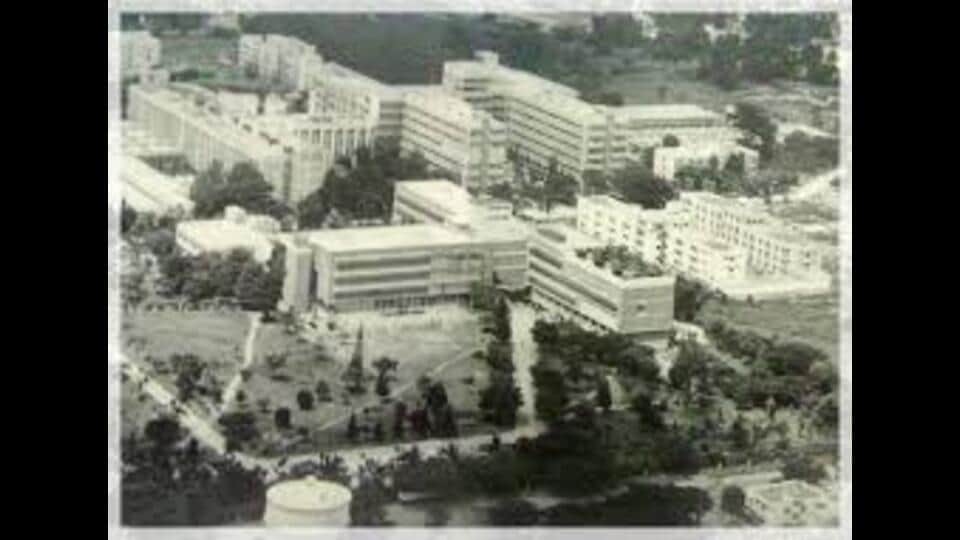
In 1968, St John’s Medical College moved to its permanent home in Koramangala. The sprawling 132-acre campus would also go on to house the St John’s Hospital (estd 1975), the School of Nursing (estd 1980; in 1989, it was upgraded to College of Nursing), and the St John’s Research Institute (estd 2004). In 1994, all the institutions were brought under the umbrella of the St John’s National Academy of Health Sciences (SJNAHS).
Tucked away within the SJNAHS campus is another wonderful little establishment – the Major General SL Bhatia Museum for the History of Medicine – which provides a fascinating peek into the practice of medicine a century ago.
Set up in 1974 by Lahore-born Sohan Lal Bhatia, the first Indian dean of Mumbai’s legendary Grant Medical College, the only physician to be awarded the Military Cross for Gallantry during WWI, and the founder of the History of Medicine department at St John’s in 1964, the museum, which is open to the public, features the good doctor’s own letters, notes, and collections of medical curiosities, which he bequeathed to the college on his death in 1981.
(Roopa Pai is a writer who has carried on a longtime love affair with her hometown Bengaluru.)


