As the Covid-19 pandemic raged last year, much of India receded to its safest haven, including the Supreme Court. For over seven months in 2021, all hearings were held online. There was no physical interaction. When the top court opened last October, massive glass barriers were put up in each court with strict restrictions on the number of people.
As the Covid-19 pandemic raged last year, much of India receded to its safest haven, including the Supreme Court. For over seven months in 2021, all hearings were held online. There was no physical interaction. When the top court opened last October, massive glass barriers were put up in each court with strict restrictions on the number of people.
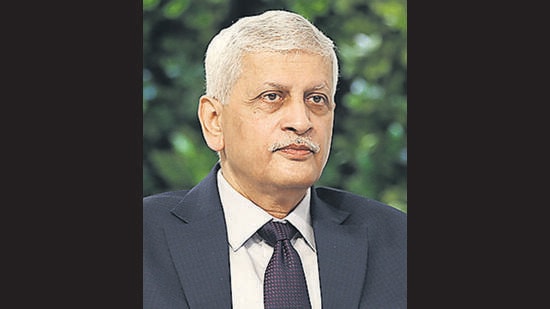
New Delhi, India – December 4, 2021: Justice UU Lalit, Judge, Supreme Court of India, at the Hindustan Times Leadership Summit (HTLS), in New Delhi, India, on Saturday, December 4, 2021. (Photo by Sanchit Khanna / Hindustan Times) (Sanchit Khanna/HT PHOTO)
Between October and November 2021, however, one Supreme Court judge travelled across 16 states in 42 days. At one point, he was in Ladakh in the northern, while on another, at Kanyakumari in the south. From Kutch to Mizoram, he went across the remotest parts of India, meeting people, and propelling legal aid.
Meet Supreme Court judge Uday U Lalit, India’s Chief Justice of India in waiting.
The beginning
Born in November 1957, justice Lalit is the son of ace criminal lawyer UR Lalit, a former judge of the Bombay high court. Justice Lalit enrolled as an advocate in 1983, and practised at the Bombay high court till 1985 before shifting his base to Delhi. Between 1986 and 1992, he worked with former Attorney General Soli J Sorabjee. Justice Lalit was designated as senior advocate by the Supreme Court in April 2004.
As a lawyer, justice Lalit was known for his thoroughness with the case and the patience in explaining legal quandaries to the bench. He became recognised for his sombre demeanour in arguing the difficult and sensational cases. From politicians such as former Punjab chief minister Amarinder Singh to film stars such as Salman Khan, justice Lalit was a preferred choice as a criminal defence lawyer.
Impressed by his ability and his integrity, the Supreme Court, in 2011, appointed him as the special public prosecutor in all 2G spectrum scam cases to ensure “fair prosecution”. The top court overruled the Centre’s mandate to appoint a prosecutor and reposed complete faith in senior counsel Lalit (as he then was) to lead the prosecution on behalf of the Central Bureau of Investigation and the Enforcement Directorate.
He appeared as amicus curiae to assist the court in several matters and also served as a member of the Supreme Court of India Legal Services Committee for two terms.
Judgeship
In August 2014, justice Lalit was elevated as a judge in the Supreme Court, making him only the sixth lawyer in India’s judicial history to be directly appointed to the top court.
Right from the beginning of his tenure, he created an indelible impression. Tucked away in one corner of the Supreme Court complex — Court hall 11 became the centre of some landmark judgments with justice Lalit and justice Adarsh K Goel constituting the bench.
Through a judgment in March 2017, this bench made judiciary shed years of reluctance to let cameras enter its courtrooms, as it ordered installation of CCTV cameras in at least two districts of all states and Union territories to record court proceedings.
Another order in 2017 proposed an action plan for the quick disposal of cases, especially bail pleas that must be decided expeditiously. “Judicial services are missions for serving society. The mission is not achieved if the litigant who is waiting in the queue does not get his turn for a long time,” held this order.
Justice Lalit was also a part of the bench that tried to prevent abuse of the anti-dowry law and automatic arrests in such cases. In July 2017, it directed that no arrest should “normally be effected” under section 498A of the IPC (cruelty for dowry) without verifying allegations as “violation of human rights of innocents cannot be brushed aside”. The bench ordered for the constitution of family welfare committees in every district to vet the complaints received by police or the magistrate.
A historic decision by the Supreme Court on August 22, 2017 striking down instant triple talaq as being violative of gender justice and right to equality also had justice Lalit sitting on the five-judge Constitution bench which decided against such a “manifestly arbitrary” form of granting divorce by a 3:2 majority. Justice Lalit sided with justices Rohinton F Nariman and Kurian Joseph to strike down such form of divorce provided under Section 2 of the Muslim Personal Law (Shariat) Application Act, 1937.
In November 2021, a bench headed by justice Lalit delivered yet another significant decision in offences under Protection of Children from Sexual Offences (POCSO) where the court said that “skin to skin” contact between accused and victim is not essential to prove “sexual intent”. Setting aside two judgments by the Bombay high court acquitting accused under POCSO for lack of any “skin to skin” contact, the top court said: “The very object of enacting the POCSO Act is to protect the children from sexual abuse, and if such a narrow interpretation is accepted, it would lead to a very detrimental situation, frustrating the very object of the Act.”
At present, the bench headed by justice Lalit is hearing several important matters. In March, justice Lalit’s bench initiated proceedings on its own motion (suo motu) for revamping the manner in which death sentences are handed down by the courts in the country, observing that it is time to usher in more objectivity in the criminal justice delivery system. The bench has undertaken an exercise to lay down a framework to assess socio-economic, mental and psychological aspects of prisoners at the time when they are to be sentenced to death following their conviction at the end of trial.
Justice Lalit’s bench is also hearing a public interest litigation (PIL) for implementing the provisions of the 2005 Protection of Women from Domestic Violence Act for providing protection officers, service providers and shelter homes for distraught women affected by domestic violence.
Legal aid reformsJustice Lalit became executive chairman of the National Legal Services Authority (Nalsa) in May 2021. It was the beginning of stellar reform that the legal aid movement in India was going to witness in the next few months despite the pandemic.
Soon after he took over, justice Lalit started having day-long interactive online sessions with chairpersons of state-level services authorities and committees to identify the major challenges in providing legal aid and the way forward. Awareness emerged to be the key; to let people know who they should approach when in legal trouble.
Soon, justice Lalit was travelling every weekend to different parts of the country to monitor the awareness campaign. As part of a six-week-long pan-Indian legal awareness and outreach campaign between October and November 2021, justice Lalit went across 16 states in a span of 42 days. Nalsa could connect with more than 1.5 million villages through door-to-door visits, interacting with around 630 million people and organising 464,000 legal awareness programmes during that period.
Speaking at the Hindustan Times Leadership Summit (HTLS) in December 2021, justice Lalit emphasised on building confidence about legal aid and providing quality legal aid services to enhance credibility of the movement. “Not transgenders, nor people with disabilities, and not those who are financially strained — no one should be deprived of legal assistance,” justice Lalit had said, imploring the leaders in the society to get associated with the legal aid movement.
Last week, justice Lalit, while delivering an address at the First All India District Legal Services Authorities meet in New Delhi, quipped with pride that after he took over, Lok Adalats have been able to settle over 30 million cases at pretrial stages, warding off a deluge of cases from entering the already overburdened justice delivery system.
He takes over from justice NV Ramana as Chief Justice of India on August 27.

 E-Paper