The Uttar Pradesh forest department’s firm and unambiguous stand on not allowing feral dogs to be relocated to the Pilibhit Tiger Reserve (PTR) has forced the Sitapur district administration to drop the idea.
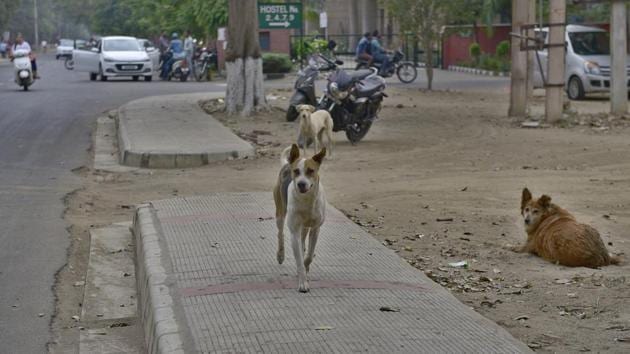
The Sitapur district administration had told the media last week that feral dogs would be relocated in PTR forests following rampant canine attacks in the district in which at least six children were killed and several others injured.
But the forest department simply put its foot down.
“We cannot permit anyone to shift animals which live near human settlements, to forest reserves because it will disturb the natural ecosystem of the reserve,” said Rupak Dey, UP principal chief conservator of forest (PCCF) on Monday. “The forest department will be forced to take action against anybody who attempts such a thing,” the officer added.
After the refusal by the forest department, the feral dogs caught in Sitapur are now being sent to Kanha Upvan in Lucknow.
“A total of 33 dogs, which were caught from the areas where these attacks took place, have been shifted to Kanha Upvan,” said Rakesh Patel, city magistrate of Sitapur.
{{/usCountry}}“A total of 33 dogs, which were caught from the areas where these attacks took place, have been shifted to Kanha Upvan,” said Rakesh Patel, city magistrate of Sitapur.
{{/usCountry}}These dogs will be sterilised at the veterinary hospital at the upvan before being released back in Sitapur district.
However, experts say that though sterilisation will prevent increase in dog population, it will have not end dog attacks.
The Sitapur district administration is also relying on creating awareness among people to prevent dog attacks. It is targeting school going children and their parents for the awareness campaign.
Sitapur district magistrate Sheetal Varma held a meeting with Basic Shiksha Adhikari (BSA) and district inspector of schools (DIoS) and directed them to make children and their parents aware about the dos and don’ts to avoid dog attacks.
“I have asked the BSA and DIoS to ensure that a note is written in students’ diaries for their parents, requesting them to keep their children away from dogs and not to leave them be unattended,” said Verma. “We will also shut down school in affected areas, if needed,” she added.
Apart from the students, the administration is also planning to form groups of local volunteers who can educate villagers about ways to save children from dog attacks.
According to experts, while immediate attacks can be prevented by creating awareness, mass sterilisation of the dogs was the only long-term solution to curb dog attacks.
“Sterilisation and vaccination of dogs is a slow process but is the most humane way to counter this problem,” said Shilpa Mahbubani, spokesperson of Compassion Unlimited Plus Action (CUPA), a Bengaluru-based NGO, which works to control dog population in residential areas.
The World Health Organisation also suggests sterilisation and vaccination of stray dogs as an effective means to check dog population and spread of zoonotic disease like rabies. In India, a draft formulated under prevention of cruelty to animals (Animal Birth Control Rules-2001) also prescribes sterilisation as the only method to check dog population, linked directly to attacks.
On Monday, the UP police started deploying drones and using night vision devices to track and trap feral dogs in villages around Sitapur.