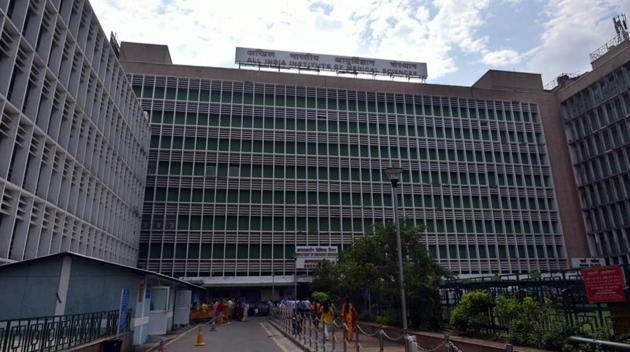
The Delhi-based All India Institute of Medical Sciences (AIIMS) is likely to open up its health care services in a phased manner from next week after it shut down all but its emergency services on March 24 following the coronavirus disease (Covid-19) outbreak.
“We’re looking at re-starting limited outpatient departments (OPDs) and surgical departments. The opening up will start in a phased manner,” said Dr. Randeep Guleria, director, AIIMS, Delhi.
On March 24, the hospital had shut down all its non-emergency departments, including surgical departments and specialty clinics, and only kept its emergency open for non-Covid-19 patients.
The decision was in line with a Union Ministry of Health and Family Welfare’s directive, urging hospitals to postpone all non-essential services and elective procedures in a bid to free up ventilators and intensive care unit (ICU) beds for Covid-19 positive cases.
In early April, the hospital had started teleconsultation facility for its follow-up cases, where a patient can book an appointment online.
“The departments that are managing well through telemedicine will be asked to continue. We’ll begin with semi-emergency and comfortable day-care surgeries that don’t require too much manpower, and also minimal infrastructure,” said Dr. Guleria.
In the first phase, gallstone removal, hernia, and other such surgeries will be conducted, as they require less number of hospitalisation days ensuring beds are not occupied for long and also minimum use of ventillator.
{{/usCountry}}In the first phase, gallstone removal, hernia, and other such surgeries will be conducted, as they require less number of hospitalisation days ensuring beds are not occupied for long and also minimum use of ventillator.
{{/usCountry}}The hospital has set up its trauma centre and its cancer hospital in Jhajjar, Haryana, as dedicated Covid-19 hospitals.
“Dedicated Covid-19 facility goes beyond hospital infrastructure and largely involves nurturing human resources. We’ll have to divide our staff into Covid-19 and non-Covid-19 groups. Simultaneously, we need to keep a close watch on the surge in Covid-19 positive cases. Initially, we’ll start with opening up a limited number of departments, and depending upon how the situation evolves over the next few weeks, we may open up some more, if the Covid-19 curve remains under control,” said Dr. Guleria.
“There’s a huge risk of a non-Covid-19 patient testing positive. We’ve had a similar experience recently, where a trauma patient tested Covid-19 positive. The challenge in the gradual opening up of departments is to factor these critical aspects in mind. We’ll have to monitor the evolving situation closely,” he said.
“Everything has to be thought through. We’ve to re-define our new normal. The medical practice will undergo a paradigm shift soon,” he added.
The central government-run Safdarjung Hospital has also opened up its outpatient clinics for new patients from Wednesday.
The opening up of more hospitals in the national capital, which had earlier restricted its services to emergency only, will ease the burden on the Delhi government-run hospitals, as most of them have been running on more than 100% capacity.
The constraints were drawn to the Centre’s attention by the Delhi government earlier this week.