
 E-Paper



Amit Shah sought MPs’ suggestions on criminal bill, says BJP leader
In December last year, Union home minister Amit Shah had written to all lawmakers, seeking their suggestions on the proposed law, the leader cited above said, seeking anonymity.

 Prefer HTon Google


The Centre last year sought suggestions from lawmakers across party lines on the provisions of the Criminal Procedure (Identification) Bill which authorizes law enforcement authorities to collect, store and analyse details, including biometrics, of all convicts and detained persons, a senior Bharatiya Janata Party (BJP) leader said on Monday.
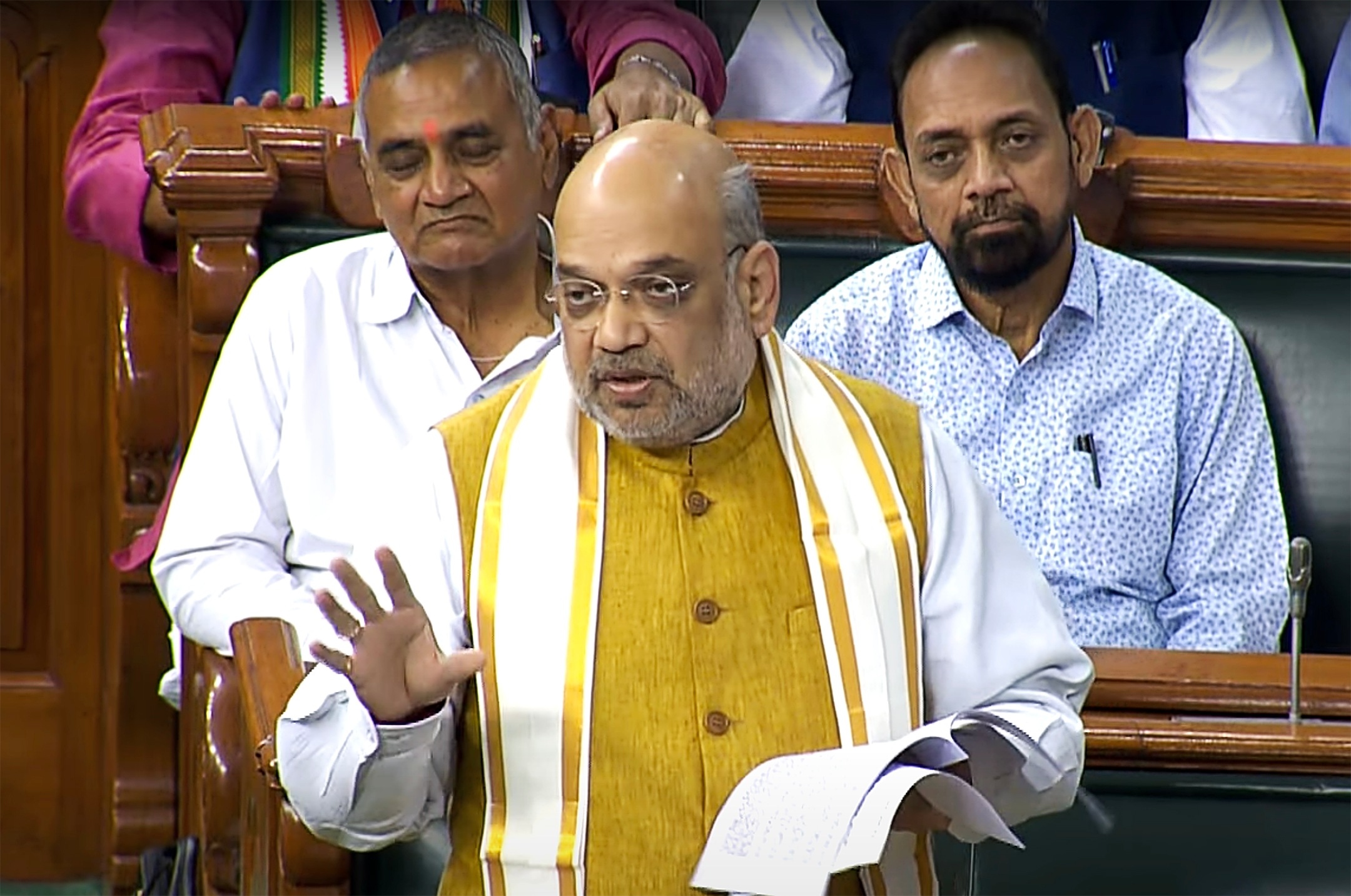
In December last year, Union home minister Amit Shah had written to all lawmakers, seeking their suggestions on the proposed law, the leader cited above said, seeking anonymity.
“… The experience of seven decades of Indian democracy calls for comprehensive review of criminal laws, especially the Indian Penal Code, 1860, the Code of Criminal Procedure, 1973, and Indian Evidence Act, 1872, and adapt them in accordance with the contemporary needs and aspirations of our people. The government of India intends to create a people-centric legal structure,” the letter, seen by HT, said.
“A Member of Parliament has a significant role in the lawmaking process. The suggestions from Members of Parliament will be invaluable in this exercise of comprehensive amendments in criminal laws,” it added.
The senior BJP leader’s claim came amid demands by opposition leaders that the bill be referred to a Parliamentary standing committee to ensure stronger safeguards to prevent its misuse.
The bill makes it mandatory for persons suspected to be involved in a crime, arrested, or detained, to allow police to collect details, including biometrics, and empowers the National Crime Records Bureau (NCRB) to collect, store and preserve these records. NCRB will be the main repository of this data, and be able to share it with other agencies, including those in states and Union territories. It will also have the power to destroy and dispose off the records. It can retain such data for 75 years in digital or electronic form.
The details law enforcement will be able to capture following passing of this bill include finger impressions, palm print impressions, footprint impressions, photographs, iris and retina scans, physical and biological samples and their analysis, behavioural attributes, including signatures, handwriting or any other examination referred to in section 53 or section 53A of the Code of Criminal Procedure, 1973.
The draft law seeks to repeal an existing act – the Identification of Prisoners Act, 1920. Resistance or refusal to allow the collection of data under this proposed law shall be deemed to be an offence under section 186 of the Indian Penal Code.
During his address in Lok Sabha on Monday, Shah also claimed that the Centre had invited suggestions from states and included some of the best practices from other countries in the area of evidentiary proof for solving crimes. The matter was also discussed with the state governments, he said.
The opposition, however, continued with their demand that the bill be sent to a select committee.
“All opposition parties in Rajya Sabha want it (bill) to be referred to a select committee because the bill raises very grave concerns and such an important bill cannot be bulldozed through without any scrutiny whatsoever,” Congress’ chief whip in Rajya Sabha, Jairam Ramesh, said.
“The proposed amendments are sweeping…they make no difference between those who are in preventive detention and those who are convicted. As per the amendments, even those who are in detention can be subjected to detailed scrutiny that can be invasive,” CPI(M) leader and Rajya Sabha MP John Brittas said.
Opposition MPs underlined several concerns in Lok Sabha as well. In a letter to Shah, Congress MP Gaurav Gogoi wrote, “In the sphere of hate speech legislation, specifically section 135 of the IPC, truth is once again not an accepted defence. This leads to cases that remain undecided for ages or where a decision is taken on the basis that the speech thus employed, even if historically true or a fact, may still be criminalised on the reasonable expectation that it may incite violence. Once again, there is a wide scope for discretion to the exercised. Such interpretation of the law is likely to contribute to tricky situations in the online sphere. Firstly, we may look at it as a means that may quell discussion or reportage of communal disharmony.”
Gogoi also referred to section 124A of the IPC that deals with sedition and said that at present, employing such a law in a democratic, socialist, republic with a Constitution is akin to using outdated blasphemy laws in other countries.


