At least 50 million people could die and the world will be hit by a decade-long global atmospheric catastrophe if a nuclear war broke out between India and Pakistan, said a new study published on Wednesday, though Indian experts termed the chances of such a conflict vanishingly small.
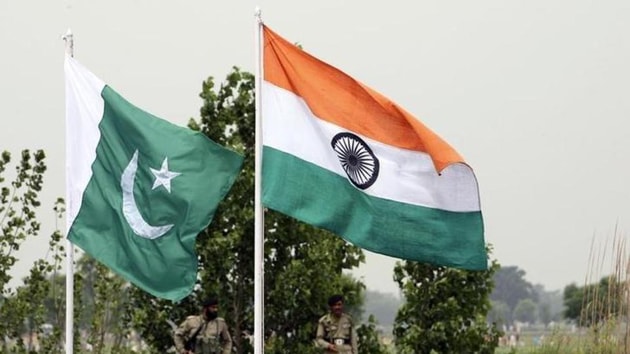
The study, published in the journal Science Advances, looks at a nuclear war scenario between the two neighbours in 2025.
In the scenario, simulated using state-of-the-art global climate models, India and Pakistan use 100 and 150 strategic nuclear weapons respectively, releasing 16-36 million tonnes of soot (black carbon) in smoke that would rise into the upper atmosphere, blocking solar radiation.
Also Watch | ‘Pakistan’s plans will fail if J&K moves towards development’: Jaishankar
This could lead to a decline in sunlight reaching the Earth by 20 to 35%, cooling the surface by between two and five degree Celsius.
“In addition, severe short-term climate perturbations, with temperatures declining to values not seen on Earth since the middle of the last Ice Age, would be triggered by smoke from burning cities,” read the paper.
This could reduce precipitation by up to 30% and diminish the rate at which plants store energy as biomass by almost a third on land. “Crops would be affected by colder temperatures, less precipitation, less sunlight, and more ultraviolet radiation due to ozone depletion,” Alan Robock, a professor at Rutgers University and one of the authors of the paper, told HT.
The paper found a high casualty figure because both India and Pakistan are densely populated, and based its calculation on a scenario where both countries attack urban centres. Under its scenario, Pakistan’s losses would be about twice those of India in terms of a percentage of the urban population.
{{/usCountry}}The paper found a high casualty figure because both India and Pakistan are densely populated, and based its calculation on a scenario where both countries attack urban centres. Under its scenario, Pakistan’s losses would be about twice those of India in terms of a percentage of the urban population.
{{/usCountry}}“Smoke from burning cities will rise into the stratosphere and spread globally within weeks. Widespread agricultural failures are likely,” Owen B Toon, lead author and professor at the University of Colorado, told HT. Impact on food production is seen to range from crop-growing regions of North America and Eurasia, Southeast Asia and fisheries in the north Atlantic and Pacific.
Robock said such instant climate change was only experienced after super volcanic eruptions, such as the Toba eruption roughly 74,000 years ago in present day Sumatra, Indonesia. It is one of the largest Earth’s largest known eruptions.
Nuclear rhetoric in the sub-continent has been charged in recent weeks, especially by Pakistan prime minister Imran Khan who warned at the United Nations General Assembly of a potential of a nuclear war over Kashmir.
But experts said the chances of such a conflict realistically breaking out are next to zero. “The possibility is almost non-existent is because of the shared culture and communities. The two countries have never fought wars of annihilation because you’re literally cutting too close to the bone. Our wars have been very limited,” said Bharat Karnad, a professor at the Centre for Policy Research in Delhi. He added that the rhetoric around nuclear war is often used for deterrent purposes.