
 E-Paper



Army Chief Naravane’s Nepal visit to break ice, Oli wants Pancheshwar project revived
Gen Naravane will be formally conferred the title of Honorary Chief of Nepal Army by Bidya Devi Bhandari, President of Nepal, during his three-day visit beginning November 4.

 Prefer HTon Google


The results of 45 days of discreet back channel diplomacy with Kathmandu will be put to test this week when Indian Army Chief General M.M. Naravane calls upon Nepal Prime Minister K P Sharma Oli and formally buries the orchestrated controversy over road construction via Lipulekh for pilgrimage to Mansarovar in Tibet.
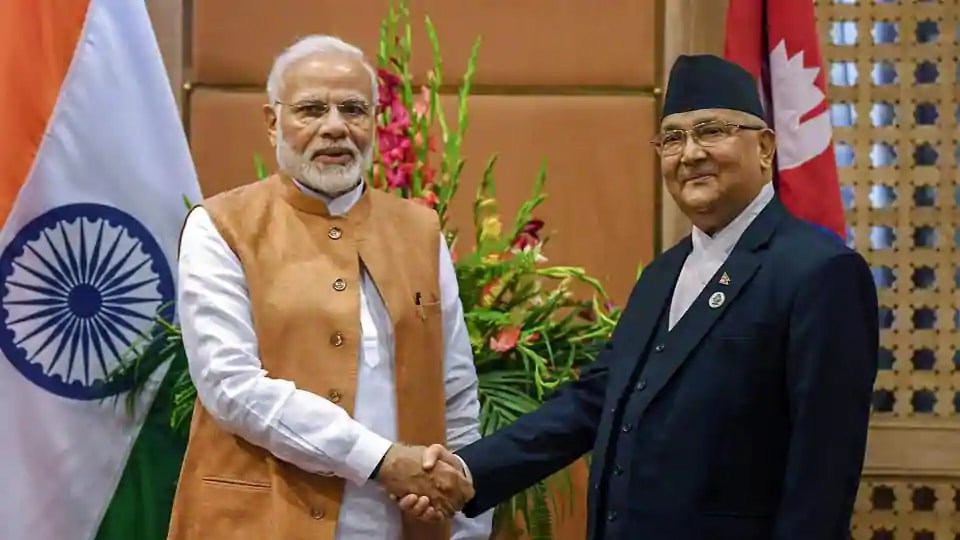
Gen Naravane will be formally conferred the title of Honorary Chief of Nepal Army by Bidya Devi Bhandari, President of Nepal, during his three-day visit beginning November 4.
PM Oli is scheduled to meet Army chief in his capacity as Defence Minister after the investiture ceremony.
Also Read: Nepal PM Oli sends a quiet message to India with a change in his cabinet
There are all indications that Gen Naravane will receive a red carpet treatment from Kathmandu as the Oli government wants to revive the Pancheshwar multi-purpose project on river Mahakali as well as other hydro-electric projects with India. According to official sources, the Pancheswar draft detailed project report is under discussion of the technical teams by two governments with 80 per cent of the outstanding issues resolved through mutual consultation. India’s SJVN is already constructing a 900 megawatt river Arun III project and another 900 MW Upper Karnali hydroelectric project by GMR is on steam with no issues raised from Kathmandu.
As India firmly believes that Kalapani map controversy was a result of Nepal’s own domestic politics, it is willing to shake extended hand of friendship from Kathmandu and go above internal party wrangling to restore the age-old relationship between two close neighbours. Prime Minister Narendra Modi himself is interested in deepening ties with Nepal and has made it clear to all that Kathmandu has a special place with New Delhi irrespective of the party in power.
In fact, India is considering a plan to contribute significantly in education, health and infrastructure development sectors in Nepal. The following can be done with Nepal:
• Education: Even though India has invested significantly over the years, there is a desperate need for assisting Nepal in setting up schools and academic institutions. India could also cater to education facilities in the eastern and western regions of Nepal while extending a large number of scholarships to Himal region children to study in India.
• Health: India can help Nepal by catering to health facilities in the form of specialised small hospitals for the remote northern areas. There needs to be intense engagement between physicians of both countries to bridge the deficiency of trained doctors in the Himalayan Republic as well as support for critical medicine supply from New Delhi.
• Infrastructure: India and Nepal need to join hands to build road and bridges infrastructure in remote areas on a long term basis. China has already moved into this area and has constructed the ring road around Kathmandu. The two countries also need to jointly identify the points where the embankments have to be strengthened to prevent flooding of trans border rivers.
• Water Shortage: India needs to share expertise with Nepal to remove serious drinking water shortages in high altitude areas.
• Agriculture: India has been supplying fertilizers to Nepal but this has been halted with Kathmandu blaming New Delhi for not renewing an old agreement for such supplies. This issue needs to be sorted out on a priority basis as Kathmandu is looking towards China and Bangladesh to plug the gap.
The two countries need to look at increased trans-border connectivity by enhancing the number of trading points on the border with immigration and customs facilities. Besides, India and Nepal could work together to develop Simikot and Nepalgunj airports, used by Indians for Mansarovar pilgrimage.
While Gen Naravane’s visit is expected to break ice between two age old friends, one seriously hopes that it does not turn out to be a false dawn.


