Western Eurasian influence spread to South Asia in two waves sometime before the advent of the Bronze Age (which lasted approximately from 3000 to 500 BCE) and in the late Bronze Age, according to a theory proposed in a study published this week in Science.
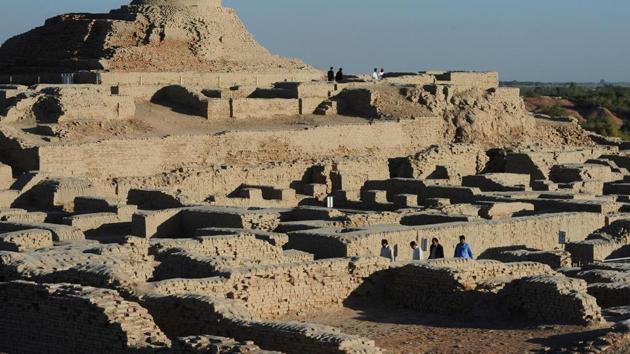
The research contributes to a long-standing debate about whether Indo-European languages, including Sanskrit, were brought to the subcontinent by outsiders, sometimes referred to as ‘Aryans,’ or evolved indigenously. Linguists support the idea that these languages were not born indigenously but introduced and genetic studies have favoured this view. Recent academic debate has centred on the question of which group brought the Indo-European languages to South Asia and when. The new paper points to a group of steppe pastoralists, who inhabited the Central Asian grasslands north of Afghanistan and migrated eastward in the late Bronze Age.
“At least two distinct waves of gene flow brought west Eurasian ancestry to South Asia, one related to sedentary farming populations inhabiting Iran and Turkmenistan and other to the Late Bronze Age ‘chariot horizon’ which brought in Indo-European languages to South Asia from the steppe,” Peter De Barros Damgaard, at the Center for GeoGenetics, University of Copenhagen, and a co-author, said.
The researchers analysed 74 genomes of ancient humans who lived between 11,000 to 500 years ago sourced from across the expanse between Europe and East Asia. No ancient genome samples from India were used but samples from Turkmenistan were used as a proxy for South Asia. These were co-analysed with samples from present-day Asian populations.“Once the genomes are sequenced we can start comparing them to each other and conduct population genomic analyses to understand population structure and relatedness of different groups across space and time,” Damgaard said. An important feature of the work is that it relies not just on genetic evidence but also on archaeological evidence and linguistics.
{{/usCountry}}The researchers analysed 74 genomes of ancient humans who lived between 11,000 to 500 years ago sourced from across the expanse between Europe and East Asia. No ancient genome samples from India were used but samples from Turkmenistan were used as a proxy for South Asia. These were co-analysed with samples from present-day Asian populations.“Once the genomes are sequenced we can start comparing them to each other and conduct population genomic analyses to understand population structure and relatedness of different groups across space and time,” Damgaard said. An important feature of the work is that it relies not just on genetic evidence but also on archaeological evidence and linguistics.
{{/usCountry}}The origins of the first wave of migrants appear to be the Copper Age Namazga farming culture, that developed at the southern edge of the steppe, who migrated to the region possibly before the advent of the Bronze age and did not include speakers of the proto Indo-European languages.
The second wave arrived around 2300 to 1200 BCE and was responsible for bringing Indo-Iranian languages, a subset of Indo-European languages. Present day Indo-European languages include Hindi, Urdu, Punjabi, Bengali, Marathi and Gujarati.