
 E-Paper



As cases plateau, Delhi to wait before easing Covid curbs
Strict restrictions on activities and movement of people are in place in Delhi since Covid cases began rising at the beginning of the month, with all leisure and discretionary activities like eating out and going to the cinema banned.

 Prefer HTon Google


The Delhi government’s health department reviewed the city’s Covid-19 outbreak at present and decided to further observe case trends over the next few days to propose any relaxation of curbs, a decision questioned by experts who said some restrictions can now be rolled back.
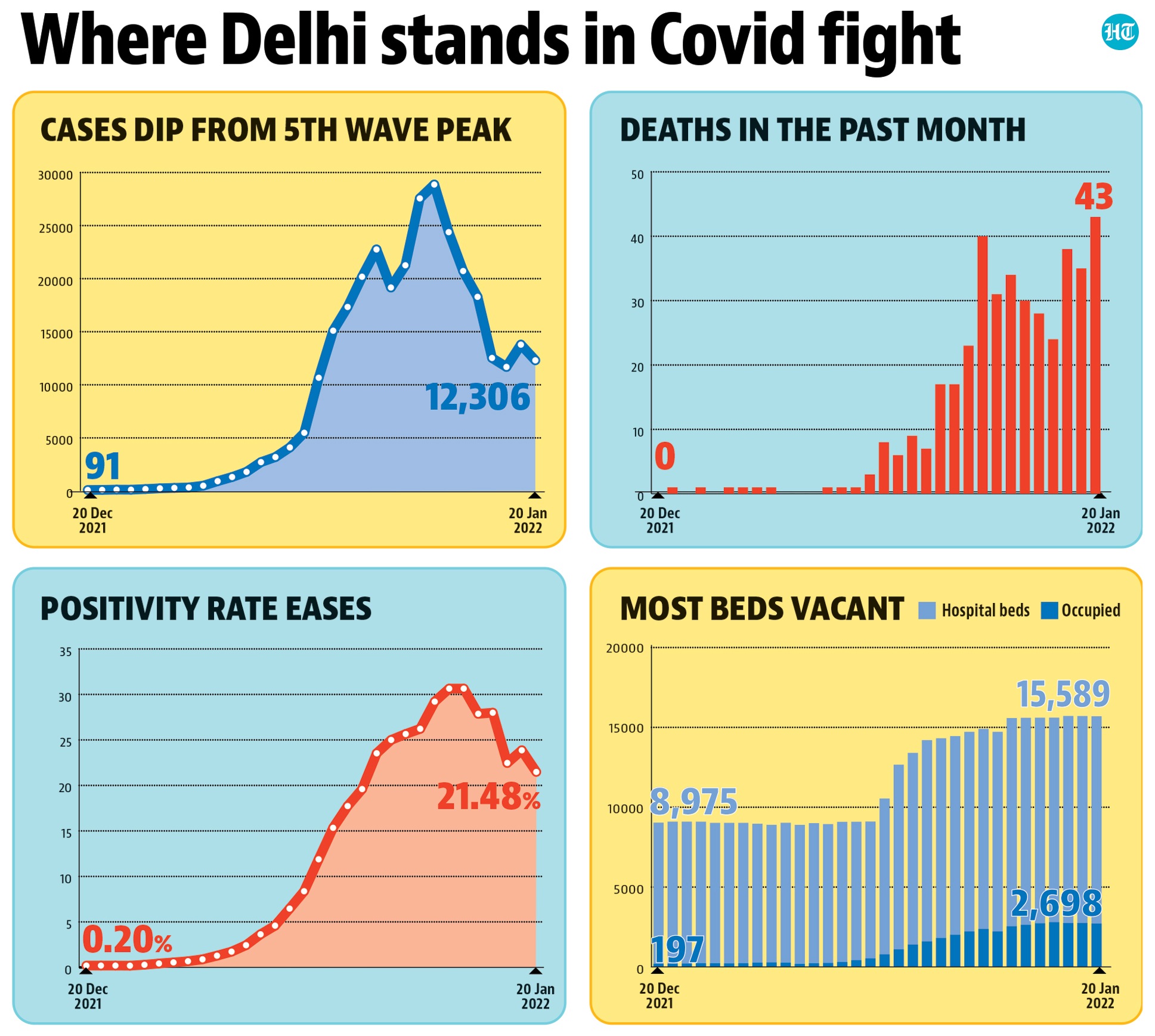
The Capital added 12,306 new cases, which accounted for 21.48% of the tests conducted – both numbers were a drop from what was recorded a day earlier. The hospital occupancy rate too has remained stable, with more than 82% of the hospital beds having remained vacant over the last week.
The officials too accepted that the situation was stable. “We are closely monitoring the situation. While the hospitalisations in Delhi have been stable for the last one week, we are yet to see a clear decline in cases. We will wait for some time before we can relax the restrictions,” said a senior health official, asking not to be named.
Strict restrictions on activities and movement of people are in place in Delhi since cases began rising at the beginning of the month, with all leisure and discretionary activities like eating out and going to the cinema banned. A curfew comes into force on between 10pm and 5am and over the weekends, when people can only leave their homes for certain essential activities.
Also read | Delhi caps RT-PCR test at private labs, for home collection: Know the new rates
These curbs have caused significant losses, particularly the hospitality sector. Medical experts said at the current stage, they are excessive.
“The government can start lifting restrictions in a phased manner. We have seen that this variant is impacting the unvaccinated, people with co-morbidities and senior citizens more, so while protecting this segment, the rest of the population can be allowed to slowly start resuming their lives and livelihoods. What we are seeing now is that because of regular restrictions, the working class are desperate,” said Dr Sumit Ray, head of department (critical care), Holy Family Hospital.
Dr Jugal Kishore, head of department of community medicine at the Safdarjung Hospital, said continuing restrictions could, in fact, drag out the infection curve.
“Since this variant is so transmissible, restrictions are only delaying the decline in infections. Another important thing to consider is that the longer we allow the virus to stay in the community, the greater are its chances to mutate, which in the larger sense would delay the end of the pandemic itself. In my opinion, the restrictions are more of a psychological consolation for people that the government is in action-mode and because of this, authorities also do not want to stick their necks out and impose no restrictions,” said Dr Kishore.
At its peak this month, the city reported 28,867 cases. The positivity rate reached a high of 30.64%. But the numbers have come down from these levels.
After recording a minor increase in new Covid infections on Wednesday, Thursday’s numbers were a decline. But, the city on Thursday added 43 deaths, the highest single day deaths in the Omicron wave so far, surpassing the 40 reported on January 12.
The last time the city reported such a high death count was on June 10 last year, with 44 deaths.
According to the Delhi government health bulletin, there was also a fall in the positivity rate. Out of the 57,290 samples tested, 21.48% came out positive, as opposed to 23.86% on Wednesday and 22.47% on Tuesday.
As government officials pointed out, hospital admissions continued to remain stable, with only 2,698 beds (17.31%) in dedicated beds in Covid-19 hospitals being occupied out of the total 15,589. This means, 12,891 (82.69%) remained vacant.
While reviewing the Covid-19 spread in the national capital, the health department also asked districts to ensure that the number of daily testing is amped and stricter action against the violation of Covid norms is also ensured.
“The daily testing had dropped slightly, but what we need to understand is that even if tests are slightly lower we can still get the city’s broad picture of infections with the positivity rate. We have ordered the district magistrates to start testing people in crowded places again,” a health official said.


