New Delhi The Union government enacted an amended Consumer Protection Act in 2019 to deal with newer challenges in a digitised, technologically evolving marketplace where traditional consumer safeguards no longer apply. In an interview with Zia Haq on the occasion of National Consumers’ Day, Union food and consumer affairs minister Pralhad Joshi answers key questions on consumer rights. Edited excerpts:
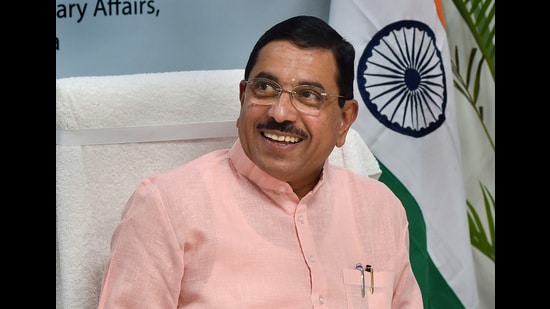
As technology is rapidly evolving in this age of AI, will protection of consumer rights need much more agility from regulators?Indeed, the rapid pace of technological advancements presents both opportunities and challenges in protecting consumer rights. As technology evolves, so too must our regulatory frameworks. We recognise this, and are committed to adopting a forward-looking, adaptable approach. For instance, the theme of the National Consumers’ Day 2024 is “virtual hearings and digital access to consumer justice”.
We are increasingly focusing on the digital landscape, addressing emerging issues like e-commerce, data privacy and online advertising.
We have introduced a single integrated platform e-Jagriti for e-filing of consumer complaints, monitoring and tracking of case status and attending hearing from the comforts of consumers’ homes through video conferencing. The portal is AI driven. Through these measures, on the National Consumer Helpline, we have achieved 100% disposal rate for e-commerce grievances in 2021, 2022, and 2023.
Dies regulatory jurisdictions need more fine-tuning in the interests of consumers? For instance, when it comes to consumer complaints, airlines often take the plea that they come under the directorate general of civil aviation (DGCA)?While there is a clear distinction between sectors, such as aviation being regulated by DGCA, the consumer protection framework ensures that no sector is exempt from consumer rights. We are aware that some sectors raise concerns about jurisdictional overlap. However, our approach is to ensure that consumers are not left without recourse. There may be a need for more coordination between regulators to ensure that consumer grievances are addressed promptly and comprehensively, and we are open to fine tuning the jurisdictional framework.
{{/usCountry}}Dies regulatory jurisdictions need more fine-tuning in the interests of consumers? For instance, when it comes to consumer complaints, airlines often take the plea that they come under the directorate general of civil aviation (DGCA)?While there is a clear distinction between sectors, such as aviation being regulated by DGCA, the consumer protection framework ensures that no sector is exempt from consumer rights. We are aware that some sectors raise concerns about jurisdictional overlap. However, our approach is to ensure that consumers are not left without recourse. There may be a need for more coordination between regulators to ensure that consumer grievances are addressed promptly and comprehensively, and we are open to fine tuning the jurisdictional framework.
{{/usCountry}}Under the Consumer Protection Act 2019, power has been given to the Central Consumer Protection Authority to refer a matter to the regulator concerned along with its own findings. We have often referred cases to FSSAI, DoT, ministry of health and family welfare etc. for cases involving food, health products and scam calls etc. Further, the Consumer Protection Act 2019 mandates that its provisions shall be in addition to and not in derogation of the provisions of any other law.
Do you have any plans or see any further need to amend the Consumer Protection Act, 2019 to strengthen it?The Consumer Protection Act, 1986 was enacted to provide for better protection of the interests of consumers but over a period of time, consumer markets for goods and services went under drastic transformation since the enactment of the 1986 Act. Therefore, to address issues relating to misleading advertisements, telemarketing, multilevel marketing, direct selling and e-commerce, the need to amend the 1986 Act arose. The Consumer Protection Act, 2019, is a significant step of the Modi government in safeguarding consumers’ rights.
While it is still in its early stages, we are constantly monitoring its implementation to identify areas for improvement. We have already undertaken initiatives like the notification of the Consumer Protection (E-commerce) Rules, Guidelines for the Prevention and Regulation of Dark Patterns 2023, Guidelines for Prevention and Regulation of Greenwashing, and we are open to making amendments as necessary to address emerging concerns.
Recently, your ministry and its institutions had taken actions against firms, such as coaching institutes for misleading ads, Ola Electric on consumer plaints, airlines, travel aggregators and “dark patterns”. What relief have consumers got?The actions taken by us, including against coaching institutes, Ola Electric, airlines, and travel aggregators, have yielded positive results for consumers. Many consumers have received compensation or refunds, and firms have been instructed to change their practices to align with fair advertising and transparent service provisions. In the case of coaching institutes, CCPA has imposed a total penalty of ₹54,60,000 on 18 coaching institutes so far. Then because of notification of guidelines for prevention and regulation of dark patterns, many air travel websites have redesigned their portals to remove dark patterns. Further, a close interaction with e-commerce platforms has led to changes in the subscription models and recurring payment methods of their platforms.
CCPA has often acted robustly and pre-emptively to enforce the law. Yet, the most it can fine is Rs. 50 lakh even when dealing with big global brands?The Consumer Protection Act, 2019, empowers CCPA to act against unfair trade practices and violations of consumer rights. While the current penalty of ₹50 lakh has been effective in many cases, the government is aware that global companies often operate on a larger scale, which can sometimes make this fine seem insufficient. But irrespective of the amount of fine, the purpose of CCPA is well served, that is to give a strong message to the companies that if they don’t review their business models or trade practices that are prejudicial to the interests of consumers, they should be ready to pay the price. Under, the CP Act, 2019, CCPA also has power to recall goods, order refunds of prices of goods or services or order discontinuation of the products or services on finding sufficient evidence of violation of consumer rights or unfair trade practices. If needed, we will explore the possibility of enhancing the powers and penalties to ensure the authority can take stronger action against larger violators.