GUWAHATI: A community’s minority status should be designated based on its representation in a state or district’s total population, Assam chief minister Himanta Biswa Sarma said on Wednesday, adding that the decision should be based on the existing local reality.
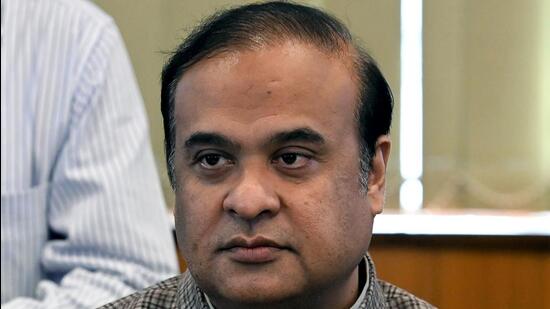
Speaking in the state assembly during the ongoing Budget session, Sarma said: “Whether a community is a minority or not depends on threats to its religion, culture or educational rights. If there’s no such threat, then that community can no longer be considered a minority.”
Replying to question posed by BJP MLA Mrinal Saikia on which communities are considered minorities in Assam, Sarma said that in line with Supreme Court judgments on the issue and as per definitions given in Articles 25 to 30 of the Constitution, “one cannot say outright that Muslims, Buddhists or Christians are minorities, because they are a minority in a particular state”.
“The definition of whether a community is a minority or not should be based on existing reality in that particular state or district. This is an evolving matter of concern and at present, SC is hearing it as well,” he said.
Sarma was referring to the Centre’s affidavit in the top court earlier this week stating that notification of any community specific to a state as a minority comes under the purview of the state concerned.
{{/usCountry}}Sarma was referring to the Centre’s affidavit in the top court earlier this week stating that notification of any community specific to a state as a minority comes under the purview of the state concerned.
{{/usCountry}}Also Read | Supreme Court grants Centre time to respond to plea on Hindus’ minority status
While the central government has notified six communities, namely Christians, Sikhs, Muslims, Buddhists, Parsis and Jains, as minorities as the national level, it is open for states and UTs to notify Hindus as a religious or linguistic minority where they are less in number, stated the Centre’s affidavit.
“In the context of Assam, Bengali speakers in Barak Valley can’t be called a linguistic minority, whereas those who speak Assamese, Rengma Naga and Manipuri are linguistic minorities there. In parts of Brahmaputra Valley, Bengali speakers will be the linguistic minority,” Sarma said.
“For long, there was a feeling in India that all Muslims are minorities across the country. But now, this definition has been challenged and it has been told to the SC by the Centre that Hindus can also be a minority in a particular state, depending on circumstances,” the CM added.
He said that in Assam’s South Salmara district, Hindus are a minority, whereas Muslims are in majority.
Also Read | Definition of minority should be determined state-wise, demands seers’ body
The CM added that in Assam, people of some communities were availing benefits accorded to religious minorities as well as those meant for other backward castes (OBCs), scheduled castes (SCs) and scheduled tribes (STs).
“Now, issues like these are getting discussed and debated and even reached the SC. I hope that in the coming days, the SC would provide more clarity on the definition of minorities and a new meaning would emerge,” said Sarma.
As per existing guidelines, only the Centre can determine which communities can be accorded minority status. There are several districts in Assam like Nagaon, Dhubri, where Muslims are the majority population.
“There was no definition of minorities in our constitution. It was only when the National Commission for Minorities was created, that the term got defined. Even there, only religious minorities were considered and not linguistic minorities. The religious communities considered as minorities are Muslims, Christians, Sikhs, Buddhists, Parsis and Jains,” he said.
Sarma cited a Supreme Court judgment passed in 2003 by an 11-judge bench in the TMA Pai Foundation and others versus the State of Karnataka case.
“Citing Article 30(1) of the Constitution, the bench had stated that religious and linguistic minorities are at par in so far as that Article is concerned. The SC order had made it clear that rights and privileges for religious minorities are also there for linguistic minorities as well,” he said.
“In India, there is no clear distinction yet on what would comprise a linguistic minority. What percentage of population should speak a particular language for them to be declared linguistic minorities?” Sarma asked.
Article 30(1) of the Constitution states that all minorities, whether based on religion or language shall have the right to establish and administer educational institutions of their choice.
Sarma also mentioned Article 350B of the Constitution, which speaks about appointment of a special officer for linguistic minorities by the President. The officer shall investigate matters related to safeguards provided to linguistic minorities under the Constitution.
“The matter is being heard by Supreme Court at present and is sub-judice. For Assam, when we talk of religious or linguistic minorities, we need to be clear on whether indigenous Muslims who speak Assamese fall within the ambit of minority or not. Instead of declaring a community as minority across India, it can be done on the level of states depending on the situation. But taking it to the district level could create more issues. Instead of whimsical statements on this, I think we should wait for the SC verdict on the issue,” said senior advocate Nekibur Zaman.