Regional committees set up to look into the ongoing boundary dispute between Assam and Arunachal Pradesh will complete the joint visits to the border areas by the month-end, a senior Assam minister said on Thursday.
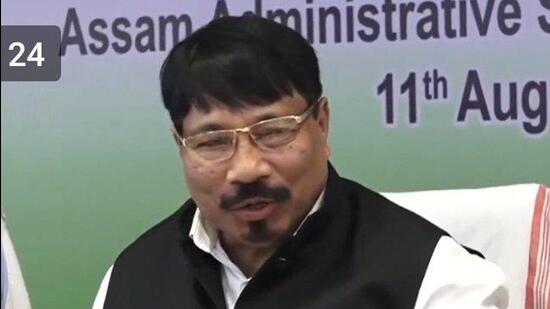
“Today we decided that by the end of August, we will complete the task of joint visits to the disputed border areas. It was also agreed to prepare our reports and submit them to the CMs of both states by September 15,” Assam border protection and development minister Atul Bora said in Guwahati on Thursday after a meeting of the state regional committees.
Chief ministers of the two states, Assam’s Himanta Biswa Sarma and Arunachal Pradesh’s Pema Khandu signed the Namsai Declaration on July 15 in an attempt to speed up the seven-decade-old boundary dispute between the two states. The two states agreed to bring down the number of disputed villages from 123 to 86. It was also decided that the 12 regional committees, set up in each state for joint verification of the disputed areas, will submit their first tranche of reports for areas on which the two sides arrive at a consensus by September 15.
“During the joint visits, the regional committees would look into various aspects like constitutional boundary, geographical contiguity and administrative convenience. The desire of the local people (on which state they want to reside in) would also be taken into account,” said Bora.
{{/usCountry}}“During the joint visits, the regional committees would look into various aspects like constitutional boundary, geographical contiguity and administrative convenience. The desire of the local people (on which state they want to reside in) would also be taken into account,” said Bora.
{{/usCountry}}He added that the formula of ‘give and take’, which was used to resolve 6 of the 12 areas of dispute between Assam and Meghalaya, will be used to address the boundary row with Arunachal Pradesh.
Once the regional committees submit their reports, it will be followed by talks between the two chief ministers and lead to the signing of an agreement on reshaping boundaries. The agreement will be sent to the Centre for approval.
Last year, the two states resolved to settle their border disputes following the intervention of Prime Minister Narendra Modi and Union home minister Amit Shah. A suit is also pending in the Supreme Court since 1989 on the issue.
The border dispute between the two states has its genesis in 1873 when the British started the inner-line regulation creating an imaginary boundary between the plains and hills areas north of Assam. The inner-line regulation, which still exists, requires people from outside Arunachal Pradesh, to take permits before entering the state.
This area, initially referred to as North East Frontier Tracts, was later renamed North East Frontier Agency (NEFA) and continued to remain under Assam’s administrative jurisdiction.
In 1972, NEFA was renamed Arunachal Pradesh and granted the status of a union territory. It became a state in 1987. But before it got its present boundary, a committee headed by former Assam chief minister Gopinath Bordoloi transferred around 3,650 sq km of territory, which was earlier with NEFA, to Assam.
Arunachal Pradesh doesn’t recognise this transfer, arguing that it was done without consulting the people or administration of NEFA.
Besides Meghalaya and Arunachal Pradesh, Assam has border disputes with Mizoram and Nagaland, states which were created from it.