Australia is keen to begin discussions with India on trade in digital services under a final trade deal that will build on an interim agreement signed in April because digital trade underpins all commerce, Australian deputy foreign minister Tim Watts said on Saturday.
Recent contacts between the new Australian government led by Prime Minister Anthony Albanese and the Chinese leadership will not affect Canberra’s commitment to the relationship with New Delhi, Watts said, pointing out that concerns remain across the region about China’s growing assertiveness.
Albanese’s planned visit to India in March 2023 is being seen as an effort to give a push to the proposed comprehensive economic cooperation agreement (CECA) after the two sides signed the interim deal or Economic Cooperation and Trade Agreement (ECTA) this year. Following a meeting with Prime Minister Narendra Modi on the margins of the G20 Summit in Bali, Albanese said both sides see the conclusion of CECA as “very important for expanding economic relations”.
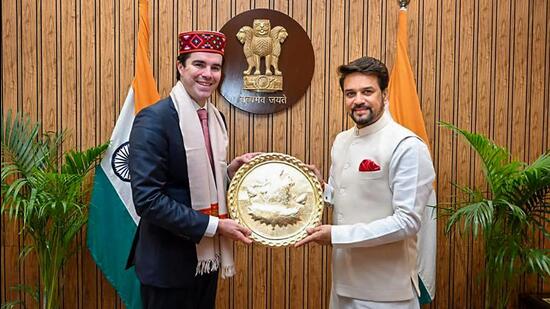
Watts, who was in India with a cross-sectoral delegation to participate in the Bengaluru Tech Summit and to represent Australia at the “No Money For Terror” meeting in New Delhi, told a small group of reporters that an Australian parliamentary panel endorsed the ECTA on Friday.
“Our next agenda is the comprehensive economic cooperation agreement and one of the things we do want to explore in that negotiation is digital services,” he said. The trade ministers of India and Australia have committed themselves to commencing negotiations on this “as soon as possible”.
{{/usCountry}}“Our next agenda is the comprehensive economic cooperation agreement and one of the things we do want to explore in that negotiation is digital services,” he said. The trade ministers of India and Australia have committed themselves to commencing negotiations on this “as soon as possible”.
{{/usCountry}}“We think that digital trade is a really worthwhile agenda because it’s not just transit of data, it really underpins all trade in the global system now. If we can better facilitate standards of action on digital services, that will facilitate trade across the board,” he said.
Watts described recent meetings between the Australian and Chinese foreign ministers and talks between Albanese and President Xi Jinping in Bali as efforts to “stabilise our relationship” after it went through a challenging period. Australia has objected to “unjustified trade blockages” by China on beef, barley, wine and other goods, and consistently raised concerns on consular cases and human rights issues.
China has become “more assertive in the region” over the past decade and that has made the relationship more challenging. On the other hand, Australia perceives India as a “like-minded partner” that desires an Indo-Pacific governed by a consistent rules-based system, as well as a peaceful and stable South China Sea with respect for international law and the United Nations Convention on the Law of the Sea (UNCLOS), he said.
Australia, Watts said, will seek to strike a balance between calling out China on trade blockages and human rights issues and collaborating with it on issues of shared interest, such as the climate crisis. “We don’t want to close off the prospect of cooperating with a very significant trading partner and a country whose relationship is important to Australia,” he added.
“Our region is being reshaped by very significant geo-strategic competition and Australia seeks to work closely with partners and regional groupings to try and shape the region in the face of that geo-strategic competition,” Watts said, adding that this includes Australia’s cooperation with India both bilaterally and in groupings such as the Quadrilateral Security Dialogue or Quad.