
 E-Paper



Ayodhya title case: Supreme Court order on mediation likely tomorrow
On Wednesday, the SC bench had reserved its order on whether the Ram Janmabhoomi-Babri Masjid title suit should be sent for mediation or not. The court had asked parties involved to name the best possible mediators to resolve one of the most politically and religiously sensitive issues.

 Prefer HTon Google


The Supreme Court’s five-judge bench that is hearing the Ayodhya case will meet on Friday for “pronouncement of orders”, a court notice said on Thursday.
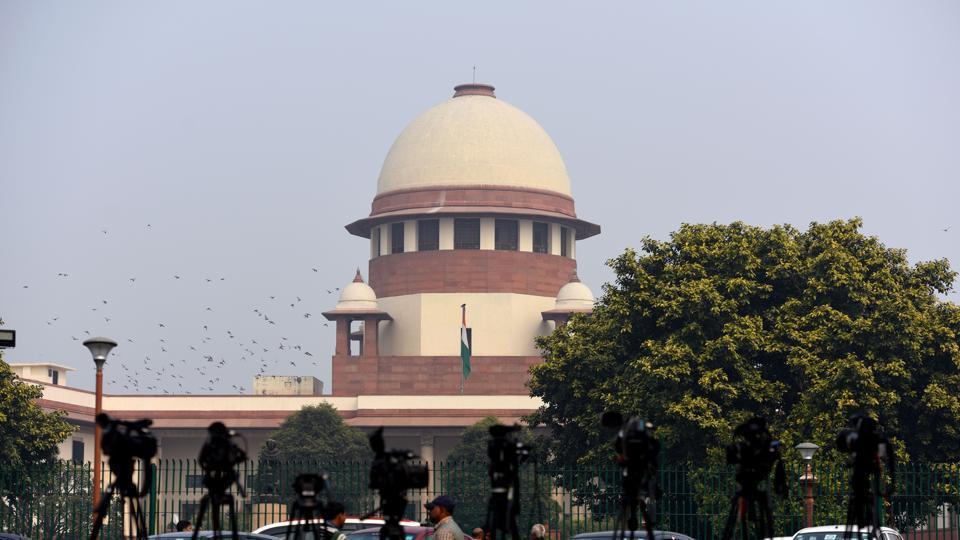
On Wednesday, the Supreme Court bench had reserved its order on whether the Ram Janmabhoomi-Babri Masjid title suit should be sent for mediation or not. The court had also asked the parties involved to name the best possible mediators to resolve one of the most politically and religiously sensitive issues.
On Wednesday, the five-judge Constitution Bench led by Chief Justice of India (CJI) Ranjan Gogoi, and comprising justices SA Bobde, DY Chandrachud, Ashok Bhushan and SA Nazeer, also told the lawyers not to argue on history as the court had no control over it.
“We have no control over what happened in the past, of [Mughal emperor] Babur... We have no control over the past. We can only undo the present, which is the dispute before us,” Justice Bobde said.
He was referring to a belief among Hindus that Babur had demolished a Hindu temple to construct the Babri Masjid in the 16th century.
The court has said that mediation would ensure that confidentiality is maintained by both sides and that the process is not reported or commented upon in the media. At the same time, the court had also clarified that by ordering mediation it did not want to gag the media but to consider delaying the publication of the deliberations.
The Supreme Court is hearing 14 appeals against a September 2010 judgment by the Allahabad high court that ordered a trifurcation of the disputed 2.77-acre site between the Nirmohi Akhara, the Sunni Central Wakf Board and Ram Lalla Virajman, the child deity.
With the Lok Sabha elections barely months away, the case has assumed immense political significance, especially in Uttar Pradesh which sends 80 members to the Lok Sabha.
If mediation is ordered in the case, then the case will likely be resolved after the elections end.
The court had in a hearing on February 26 said that even if there was a 1 per cent chance of an amicable resolution, mediation should be given a chance, adding that it was considering a possibility of “healing relationships”.


