E-Paper



Big bizmen got huge loans waivers since 80s, but farmers were jailed: Varun Gandhi
BJP parliamentarian says education is the only way to remedy social and economic inequality in India.


While Rs 9.5 lakh crore in loans taken by influential businessmen were waived over the last 30 years, small farmers and traders faced imprisonment for defaulting on relatively miniscule borrowings.
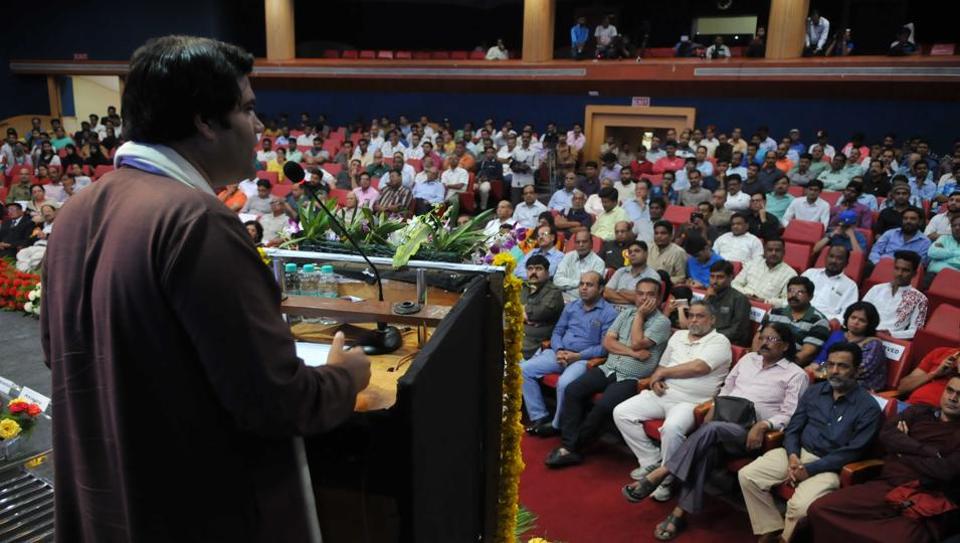
BJP parliamentarian Varun Gandhi made this claim during his keynote address at a seminar on political reforms in Bhopal on Sunday evening. The event was organised jointly by the city-based New Life Educational Society and Citizen Welfare Forum, besides Uttar Pradesh’s Wali Foundation.
Observing that economic and social inequality has been affecting India’s poor for many decades now, Gandhi said: “A few years ago, I chanced upon a man who had taken a Rs 3-lakh loan to enrol his daughter in a nursing course. But he couldn’t repay it. This person was jailed, his house was attached, and his property was auctioned. When he was released, he was given six months to repay an amount of Rs 60,000 that still remained pending against his name.”
The BJP MP asked his audience to view this situation in the light of the huge loan waivers extended to businessmen in the last 30 years. “The amount comes up to Rs 9.5 lakh crore. At the same time, many small farmers and traders have been imprisoned because they couldn’t repay their loans…” he said.
Gandhi said it was lamentable that the salaries of Tamil Nadu legislators should be doubled at a time when farmers from the state were protesting by drinking urine and parading skulls of dead relatives. “I feel ashamed to be a politician,” he added.
The BJP leader, in his hour-long speech, described how economic and social inequality ultimately leads to the persecution of a large section of the society. He also cited various anecdotes – gathered during his travels across the country to research for a book he was authoring on the economic future of villages – to illustrate how people were trying to resolve problems concerning governance and social ills through education and other innovative approaches.
“Nearly 85% of the property in this country is owned by 10% of its people. This means that 90% of its people are living on a mere 15% of its expanse,” said Gandhi. “I believe there is just one way to bridge this gulf… and that’s education. In education lies the future of this country and the solution to its problems.”