New Delhi: A convict undergoing life imprisonment in a murder case cannot be denied remission just because the slain victim happened to be a public servant, the Bihar government has told the Supreme Court, justifying its decision to release former lawmaker Anand Mohan, who was sentenced to life for instigating the killing of the then Gopalganj district magistrate in 1994 but was freed early after the state tweaked the prison rules.
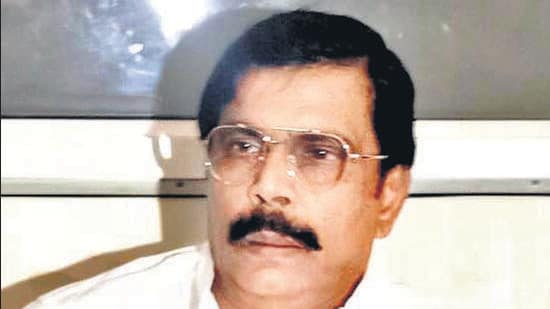
The rules were amended on April 10 and the gangster-turned-politician, who spent less than 16 years behind bars, walked out of jail on April 27.
“The status of a victim cannot be a factor for grant or refusal of remission...the remission of the Respondent No.4 (Mohan) was considered in accordance with the policy and as per the procedure prescribed,” said the Bihar government’s affidavit, adding there is a limited scope of judicial interference in state’s remission policy.
It argued that 2012 prison rules were changed on April 10 to remove the prohibition against premature release of life convicts guilty of murdering public servants after heeding to a variety of relevant factors and the fact that no such distinction existed in the similar rules framed by other states such as Delhi, Punjab and Haryana.
“The punishment for murder of general public or a public servant is same. On the one hand, the life convict prisoner guilty of murder of general public is considered eligible for premature release and on the other hand, the life convict prisoner guilty of murder of a public servant is not eligible for consideration for premature release. The discrimination on the basis of status of a victim was sought to be removed,” said the government, lending reasons to the April 10 notification.
{{/usCountry}}“The punishment for murder of general public or a public servant is same. On the one hand, the life convict prisoner guilty of murder of general public is considered eligible for premature release and on the other hand, the life convict prisoner guilty of murder of a public servant is not eligible for consideration for premature release. The discrimination on the basis of status of a victim was sought to be removed,” said the government, lending reasons to the April 10 notification.
{{/usCountry}}According to the affidavit, it was found that the ineligibility for consideration of premature release of life convict who is guilty of murder of a public servant was not in consonance with the punishment prescribed for murder in general under the Indian Penal Code.
It added that Mohan was released after relevant reports were favourable. He has written three books during his incarceration and also participated in the work assigned in the jail, the Nitish Kumar government maintained.
Gopalganj district magistrate G Krishnaiah was killed in December 1994. Mohan, then a member of the legislative assembly (MLA), was convicted for instigating the murder for which he was awarded the death sentence by a trial court in 2007. Mohan’s death sentence was reduced to life imprisonment by the Patna high court in 2008. He challenged the verdict in the Supreme Court but to no avail.
Mohan walked out of prison on April 27 after the Bihar government tweaked the Bihar Prison Manual, allowing life convicts involved in the murder of a public servant to be eligible for premature release after serving a sentence of 14 years.
The wife of slain IAS officer, Uma Krishnaiah, moved the Supreme Court on April 29 challenging Mohan’s premature release. Her petition challenged the April 10 amendment that paved the way for Mohan’s release and argued that the state government could not mechanically release any person at the end of 14 years.
Uma also cited decisions of the top court to argue that the state had to consider remission of life convicts based on the policy that existed at the time of conviction. Mohan was convicted in 2007 when the 2002 remission policy was in vogue. The 2002 policy also denied premature release to convicts guilty of killing public servants on duty.