The Bharatiya Janata Party (BJP) on Monday announced its much-anticipated new organisational team, bringing a few key leaders back into the party, promoting a bouquet of women leaders and inducting a number of young people with an eye on upcoming assembly elections, especially in Uttar Pradesh. The changes also point to those that might follow in a cabinet reshuffle that has been spoke of for months.
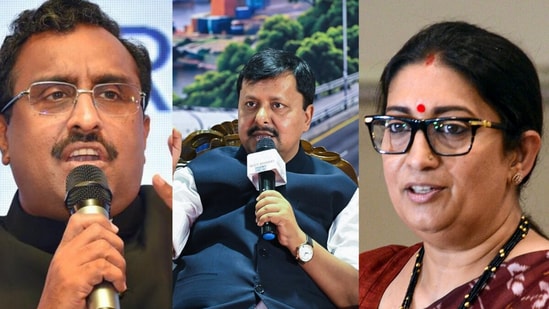
Seven months after appointing Nitin Nabin as the 12th national president of the BJP, the party announced 13 vice-presidents, six of them women. It dropped a clutch of key names and introduced new faces, including former national general secretary Ram Madhav and former Uttarakhand chief minister Tirath Singh Rawat.
The party named eight general secretaries, dropping four. Among the six new faces were former Union minister Smriti Irani – the only woman among the eight – and former Tripura CM Biplab Deb. Union commerce minister Piyush Goyal was appointed national treasurer, a post he held from 2010 to 2014; Anil Baluni has been retained in the media cell, as convenor. He was earlier media cell head.
Deep Dive
What are the key changes in the BJP's new national team announced by Nitin Nabin?
Why has the BJP emphasized representation from diverse communities in its new national team?
How does the new BJP leadership team reflect the party’s outreach to minority communities?
For Madhav, Irani, Deb, and Rawat, the announcement marks a comeback of sorts into the leadership mainstream of the party.
{{/usCountry}}For Madhav, Irani, Deb, and Rawat, the announcement marks a comeback of sorts into the leadership mainstream of the party.
{{/usCountry}}The party replaced parliamentarian Tejaswi Surya and former lawmaker Vanathi Srinivasan as the chiefs of its youth and women wings, with Hemang Joshi from Gujarat and Roopkumari Chaudhary from Chhattisgarh, respectively. Amit Malviya was replaced as IT cell chief with former Chhattisgarh minister Deepak Mhaskey, who has been appointed as convenor.
There is speculation that some of those replaced could find a place in the Cabinet during a reshuffle or be deputed to various states and morchas. A person familiar with the matter said a reshuffle could come in September.
Overall, the list of 65 office-bearers includes 12 women. Among the states, there are 10 names from Delhi and many states such as Assam and Nagaland have a single entry.
Also Read | Amit Malviya dropped, Smriti Irani makes comeback in new BJP team | Check list here
“Congratulations to the newly appointed national office-bearers of the BJP and those who have been given various responsibilities in the party. This newly appointed team brings together organisational experience, energy and grassroots connect. I am confident they will give their best in strengthening our party and focussing on public service. My best wishes to them,” Prime Minister Narendra Modi said on X.
The organisational rejig was widely anticipated because it is seen as a key step leading to the much-awaited cabinet reshuffle, the first in the third term of the National Democratic Alliance. The new team adheres to the party’s social engineering model, which gives representation to various castes and tribes, and is a mix of experienced and fresh faces.
Among the 13 vice-presidents, the party retained former Rajasthan CM Vasundhara Raje Scindia from Rajasthan, lawmaker Rekha Verma from Uttar Pradesh, and lawmaker Baijyant ‘Jay’ Panda from Odisha. The new inclusions were Tirath Singh Rawat from Uttarakhand; Ram Madhav from Delhi; D Purandeshwari from Andhra Pradesh, a former national general secretary and state unit president; former MLA Varshaben Narendrabhai Doshi from Gujarat; former Union minister Bharti Pravin Pawar from Maharashtra; former Punjab minister Manpreet Singh Badal; and former SC cell chief Lal Singh Arya from Madhya Pradesh. M Nagaraja, an OBC leader from Karnataka and a Rajya Sabha MP; Tariq Mansoor, a Pasmanda Muslim and former vice-chancellor of Aligarh Muslim University; and Madhuchandra Kar, a Bengal doctor, were also in the list.
Among the eight national general secretaries, the party retained only Vinod Tawde and Sunil Bansal. The list includes Harish Dwivedi, a former MP from Basti in Uttar Pradesh was recently the state in-charge for Assam and is Brahmin; former Rajasthan state president and other backward classes (OBC) leader Satish Poonia; Madhya Pradesh tribal leader Gajendra Patel; and Haryana Rajya Sabha member Sanjay Bhatia. Bhatia didn’t contest the 2024 Lok Sabha polls, vacating his Karnal seat for former Haryana CM Manohar Lal Khattar.
Also Read | 12 women, 6 minority leaders part of BJP's new national team under Nitin Nabin
Poonia is an old Rashtriya Swayamsevak Sangh member and perceived to be at loggerheads with Raje.
The party has not given an SC representation in this category, opting for a ST name.
Tawde and Bansal, who both played key roles as election in-charges in several state polls, were retained keeping in view the upcoming assembly elections. While Bansal played a key role in West Bengal, Tawde was in-charge of Kerala and state in-charge of Bihar, overseeing the transition from Nitish Kumar stepping down as CM to Samrat Choudhary taking over earlier this year.
The party also rewarded turncoats: former Aam Aadmi Party MP Sandeep Pathak and Rohan Gupta, who switched sides from the Congress, were made national secretaries; Manpreet Badal, who was earlier with the Shiromani Akali Dal, was named vice-president,
The 16 national secretaries were drawn from various states and largely comprised younger people. This included 3-term MP Bhola Singh from Bulandshahr; Rajya Sabha MP from Madhya Pradesh and OBC leader Kavita Patidar; and former Kerala unit chief K Surendran. Anil Antony, a minority face from Kerala, was retained. The list also included Phangnon Konyak, the first woman from Nagaland in the Rajya Sabha; author and academic Swadesh Singh, who was part of the election team in Bengal; Mriganka Deo Barman from the indigenous Koch Rajbongshi community of Assam; and Manoj Tigga, a tribal leader who was also the chief whip in the Bengal assembly.
Also Read | 12 women, 6 minority leaders part of BJP's new national team under Nitin Nabin
Notable leaders dropped included Arun Singh, who was party general secretary since 2015, making him one of the longest-serving functionaries; Radha Mohan Das Agrawal, who was made general secretary in 2023, a year after he vacated his long-held Gorakhpur assembly seat for CM Yogi Adityanath. Agrawal and Singh are both Rajya Sabha MPs. Tarun Chugh –– who was recently elected to the Rajya Sabha –– was made office in-charge, replacing Arun Singh.
Dushyant Gautam, a Dalit leader who unsuccessfully contested the Delhi assembly polls in 2025 and was general secretary since September 2020, was also dropped. His name was associated with the Ankita Bhandari murder case in Uttarakhand in 2022. Gautam filed a defamation lawsuit against the political parties and individuals involved and the Delhi high court passed interim orders to remove all social media posts linking him to the murder case.
Malviya was replaced by Mhaskey, who served as the state in-charge of the BJP IT cell Chhattisgarh and a state spokesperson. He has four co-convenors: Shiwanand Dwivedi, who co-authored a book on home minister Amit Shah; Priti Gandhi, Alok Bhatt; and Arun Yadav.
The appointment of former Madhya Pradesh state unit president, VD Sharma, as the in-charge of various cells is an indication that the party will revive these cells or prakosht as they were known for wider outreach.
Rajesh Mangal from Rajasthan will be the co-treasurer, while Rajya Sabha member Ashish Aggarwal, Siddharth Yadav, and Pradeep Bhandari will be co-convenors of the media cell.
Nabin – a five-term legislator from Bihar and now a Rajya Sabha MP – was appointed national president on January 20. His appointment was perceived to mark the beginning of a generational shift in the party that was formed a month before Nabin was born in May 1980.