E-Paper



BJP sweeps Arunahcal Pradesh assembly polls, bags 46 of 60 seats
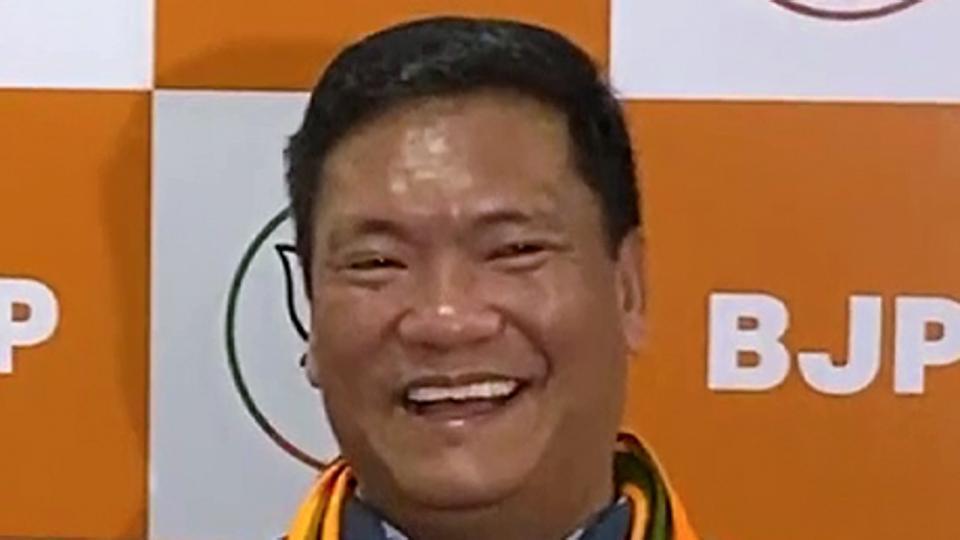
Chief minister Pema Khandu, who has been at the helm since 2016, is expected to get another term at the top post

 Prefer HTon Google


The ruling Bharatiya Janata Party (BJP) registered a landslide victory in the assembly polls in Arunachal Pradesh on Sunday, bagging 46 of the total 60 seats. Chief minister Pema Khandu, who has been at the helm since 2016, is expected to get another term at the top post.
National Peoples’ Party (NPP), which is a constituent of the National Democratic Alliance (NDA) government at the Centre, came second with 5 seats, Nationalist Congress Party (NPP) won 3 seats, Peoples’ Party of Arunachal (PPA) bagged 2 seats, Congress won 1 and the rest 3 seats were secured by independent candidates.
Ten BJP candidates including Khandu and his deputy Chowna Mein had won their seats unopposed and the party won 36 of the remaining 50 seats, polling for which took place on April 19.
“Thank you Arunachal Pradesh! The people of this wonderful state have given an unequivocal mandate to politics of development. My gratitude to them for reposing their faith in BJP yet again. Our party will keep working with even greater vigour for the state’s growth,” Prime Minister Narendra Modi said in a message on X.
Talking to journalists in Itanagar, Khandu thanked voters for reposing faith in the BJP again and said the results reflected the good work done by the party’s governments at Centre under PM Modi and in the state. He stated that the oath taking ceremony of the new government would be decided after the Lok Sabha election results are out on June 4.
BJP’s win was almost certain even before counting started as the party had bagged 10 seats unopposed. The ruling party was the only one which had fielded candidates in all 60 seats. The Congress, which was the biggest party till BJP took that position nearly a decade back, had put up candidates in only 19 seats.
“In Arunachal Pradesh, voters prefer to favour the party in power and the results were a continuation of that trend. We had named 34 candidates for this election, but only 19 remained in the fray. Others withdrew from the contest due to the influence of money power,” said former CM and state Congress president, Nabam Tuki.
BJP and NPP, which is the major party in the ruling coalition in Meghalaya, had an understanding ahead of polls. Both parties decided that while BJP won’t field any candidates for the two Lok Sabha seats in Meghalaya, the NPP would reciprocate the same in Arunachal Pradesh.
Though NPP contested independently in the Arunchal Pradesh assembly polls, the party fielded only 20 candidates, making it easier for BJP’s return to power. In the event of BJP not getting the required 31 seats needed to form the government, NPP was expected to extend support.
“As of now no date has been fixed for the swearing in ceremony on the next chief minister and his cabinet, but it is expected to take place after June 6 after results for the Lok Sabha polls are available,” BJP state spokesperson Techi Necha said.
The EC had preponed counting of votes for the assembly elections to Arunachal Pradesh and Sikkim by two days as the tenure of the two assemblies are set to expire on June 2. Counting of votes for the two Lok Sabha seats in Arunachal Pradesh will take place on June 4 along with rest of the country.
Arunachal Pradesh witnessed 82.95% voter turnout on April 19. The seats which BJP had won unopposed are Ziro-Hapoli, Taliha, Tali, Sagalee, Roing, Mukto, Itanagar, Hayuliang, Chowkham and Bomdila.
In 2019, the ruling BJP had retained power by winning 41 seats, Janata Dal (United) won 7, National Peoples Party (NPP) got 5, Congress won 4, Peoples Party of Arunachal Pradesh got 1 and the rest 2 seats were secured by independents.