E-Paper



Blood moon to glow evening skies, when and where to watch the total lunar eclipse in India
The eclipse begins with a partial phase, turning red for an hour, before returning to brightness.

 Prefer HTon Google


In a dramatic celestial event, several space enthusiasts will witness a total lunar eclipse on March 3, when the Earth's shadow falls on its natural satellite, creating a ‘blood moon’.
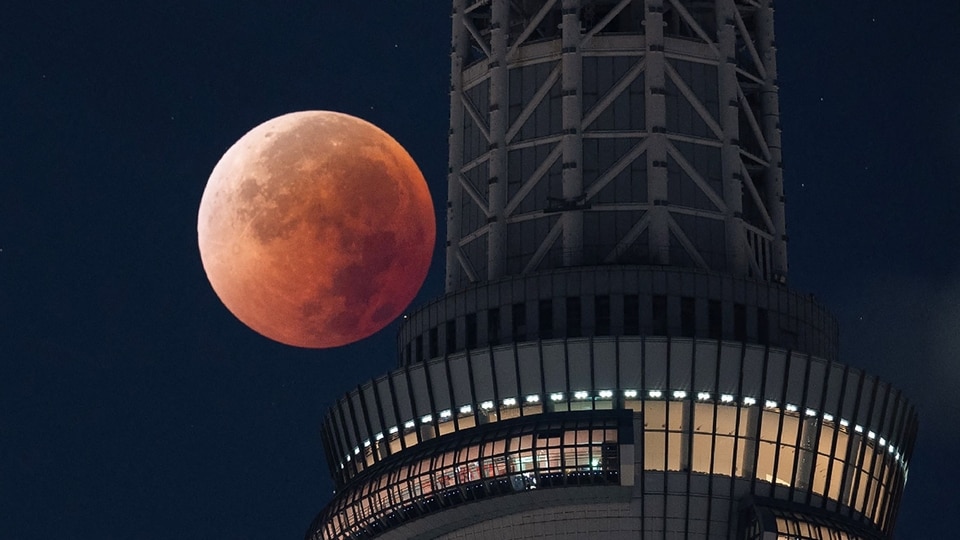
What astronomers refer to as a ‘totality’, the ominous appearance of the red-hued satellite is believed to be a portent of evil across cultures, reported news agency PTI.
The total lunar eclipse is a rare celestial event as the Earth, the Moon, and the Sun do not always align perfectly due to the slight relativity between the tilt of the Earth and the Moon's orbit around the Sun.
Date and time of the lunar eclipse
The lunar eclipse will be visible at a convenient hour this Tuesday evening.
In Western Australia, it will begin with the moon still below the horizon, while across the rest of Australia, the eclipse will appear later in the evening in the eastern sky. In New Zealand, it is expected to start at 10:50 pm local time, offering the best views as the sky will be dark and the moon high in the northern sky.
The partial eclipse phase will take nearly 75 minutes as the moon slowly enters Earth’s shadow.
Once fully immersed, the moon will glow red for about an hour before gradually emerging over another 75 minutes and returning to full brightness.
Will Blood Moon be visible in India?
Indian space enthusiasts can witness the event around sunset.
According to a Times of India report, the visible window is expected to last roughly 20 minutes in the country as the moon slowly moves out of Earth’s shadow.
The total lunar eclipse or the blood moon would be visible to nearly 3.3 billion people across America, Asia, Oceania, read a report by Space.com.
Most prominently visible lunar eclipse for now
Over the next six lunar eclipses, the moon would only dip into the shadow of the Earth instead of being completely engulfed by it.
During the three lunar eclipses expected in 2027, the moon would only enter the Earth's outer and fainter shadow. During these, the moon would only dim slightly, making it nearly impossible to perceive it as an eclipse, the PTI report read.