
 E-Paper



Bracing for crude oil above $100 in a demand deficient economy
Brent crude prices – it is the international benchmark for crude oil prices in the world – breached the $87 level on January 18, touching the highest point since 2014.

 Prefer HTon Google


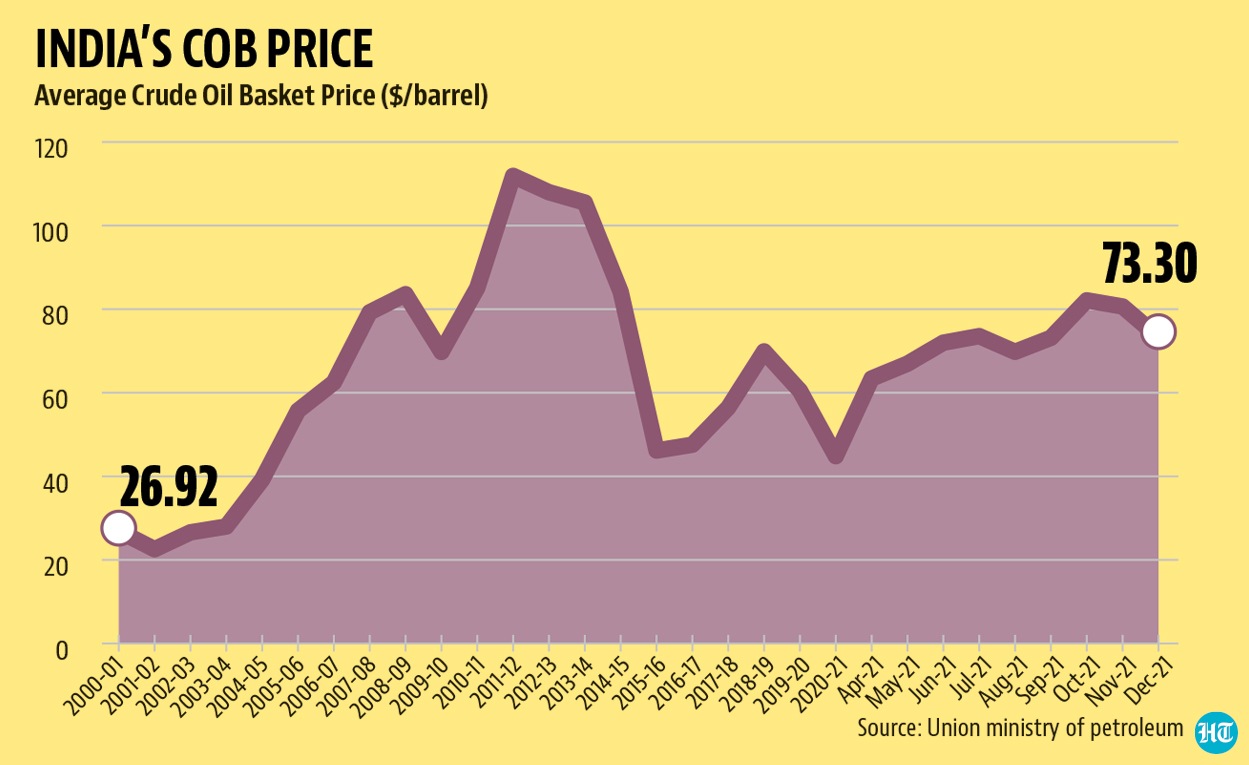
On January 17, the price of India’s crude oil basket (COB) was at $85.6 per barrel; that number is higher than the monthly average COB since September 2014.
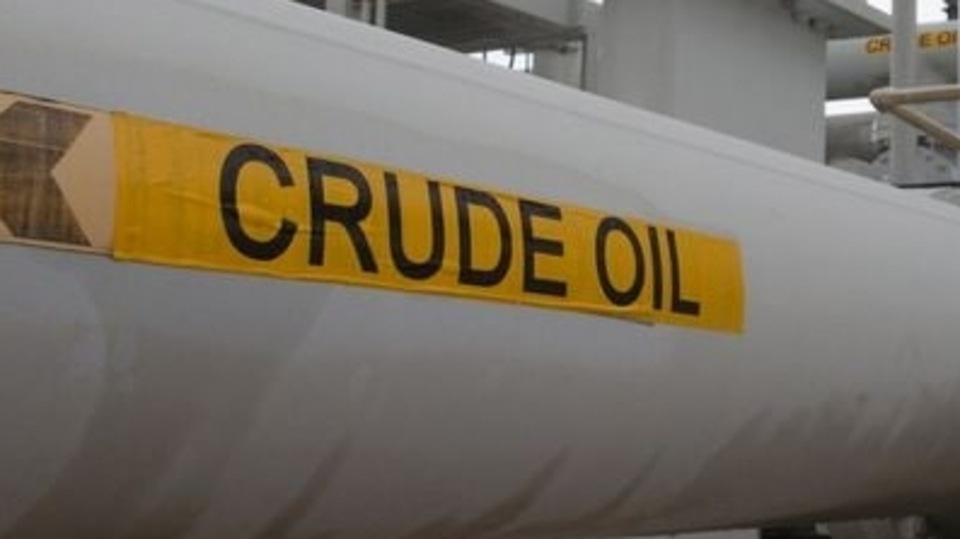
Brent crude prices – it is the international benchmark for crude oil prices in the world – breached the $87 level on January 18, touching the highest point since 2014. Goldman Sachs expects crude prices to breach the psychological barrier of $100 per barrel in the third quarter, Bloomberg News reported.
These developments will be watched with concern in both the finance ministry and RBI. The former must be busy giving final touches to the 2022-23 Union Budget and the latter will see Monetary Policy Committee (MPC) members huddling together a week after the Budget has been presented.
Oil prices have been higher in the past, but the current rally might be here to stay.
If crude oil were to breach the $100 barrier – such forecasts have been made earlier too and have not materialized – it will not be a first. India’s average COB price was above $100 for three years beginning 2011-12.
While the latest oil price spike has been driven partly by growing unrest in west Asia, an important oil producing region, there are reasons to believe that oil prices will stay elevated in the near future.
“Energy investment is running at half the level needed to meet the ambition to reach net zero by 2050. Spending on renewables needs to rise. And the supply and demand of dirty fossil fuels needs to be wound down in tandem…But legal threats, investor pressure and fear of regulations have led investment in fossil fuels to slump by 40% since 2015”, The Economist wrote in October 2021. This is not good news for a country such as India.
Also read | Chinese reliance on Middle East oil increases: Report
What does a crude price shock mean for India?
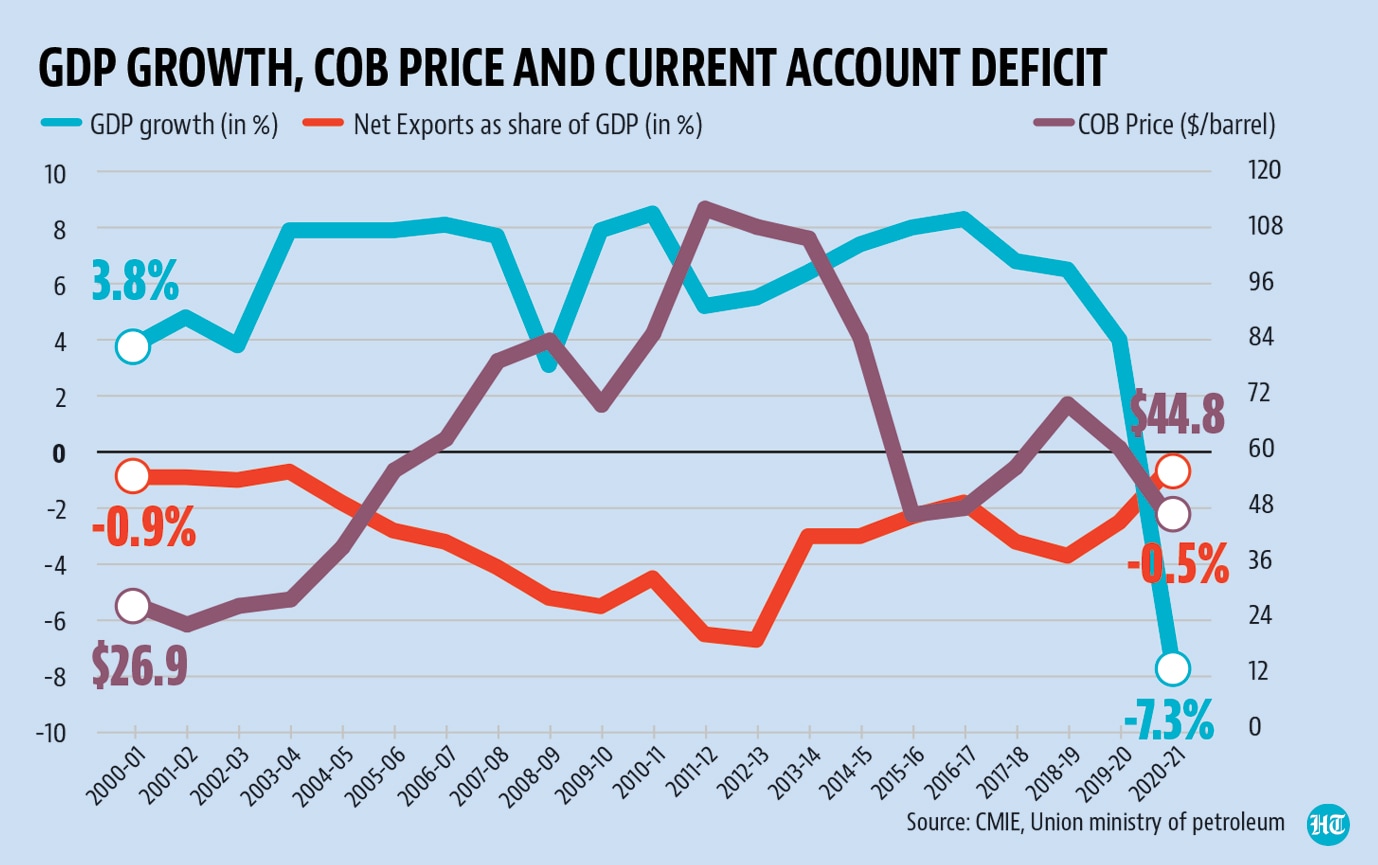
A January 2019 Mint Street memo published by RBI summarized the effect of a rise in crude oil prices for India. “We find that if a crude price shock hits the Indian economy, the CAD (current account deficit) to GDP ratio will rise sharply irrespective of a higher GDP growth; and a $10/barrel increase in oil price will raise inflation by roughly 49 basis points (bps) or increase the fiscal deficit by 43 bps (as a percentage of GDP) if the government decides to absorb the entire oil price shock rather than passing it to the end users”, the authors said in the memo. One basis point is a hundredth of a percentage point.
The high oil-price phase a decade ago was also a period of considerable economic pain the country with inflation reaching very high levels, growth slowing, and the external balance becoming precarious.
Elections have offered a temporary cushion against rise in crude prices
Fuel prices are also a politically sensitive matter. The biggest proof of this fact is that the otherwise deregulated pricing regime is always suspended when an election is around the corner. For example, petrol-diesel prices have not been changed since December 2, 2021 even though crude prices have increased significantly;from $70.56 to $87.51 per barrel, during this period. To be sure, diesel prices have remained unchanged from November 4, 2021 onwards which is when the union government announced a reduction in union excise duty on fuels. Petrol prices fell further on December 2 when the Delhi government slashed its value added tax (VAT) on petrol. Elections to assemblies in five states are scheduled between February 10 and March 7.
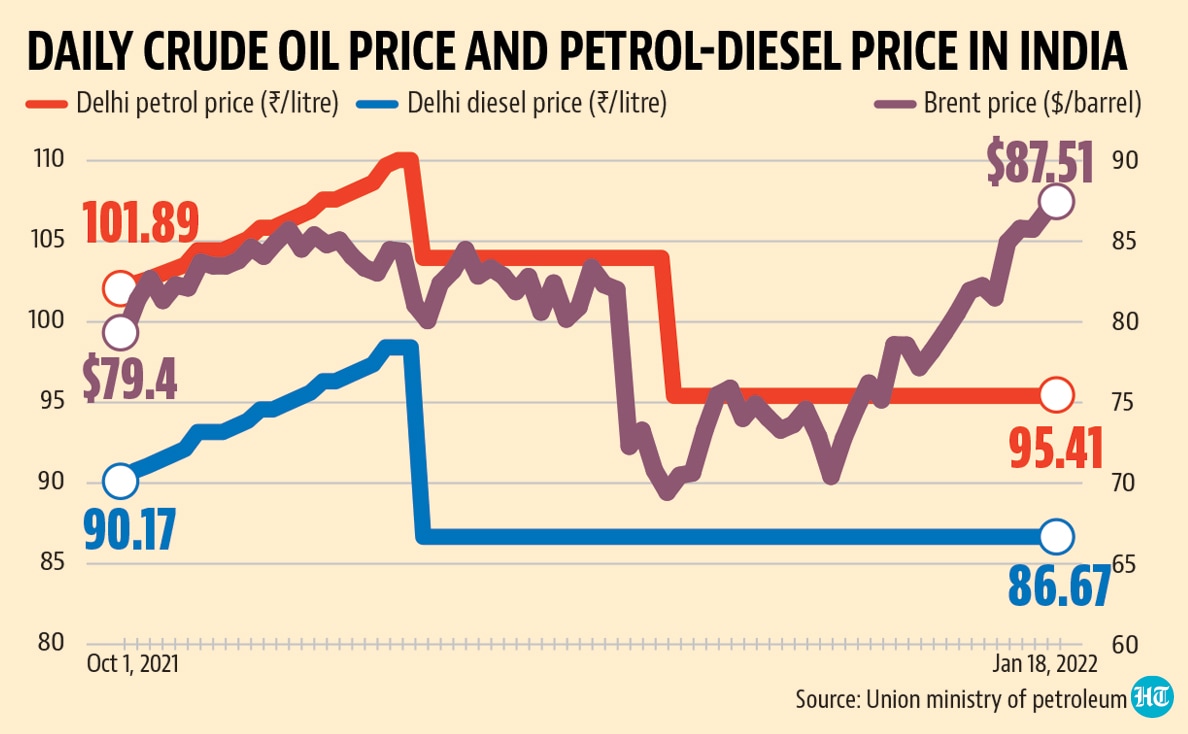
If the Budget does not bring down taxes on petrol-diesel and crude oil does cross the $100 barrier, fuel prices will be significantly higher than what they were when crude was above $100 a decade ago. This is because taxes on petrol-diesel are significantly higher today. This will generate additional tailwinds for inflation.
The difference between current and previous episodes of high inflation
A higher retail price of petrol-diesel due to higher tax component is not the only difference between the economic situation now and what existed a decade ago. An even bigger difference is the state of capacity utilisation or ability of the economy’s installed production capacity to cater to demand in the short run. In the long run investment can always increase the production capacity of an economy.
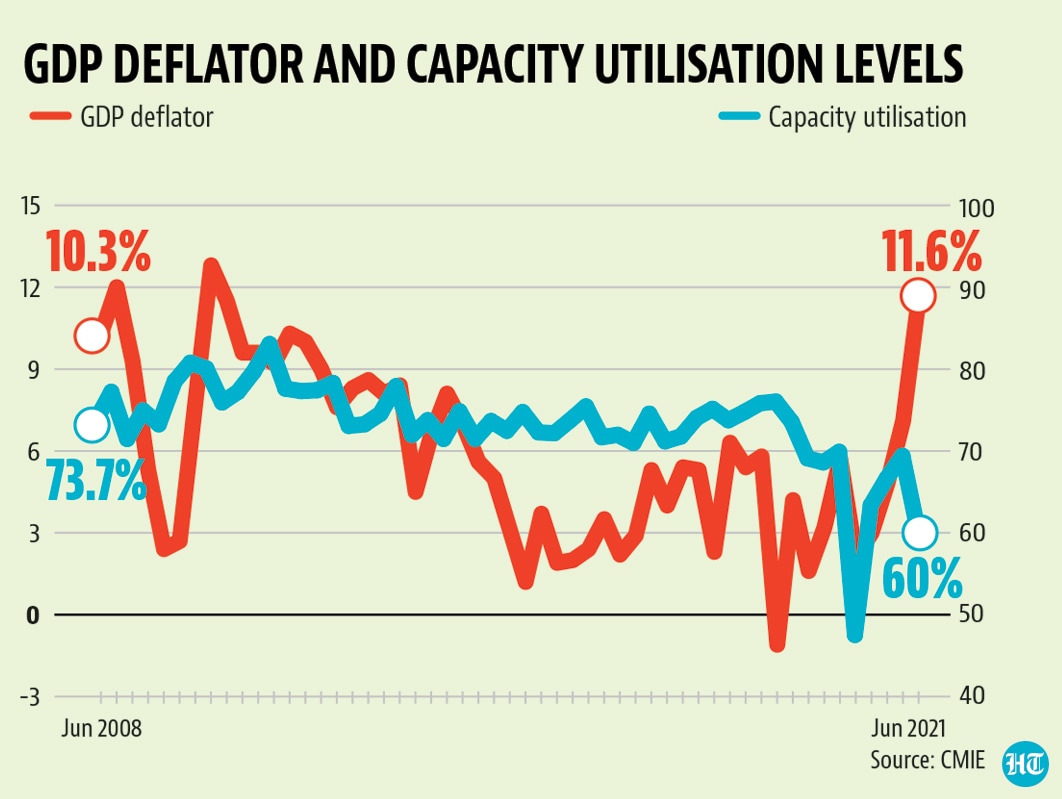
A comparison of GDP deflator – it is the difference between nominal and real GDP growth and a holistic measure of inflation for the economy and not just households which is what the Consumer Price Index measures – and levels of capacity utilisation from RBI’s quarterly order books, inventory and capacity utilisation survey (OBICUS) captures this clearly. The high inflation phase (as seen in the GDP deflator) in the last decade was accompanied by very high levels of capacity utilisation – it was never below 75% -- whereas the recent rise in the GDP deflator’s value has come along with capacity utilisation rates which are much lower. “Recent trends in domestic goods demand show that, after reaching pre-pandemic levels, it (capacity utilisation) has stagnated. The Production Linked Incentive scheme was meant to enable firms to cater to global demand, but rising import tariffs are coming in the way”, HSBC India Chief Economist Pranjul Bahndari said in a research note dated January 18.
What should be the policy response?
Should RBI then raise interest rates – most private analysts expect it will this year – at a time when aggregate demand is lacking, and may dip more with higher borrowing costs? This is a question which lies at the core of India’s economic policy regime. In the normal course, it is monetary policy which is tasked with maintaining a balance between growth and inflation. There is now growing consensus that it is fiscal policy which should play a more proactive role at the moment.
“For much of the pandemic, fiscal and monetary policy have actively complemented each other to help mitigate the growth damage from COVID. But in the third year of the pandemic, with inflation remaining above 5%, inflation expectations hardening by 200 bps over the last 18 months, and the current account deficit widening to the 2% handle, policy support will have to start becoming selective, with fiscal and monetary slowly having to evolve from complements to substitutes”, Sajjid Chinoy J.P. Morgan’s Chief India Economist wrote in a note issued earlier this month, calling for a tightening of monetary policy but a gradual fiscal consolidation path in the Budget.


