
 E-Paper



Can’t let Governors sit on bills indefinitely: SC
The Supreme Court warned that indefinite gubernatorial delays on state bills could undermine democracy, as it hears a presidential reference on judicial timelines.

 Prefer HTon Google


New Delhi: Permitting governors to sit indefinitely on bills passed by state legislatures may render the democratic process and the will of the people “defunct”, the Supreme Court observed on Thursday, as it continued hearing the presidential reference on whether the courts can prescribe timelines for gubernatorial and presidential assent.
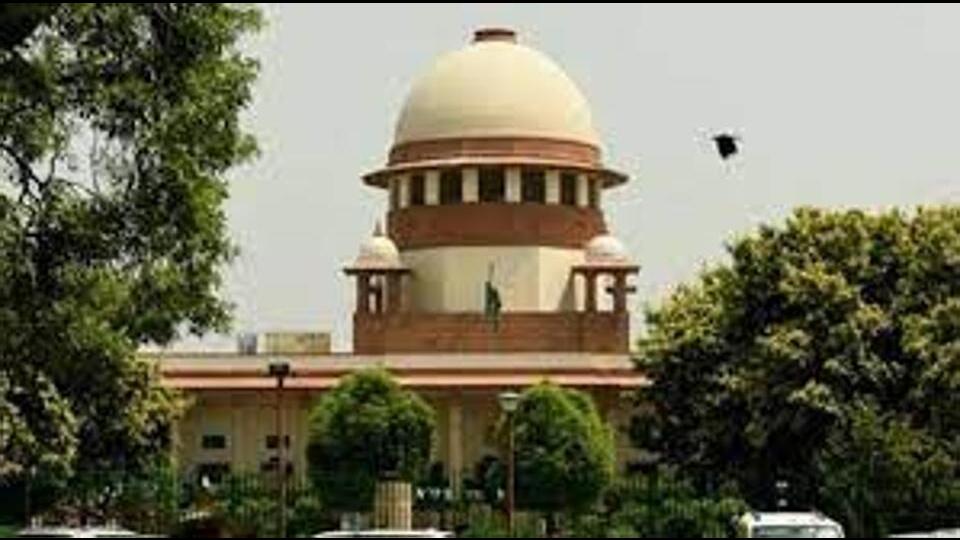
A constitution bench of Chief Justice of India (CJI) Bhushan R Gavai and justices Surya Kant, Vikram Nath, PS Narasimha and Atul S Chandurkar is examining President Droupadi Murmu’s Article 143 reference made in May. The reference seeks clarity on the top court’s April 8 ruling which, for the first time, laid down timelines for governors and the president to decide on state bills pending before them.
“If a particular function is entrusted to the governor and for years he withholds it, will that also be beyond the scope of judicial review of this court? When this court has set aside constitutional amendments taking away judicial review as violating the basic structure, can we now say that however high a constitutional authority may be, courts will still be powerless if it does not act?” the bench asked.
The bench also pressed the Centre to explain what remedy exists when governors indefinitely delay action. “Under Article 200, if we hold that the governor has unlimited power to withhold a bill for time immemorial, what is the safeguard for a duly elected legislature? Suppose a legislature elected by a two-thirds majority passes a bill unanimously, and the governor simply sits on it, it would make the legislature totally defunct,” it further remarked.
Solicitor General (SG) Tushar Mehta, appearing for the Union government, countered that while the court’s concern may be justified, it cannot assume jurisdiction to set time limits where the Constitution is silent. “A justification can never confer jurisdiction. Every problem in this country may not have a solution in the Supreme Court. Some problems must find solutions within the system,” he said.
According to Mehta, the solution was in the “political process, not judicial directions”. He argued that chief ministers could engage directly with governors, prime ministers, or even the President to resolve such impasses.
“Such issues have been arising for decades but have always been resolved through political statesmanship and maturity. Why cannot we trust other constitutional functionaries? The remedy ultimately will lie with Parliament by way of an amendment, not by judicial legislation,” Mehta submitted.
At this, the bench interjected: “When there is no outer limit, can a constitutional interpretation be left to a vacuum? Though a time limit may not be prescribed, there must be some way the process works. There cannot be a situation where not acting on a bill itself is a full stop… nothing further.”
The bench also questioned whether judicial review could be completely excluded. The court observed: “The decision may not be justiciable, but the decision-making process certainly falls within the ambit of judicial review.”
Mehta, however, warned that opening the door to scrutiny would lead to “multilevel challenges” at every stage of a governor’s or president’s decision under Articles 200 and 201. “Our problem is every step before the final decision will also be challenged because they can also constitute a ‘decision’,” he argued. He cited judicial precedents where the court held that fixed timelines for criminal trials could not be judicially prescribed, to reinforce his submission that timelines in constitutional processes too cannot be judicially imposed.
But the bench pressed further, citing petitions already filed by Kerala, Punjab, and West Bengal. “Suppose a decision is not taken for four years. What happens to the democratic set-up of the government? What happens to the will of the two-thirds majority of the legislature?” it asked.
Mehta responded with an analogy: “Take the example of a trial pending for 10 years. Can the President step in and declare that the punishment is deemed to have been undergone because the judiciary has delayed? Separation of powers means some issues are non-justiciable.”
The court, however, made it clear that it was not dealing with a hypothetical concern. “We are having petitions from at least four states,” the court underlined.
The presidential reference, prompted by the court’s April judgment in the Tamil Nadu case, asks whether the judiciary can impose timelines on constitutional authorities like governors and the president when the Constitution itself is silent. In that ruling, a two-judge bench also fixed a three-month deadline for the president to decide on bills referred by a governor, and one month for a governor to act on re-enacted bills. It had even invoked Article 142 to deem 10 Tamil Nadu bills as assented to, after holding that the governor’s prolonged inaction was “illegal”.
Mehta criticised the notion of deemed assent. “Deemed assent would mean your lordships substituted yourselves for the governor and declared the assent deemed to have been granted. Article 142 cannot be used to amend the Constitution,” he argued.
The bench, however, maintained that courts cannot abdicate their role as custodians of the Constitution. “Every wrong has to have a remedy. Whether the hands of the constitutional court will be tied when a constitutional functionary refuses to discharge their function without any valid reason? Whether the court will say we are powerless?” the bench asked.
Arguments on the reference will continue on August 26.



