The Union government cleared five new judges for the Supreme Court, hours after it assured a top court bench that the appointments will happen “very soon”, according to people aware of the matter who said a formal notification was likely to be issued late on Friday night or over the weekend.
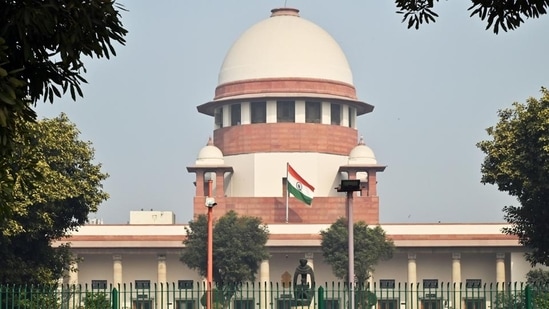
Those elevated to the Supreme Court are justices Pankaj Mithal (Rajasthan high court chief justice), Sanjay Karol (Patna high court chief justice), PV Sanjay Kumar (Manipur high court chief justice), Ahsanuddin Amanullah (Patna high court judge), and Manoj Misra (Allahabad high court judge).
The new judges are expected to be sworn in on Monday by Chief Justice of India (CJI) Dhananjaya Y Chandrachud, the people cited above added. With their appointments, the top court will have 32 out of its sanctioned strength of 34 judges.
While these five names were pending with the government since December 13, the collegium made the recommendation for the remaining two vacancies as well last week.
The development came on the same day that attorney general (AG) R Venkataramani gave an assurance to the bench headed by justice Sanjay Kishan Kaul that the appointments to the apex court may come “within 2-3 days”, even as he added that it would not be proper to put down the timeline for making these appointments in the judicial order.
Responding to him, the bench observed that lack of consistency in the time taken by the Centre to clear names was creating “issues of faith” between the judiciary and the executive.
{{/usCountry}}Responding to him, the bench observed that lack of consistency in the time taken by the Centre to clear names was creating “issues of faith” between the judiciary and the executive.
{{/usCountry}}The court eventually accepted the AG’s request and refrained from specifying the period within which the appointments will be notified, but implored Venkataramani to ensure that it is done before the matter is heard next on February 13. “We are giving you 10 days. And we are taking your word that these appointments will happen soon. Please, make sure it is done,” the bench, which also comprised justice AS Oka, told the AG.
While hearing a contempt plea complaining against inordinate delay by the Centre in clearing names, the bench on Friday also took strong exception to the government sitting over almost a dozen recommendations pertaining to the transfer of high court judges and appointment of a chief justice, making it clear that “any delay in transfers may result in administrative and judicial actions which may not be palatable”.
Warning the government against “any third-party interference in the transfer cases”, the bench told the AG that the judicial work of the judges proposed to be transferred could be withdrawn if the recommendations are not implemented soon.
“If you keeping transfers pending, it is more serious than anything else. If transfer orders are not implemented, what do you want us to? Do you want us to withdraw work from them? We can understand issues regarding new appointments but how can you sit over cases of transfer? We have already said this, we will not let third-party influence this process,” it remarked.
Venkataramani, on his part, requested the bench to defer the proceedings on this aspect. The bench, however, pointed out that delay in transfer of high court judges consequently impact the appointment of chief justices in high courts.
“We withdrew a proposal and made another recommendation for appointment of a judge to another high court. He is set to retire in 19 days. Do you want him to retire without becoming the chief justice of a high court?” it asked the AG, recording in its order that further delays in notifying transfers may prompt the court to pass “administrative and judicial orders” on the next date.
The bench was referring to the collegium’s decision on January 25 to recall its resolution for the appointment of Orissa high court judge Jaswant Singh as the chief justice of the same high court, and to propose his appointment as the chief justice of Tripura high court.
The bench added: “This is what the problem is. Sometimes you clear cases overnight and sometime you take months. This is what is creating the issue of faith...when we ask you questions, you will tell us -- it is happening; it will happen; it will happen soon...but when? We are posing this question to you since there is a history. Things have not been happening for years together.”
The AG, on his part, said that things are being followed up and 13 appointments in the high courts may also happen soon.
At this point, advocate Amit Pai, representing the petitioner — Advocate Association, Bengaluru — sought to highlight the statements being issued by various government functionaries against the judiciary. “The Supreme Court is being attacked...the endeavour to lower its dignity,” Pai said.
“We are used to it,” replied the bench, adding the judges are not bothered by such attacks beyond a point. “It’s for the other authorities to see what’s appropriate and what’s not,” it said.
Senior advocate Vikas Singh, president of the Supreme Court Bar Association, requested the bench to clarify in its order that the high courts should not wait for the clearance of the names pending with the government and that they must keep sending the names as and when the vacancies arise and are expected to arise in the next months.
Acceding to this plea, the court recorded in its order that pendency of certain names should not come in the way of high court collegium sending fresh names to the government and the Supreme Court collegium.
On Thursday, Union law minister Kiren Rijiju told Parliament that no timeline can be set down for filling up of vacancies of the judges in the constitutional courts, as he flagged that several high courts across the country are in breach of the six-month deadline for making recommendations for anticipated vacancies.
“As on January 30, recommendations in respect of 236 vacancies (191 existing and 45 anticipated vacancies during next 06 months) are yet to be received from high court collegium, which are in breach of six months’ advance timeline for making recommendation for anticipated vacancies,” emphasised the minister.
Rijiju also informed the Upper House that the Centre returned 18 proposals to the Supreme Court Collegium (SCC) pertaining to promotions of high court judges in the last three years, adding that the collegium reiterated and sent back files in six of the above cases while additional inputs were sought from the high court collegium in seven cases and names were returned to the high courts in the remaining five.
The law minister’s statements came amid an ongoing confrontation between the executive and judiciary over the judges’ selection mechanism and the division of powers between the two. The tussle, over the last few months, witnessed Rijiju and Vice President Jagdeep Dhankhar criticising the collegium system of appointing judges over concerns of transparency and assumption of authority by the Supreme Court through its judgments to appoint judges in the constitutional courts.
The top court, in a series of judicial proceedings, responded with reminders to the government that the collegium system is the law of the land that must be followed by the government “to a T”, while severely reproaching the Centre for sitting over a large number of collegium’s recommendations without specifying reasons.